 14807fdf28
Implement host-computed biquad EQ coefficient generation and multi-fragment bridge writes for the PRO X 2 LIGHTSPEED headset's 5-band parametric EQ. The coefficient algorithm uses standard Audio EQ Cookbook peaking EQ formulas with a simplified rescale normalization (max_b0 × 1.19 headroom). This is our own implementation — not an exact replica of LGHUB's ~350-line per-band cascade normalization — but it produces functionally correct results. The DSP compensates via the rescale factor, and the EQ changes are audible and working on real hardware. Wire format verified against 38 LGHUB pcap writes: - 4-byte LE section headers, LE uint16 coefficient words - Mixed Q1.31/Q2.30 fixed-point with 24-bit precision - Only b-coefficients divided by rescale; a-coefficients unchanged - Two sections: 48kHz playback + 16kHz mic - No trailing padding, no extra words between sections Changes: - base.py: Add flags parameter to write_centurion_cpl() for multi-fragment CPL - device.py: Rewrite multi-fragment bridge send — proper CPL fragmentation with fragment 0 carrying bridge prefix/hdr and continuations carrying raw sub_msg, all fragments sent back-to-back without intermediate ACKs - hidpp20.py: Replace placeholder coefficient code with full biquad math, mixed Q-format quantization, rescale normalization, and dual-section output - settings_templates.py: Persist EQ to slot 0x80 after writing to slot 0x00 so settings survive power cycle - tests: Update expected SetEQParameters payloads for new coefficient format |
||
|---|---|---|
| .github | ||
| bin | ||
| docs | ||
| lib | ||
| po | ||
| rules.d | ||
| rules.d-uinput | ||
| share | ||
| tests | ||
| tools | ||
| .coveragerc | ||
| .git-blame-ignore-revs | ||
| .gitignore | ||
| .pre-commit-config.yaml | ||
| .python-version | ||
| CHANGELOG.md | ||
| COPYRIGHT | ||
| LICENSE.txt | ||
| MANIFEST.in | ||
| Makefile | ||
| README.md | ||
| RELEASE.md | ||
| RHEL.md | ||
| Release_Notes.md | ||
| mkdocs.yml | ||
| pyproject.toml | ||
| release.sh | ||
| setup.py | ||
README.md
 Solaar
Solaar is a Linux manager for many Logitech keyboards, mice, and other devices that connect wirelessly to a Unifying, Bolt, Lightspeed or Nano receiver as well as many Logitech devices that connect via a USB cable or Bluetooth. Solaar is not a device driver and responds only to special messages from devices that are otherwise ignored by the Linux input system.
More Information - Usage - Capabilities - Rules - Manual Installation - Known Issues


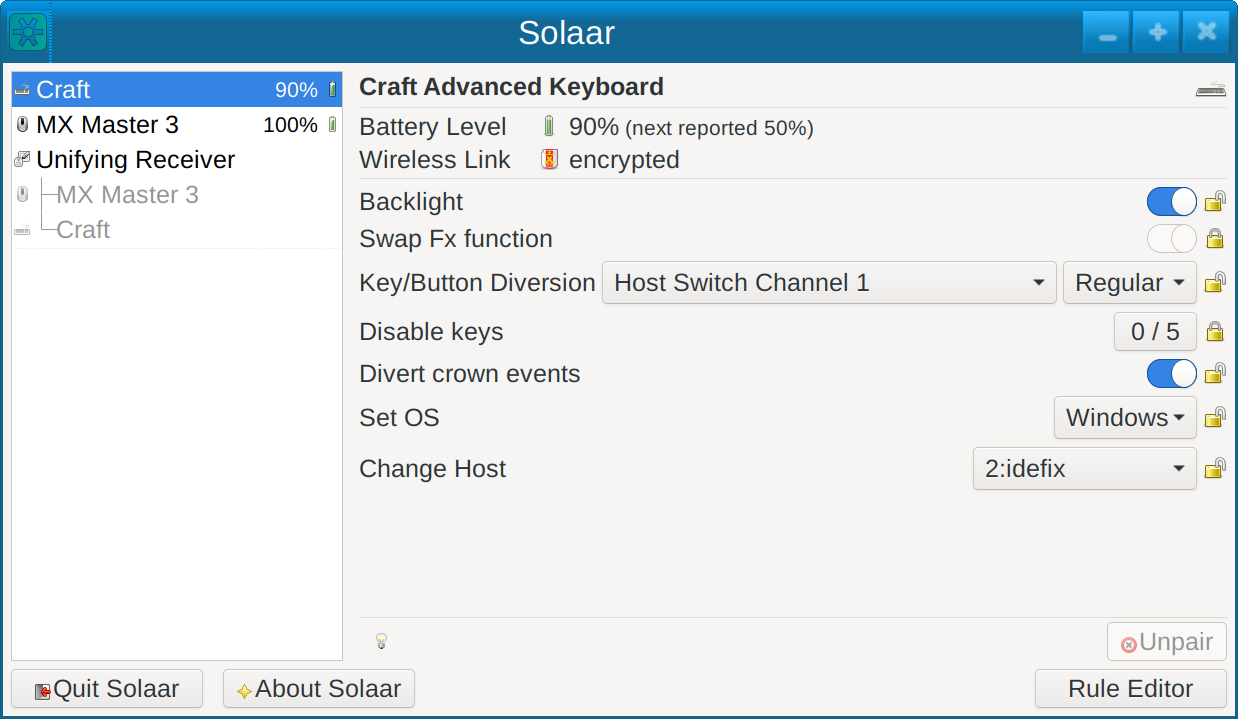
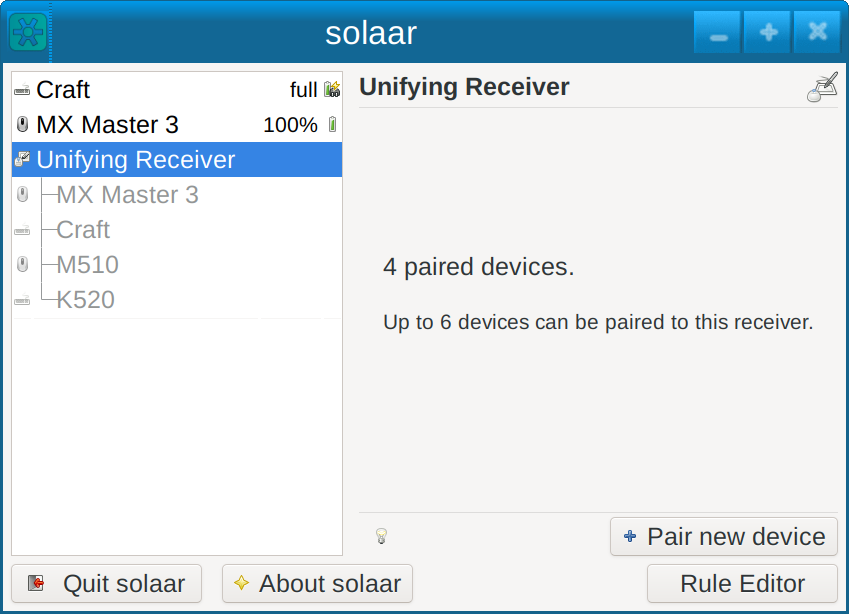
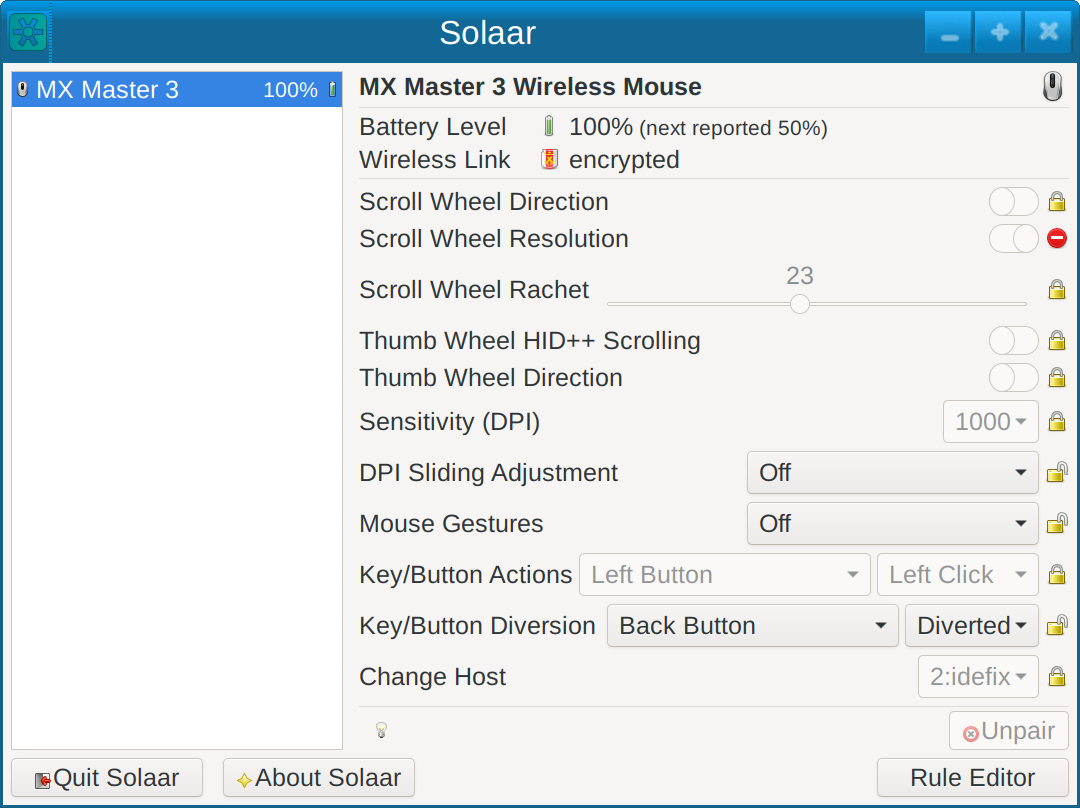
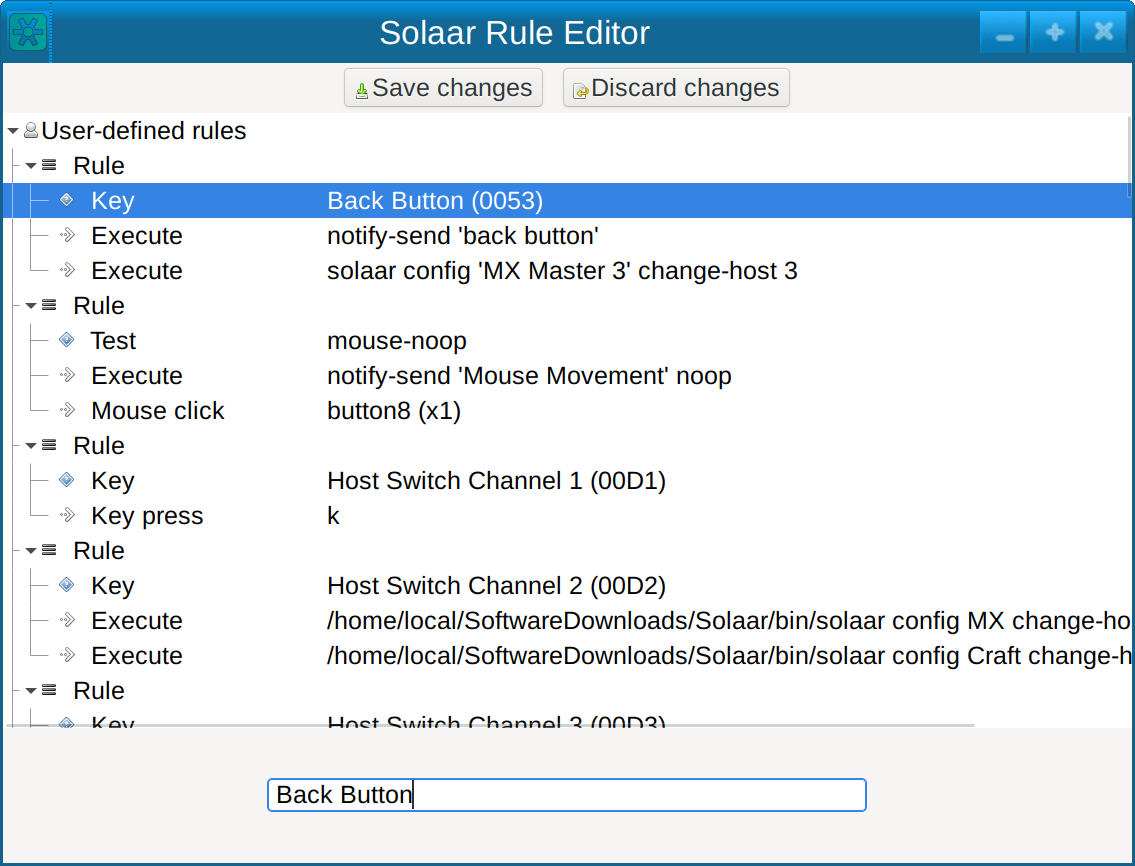
Solaar supports:
- pairing/unpairing of devices with receivers
- configuring device settings
- custom button configuration
- running rules in response to special messages from devices
For more information see the main Solaar documentation page. -
Installation Packages
Up-to-date prebuilt packages are available for some Linux distros (e.g., Fedora) in their standard repositories. If a recent version of Solaar is not available from the standard repositories for your distribution, you can try one of these packages:
- Arch solaar package in the extra repository
- Ubuntu/Kubuntu package in Solaar stable ppa
- NixOS Flake package in Svenum/Solaar-Flake
Solaar is available from some other repositories but may be several versions behind the current version:
- a Debian package, courtesy of Stephen Kitt
- a Ubuntu package is available from universe repository
- a Gentoo package, courtesy of Carlos Silva and Tim Harder
- a Mageia package, courtesy of David Geiger