 256f2e556b
Field testing on G522 showed two problems: 1. GetRGBZoneInfo returned all zeros (count=0, all-zero body) when queried BEFORE SetHostModeState(1). Protocol doc's recommended order is: claim host mode first, then enumerate zones. Our code was querying zones first. 2. The response format the G522 returns does NOT match the doc's layout. Doc says [count, 3 reserved, 1 reserved, zone_ids...] but the G522 seems to pack them tight as [count, zone_ids...] — the SetRgbZonesSingleValue response "0801020304050607080000" decodes cleanly as count=8, zones=[1..8] under the tight format. Fixes: - Call SetHostModeState(1) before GetRGBZoneInfo. - Try tight format first, fall back to doc format. Only cache a parsed result if it makes sense (non-zero zone IDs, count matches). - Don't cache ambiguous results so subsequent writes retry. This also incidentally suggests the G522 has 8 RGB zones (not the 2 left/right earcups we were guessing) — the red set we sent in the previous test probably did set zones 0x01 and 0x02 correctly, but those zones are only a fraction of the total lighting so the color change wasn't visible. |
||
|---|---|---|
| .github | ||
| bin | ||
| docs | ||
| lib | ||
| po | ||
| rules.d | ||
| rules.d-uinput | ||
| share | ||
| tests | ||
| tools | ||
| .coveragerc | ||
| .git-blame-ignore-revs | ||
| .gitignore | ||
| .pre-commit-config.yaml | ||
| .python-version | ||
| CHANGELOG.md | ||
| COPYRIGHT | ||
| LICENSE.txt | ||
| MANIFEST.in | ||
| Makefile | ||
| README.md | ||
| RELEASE.md | ||
| RHEL.md | ||
| Release_Notes.md | ||
| mkdocs.yml | ||
| pyproject.toml | ||
| release.sh | ||
| setup.py | ||
README.md
 Solaar
Solaar is a Linux manager for many Logitech keyboards, mice, and other devices that connect wirelessly to a Unifying, Bolt, Lightspeed or Nano receiver as well as many Logitech devices that connect via a USB cable or Bluetooth. Solaar is not a device driver and responds only to special messages from devices that are otherwise ignored by the Linux input system.
More Information - Usage - Capabilities - Rules - Manual Installation - Known Issues


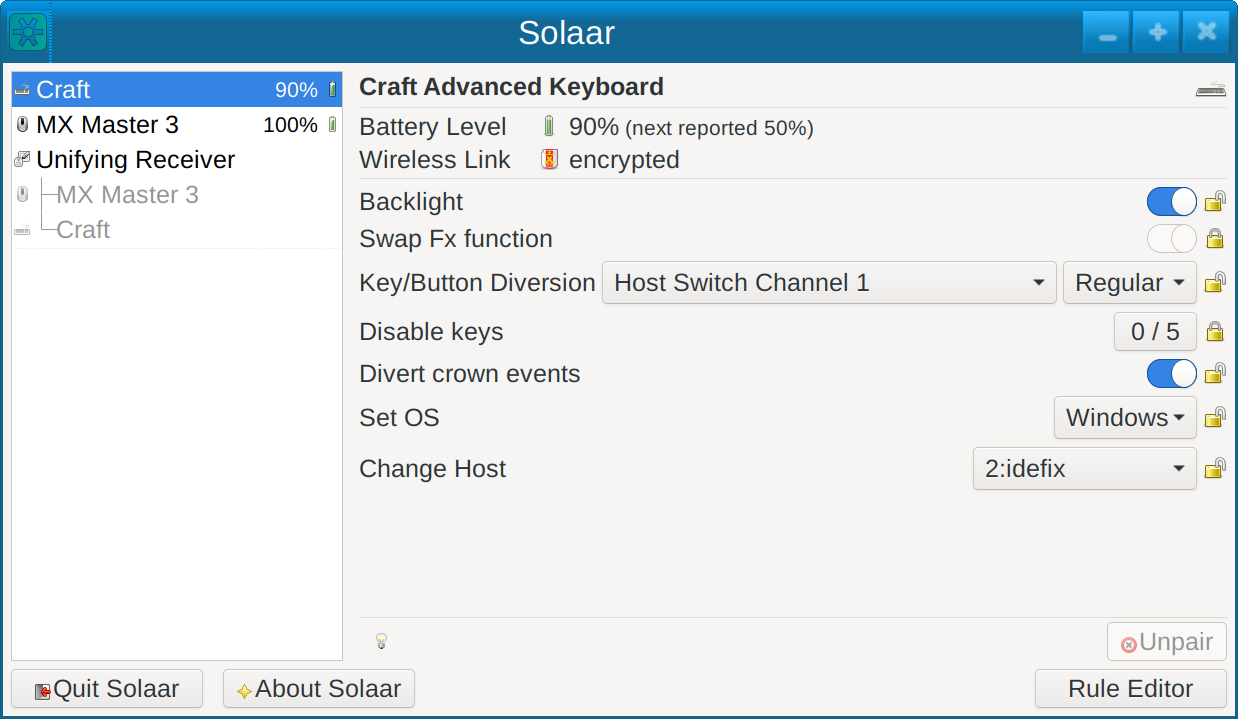
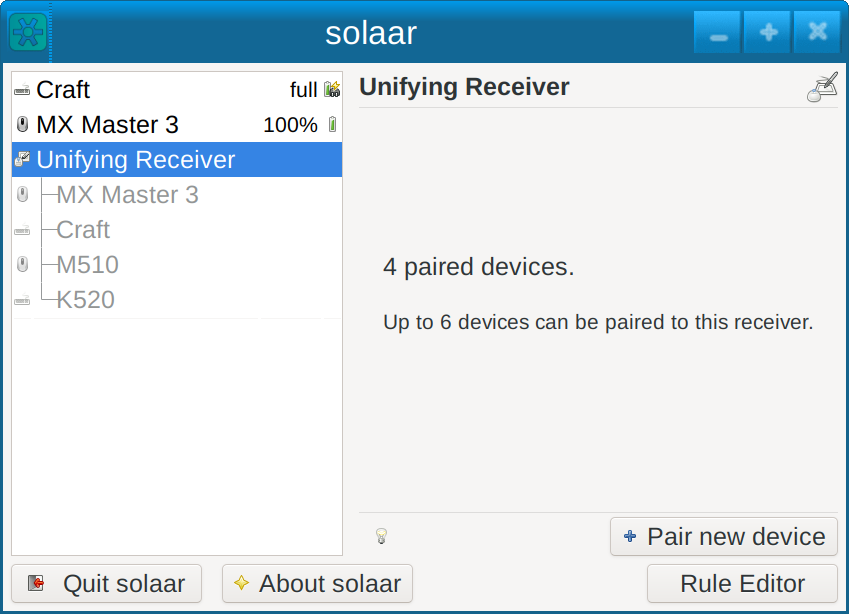
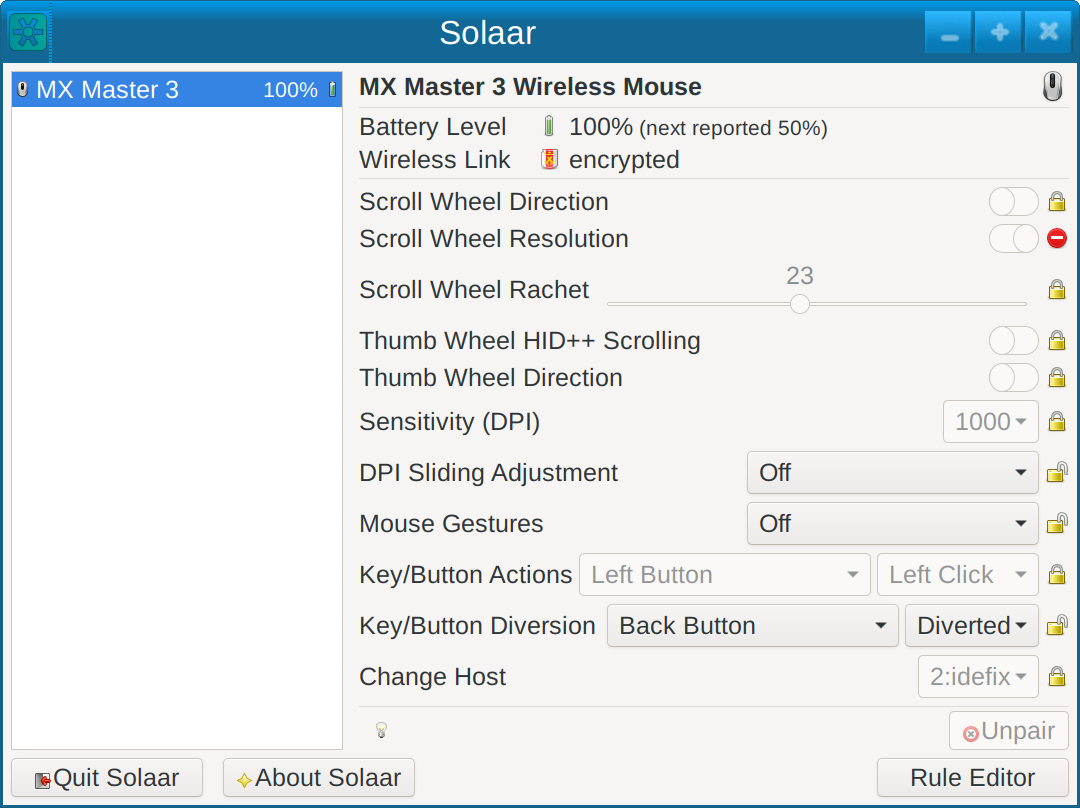
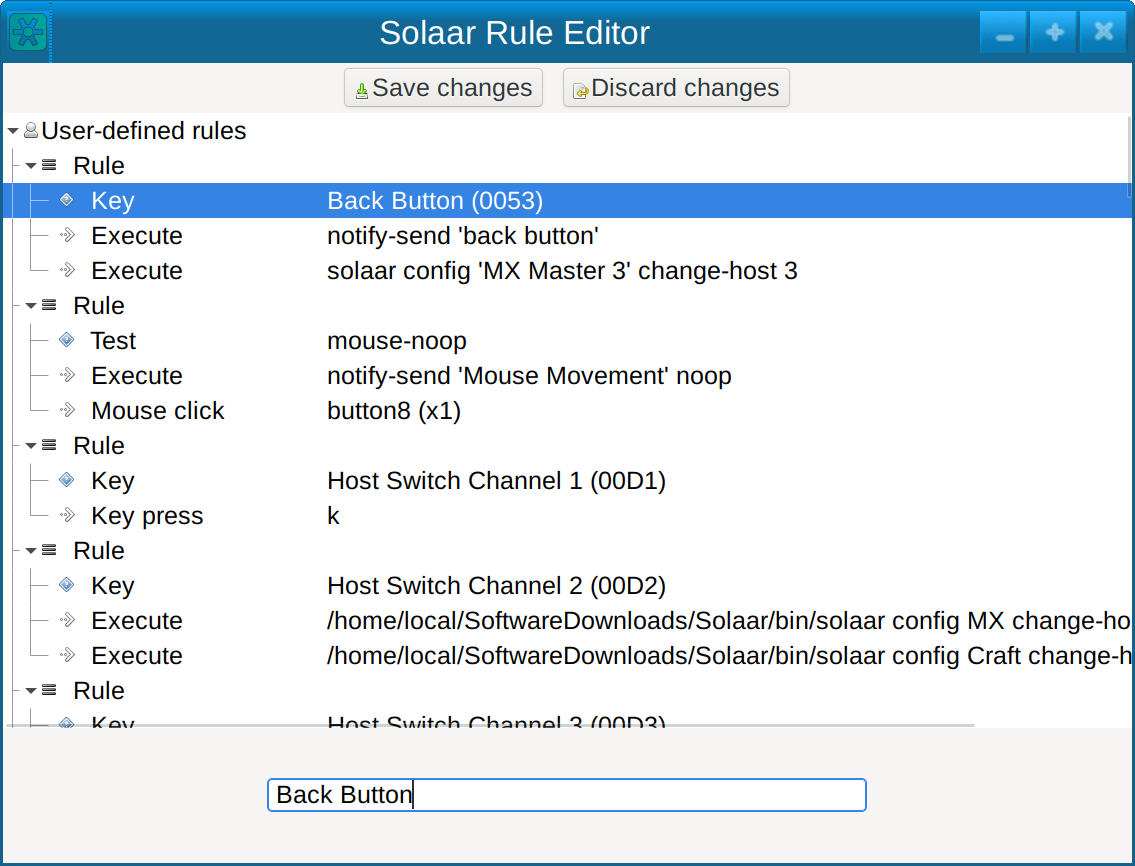
Solaar supports:
- pairing/unpairing of devices with receivers
- configuring device settings
- custom button configuration
- running rules in response to special messages from devices
For more information see the main Solaar documentation page. -
Installation Packages
Up-to-date prebuilt packages are available for some Linux distros (e.g., Fedora) in their standard repositories. If a recent version of Solaar is not available from the standard repositories for your distribution, you can try one of these packages:
- Arch solaar package in the extra repository
- Ubuntu/Kubuntu package in Solaar stable ppa
- NixOS Flake package in Svenum/Solaar-Flake
Solaar is available from some other repositories but may be several versions behind the current version:
- a Debian package, courtesy of Stephen Kitt
- a Ubuntu package is available from universe repository
- a Gentoo package, courtesy of Carlos Silva and Tim Harder
- a Mageia package, courtesy of David Geiger