 ce88a22fbd
The PRO X RAPID (reported as "PRO X RAPID", USB 046D:C35B) wires five dedicated media keys above the F-row with board-specific 0x8081 zone ids (150 Bright, 155 Prev, 152 Play, 154 Next, 153 Mute) that the canonical extras map (153-158) doesn't cover: 150/152/154 were dropped as phantoms and never surfaced in the painter. Ids and positions are hardware-probed (ported from the OpenRGB key-map for this model). Add keyboard_pro_x_rapid.with_media_top_row(), which pushes any regional TKL base down one row and prepends the media row as explicit bound cells. No EXTRAS_ALLOWLIST change is needed - the media keys paint directly, while the base's extra_zones keeps filtering the phantom zones this board shares with the G515 (47, 97, 99-103, 254). Registered per region ahead of the generic family matchers so country-code routing (ANSI/ISO/AZERTY/ JIS) still selects the main block; only the media top row differs. The logo has no addressable LED on this model, so no logo zone is mapped. Labels are words rather than media glyphs: the media/emoji codepoints aren't in DejaVu (the baseline Linux font) and tofu on minimal installs, unlike the nav-arrow glyphs which the base font covers. |
||
|---|---|---|
| .github | ||
| bin | ||
| docs | ||
| lib | ||
| po | ||
| rules.d | ||
| rules.d-uinput | ||
| share | ||
| tests | ||
| tools | ||
| .coveragerc | ||
| .git-blame-ignore-revs | ||
| .gitignore | ||
| .pre-commit-config.yaml | ||
| .python-version | ||
| CHANGELOG.md | ||
| COPYRIGHT | ||
| LICENSE.txt | ||
| MANIFEST.in | ||
| Makefile | ||
| README.md | ||
| RELEASE.md | ||
| RHEL.md | ||
| Release_Notes.md | ||
| mkdocs.yml | ||
| pyproject.toml | ||
| release.sh | ||
| setup.py | ||
README.md
 Solaar
Solaar is a Linux manager for many Logitech keyboards, mice, and other devices that connect wirelessly to a Unifying, Bolt, Lightspeed or Nano receiver as well as many Logitech devices that connect via a USB cable or Bluetooth. Solaar is not a device driver and responds only to special messages from devices that are otherwise ignored by the Linux input system.
More Information - Usage - Capabilities - Rules - Manual Installation - Known Issues


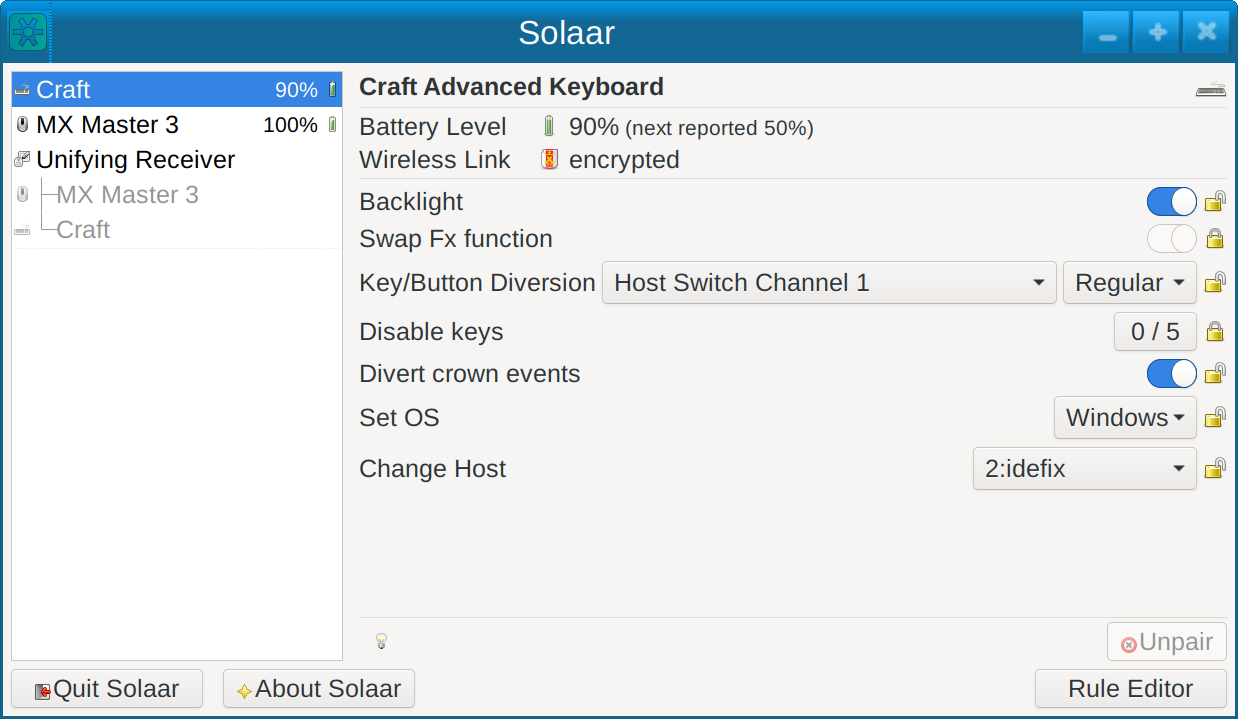
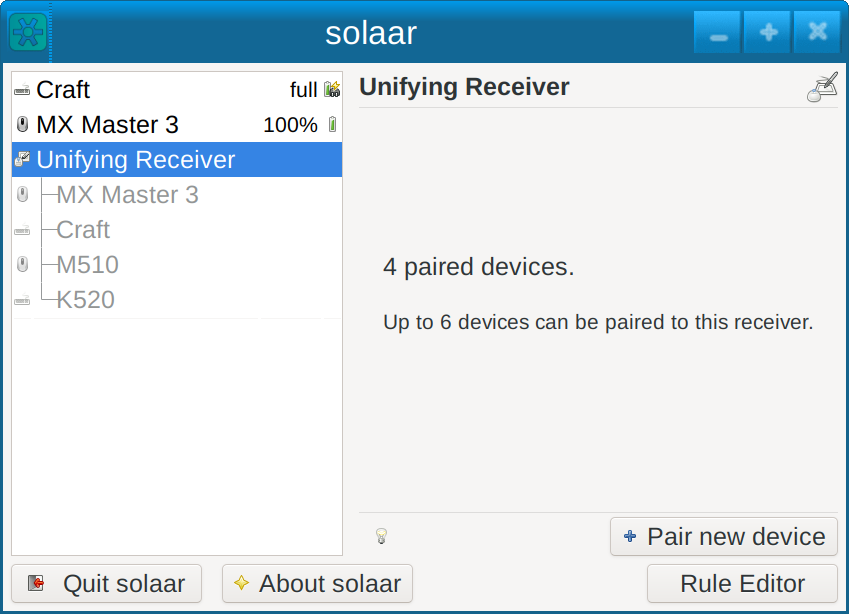
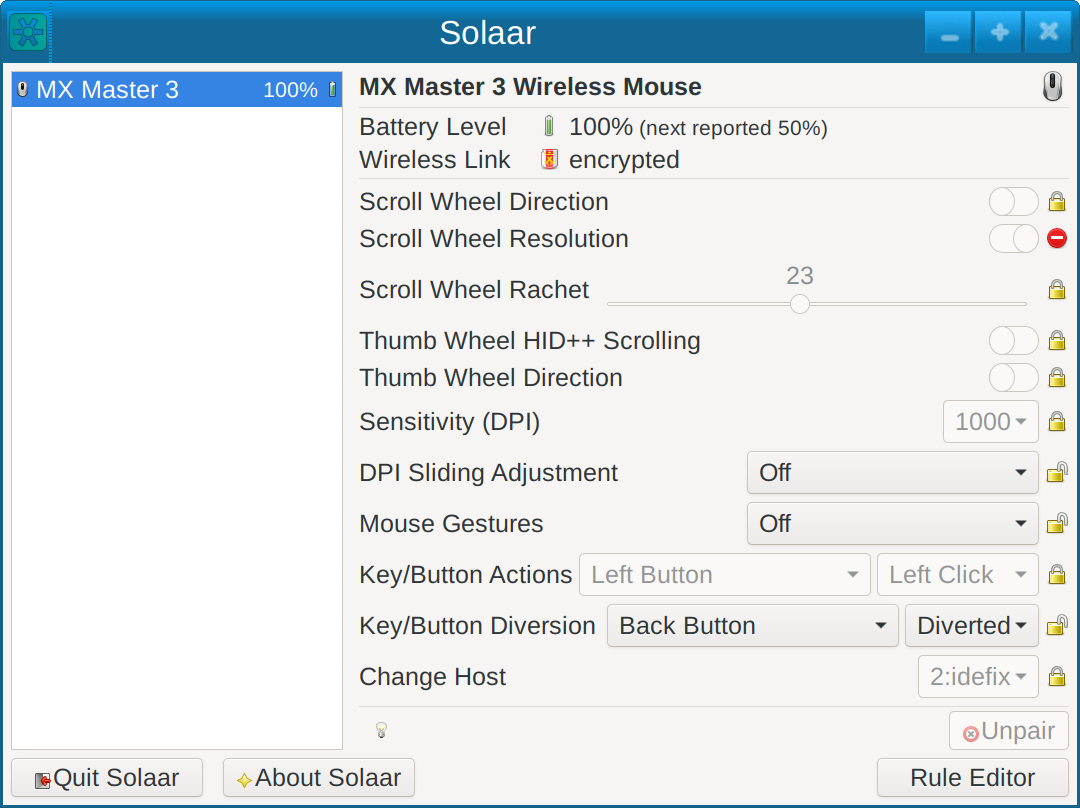
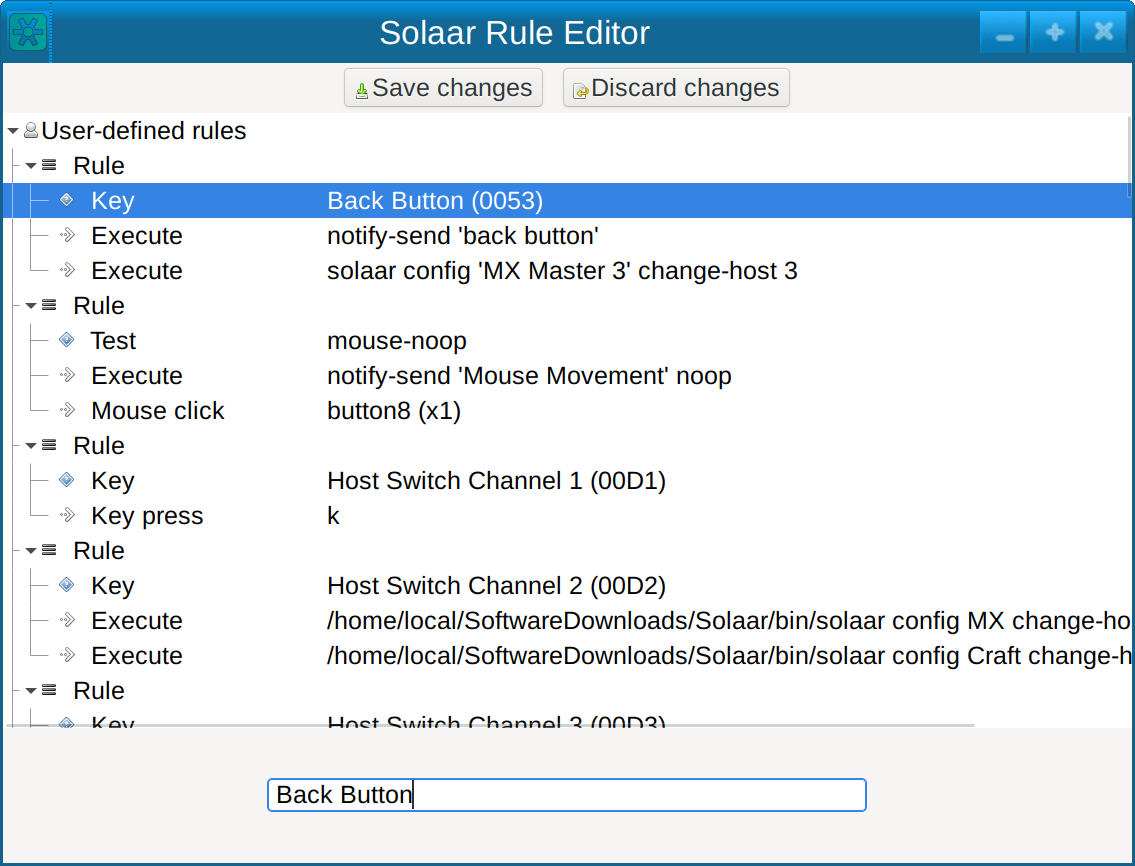
Solaar supports:
- pairing/unpairing of devices with receivers
- configuring device settings
- custom button configuration
- running rules in response to special messages from devices
For more information see the main Solaar documentation page. -
Installation Packages
Up-to-date prebuilt packages are available for some Linux distros (e.g., Fedora) in their standard repositories. If a recent version of Solaar is not available from the standard repositories for your distribution, you can try one of these packages:
- Arch solaar package in the extra repository
- Ubuntu/Kubuntu package in Solaar stable ppa
- NixOS Flake package in Svenum/Solaar-Flake
Solaar is available from some other repositories but may be several versions behind the current version:
- a Debian package, courtesy of Stephen Kitt
- a Ubuntu package is available from universe repository
- a Gentoo package, courtesy of Carlos Silva and Tim Harder
- a Mageia package, courtesy of David Geiger