 1d41ee3ab3
* test(helpers): shared skill-census helper with three explicit counts
physicalSkillFiles (symlinked dirs included, root router included),
authoredSkills (realpath-deduped, router excluded), registryEntries
(what ./setup registers: unique frontmatter names + _gstack-command).
One counting authority for the hermetic seeder, context-bill ground
truth, and the catalog-budget test — connect-chrome's dir symlink and
the root router otherwise produce three subtly different hand-rolled
censuses. Ported-wave foundation (C11).
Co-Authored-By: Claude Fable 5 <noreply@anthropic.com>
* fix(evals): stop the harness grading itself
findPreviousRun excluded only the file being written, by name, so every
suite compared against _partial-e2e.json — the current run's own
accumulator, relabelled with the current tier just before each flush.
That is why every block read '+$0.00, +0s, Stable run, no regressions.'
This harness has never been able to detect a regression, and reassuring
output that cannot fail is worse than none. In-progress runs are now
excluded by role, and a run with nothing to compare against says NO
BASELINE instead of claiming stability.
Co-Authored-By: Claude Fable 5 <noreply@anthropic.com>
(cherry picked from commit f3140b5245221fff7fb9411c7ec07c2ca11587b5)
* refactor(evals): shared partial-run predicate + finalized-run lookup
isPartialEval(data, filename) is the one place that decides what counts
as an in-progress accumulator (the _partial flag OR a _partial-prefixed
filename), and findLatestFinalizedRun(evalDir, tier) is the one place
that finds the newest real run — scanning the eval dir plus one level of
shards/<slug>/ subdirs, where the sharded paid runner points each
shard's collector. skill-budget-regression.test.ts's hand-rolled
findLatestRun (flag-blind: a flagged-but-renamed accumulator passed its
name check) is replaced by the shared helper.
Co-Authored-By: Claude Fable 5 <noreply@anthropic.com>
(cherry picked from commit b55fcf6966366fd21a8cdc46de61aab6e1b1d100)
* feat(evals): register shipped skills for hermetic PTY children
Hermetic children get a config dir that deliberately seeds no skills —
right for children that install their own, fatal for the PTY family that
TYPES /office-hours or /plan-ceo-review: claude rejects the command as
Unknown before any model turn, so the plan-family gate smokes measure
nothing. hermeticSkillsConfigDir() is a second, opt-in config dir under
the same runRoot that mirrors ./setup's registration exactly (real dir
per registry name, SKILL.md + sections/ symlinks, frontmatter-name
resolution, _gstack-command root alias), driven by the shared
skill-census so connect-chrome's dir symlink collapses the same way
setup's idempotent overwrite does.
Ported from fork commit 03c4eca2, tree walk rewritten for the upstream
layout (top-level <skill>/SKILL.md dirs, no skills/ tree). Unit tests
are new: seed shape, census parity, symlink resolution, connect-chrome
collapse, idempotence, no-API-key seed.
Co-Authored-By: Claude Fable 5 <noreply@anthropic.com>
(cherry picked from commit 93dae6107b30ce453a07c2d342b60262bba6ce0b)
* feat(evals): seedSkills opt-in for PTY slash-command tests + tripwire
Wire ClaudePtyOptions.seedSkills through launchClaudePty: when set (and
hermetic, and no per-test CLAUDE_CONFIG_DIR override), the child gets
hermeticSkillsConfigDir() so typed /skill slash commands resolve instead
of dying as Unknown command before any model turn. Opted in at the three
runPlanSkill* helpers and the four direct-launch slash-command tests
(plan-design-with-ui, plan-ceo-mode-routing, autoplan-chain,
ship-idempotency).
New static tripwire (test/pty-skill-seeding-wiring.test.ts): any test
file that sends a slash command over the PTY must route through a
runPlanSkill* helper or pass seedSkills: true — an unseeded slash-command
test spends money and measures nothing. hermetic-wiring.test.ts now
blesses the repo-tree seeding path explicitly (config dir under runRoot,
symlinks into the repo checkout, never operator ~/.claude).
The CI "Register gstack skills for PTY smoke" step keeps a keep-me note:
container cross-mount symlinks defeat the TUI scanner and HOME is not
hermeticized, so the real-file copies there must survive this change.
Co-Authored-By: Claude Fable 5 <noreply@anthropic.com>
(cherry picked from commit 63c52269daaffb833b3105ea9b4b99be6df8fec7)
* refactor(evals): single shared paid-test-set module
test/helpers/paid-test-set.ts is now the one definition of which test
files are paid (the exact globs package.json's test:gate expands).
scripts/test-free-shards.ts derives its free/paid exclusion from it
instead of a private regex list, dropping the dead
browse/test/security-review-fullstack.test.ts pattern (file no longer
exists). The sharded paid runner derives its enumeration from the same
module, so a file added to one list can no longer silently miss the
other.
Co-Authored-By: Claude Fable 5 <noreply@anthropic.com>
(cherry picked from commit a7f36479a6a1f3656452370f5883371f3cb65623)
* feat(evals): env-driven lazy eval dir + shard-aware store and tooling
Importing eval-store no longer spawns the gstack-slug subprocess: the
module-level DEFAULT_EVAL_DIR constant is now a memoized defaultEvalDir()
resolved at collector construction. Resolution order: explicit
constructor arg, then GSTACK_EVAL_DIR, then slug detection — so the
sharded paid runner can point each shard child at its own
<evalDir>/shards/<slug>/ dir with plain env, no --preload.
Runs collected under a shards/ subdir record their slug in the eval
JSON (EvalResult.shard). findPreviousRun scans one shards/<slug>/ level
and prefers same-slug priors, so each shard baselines against its own
history instead of whichever shard flushed last. eval:list,
eval:summary, and eval:compare enumerate the same one level of shard
subdirs; eval:compare's no-arg mode also stops picking an in-progress
accumulator as the after-run.
eval-watch stays flat (documented follow-up): it tails a single dir for
live progress and gains nothing from per-shard baselines until the
runner emits a merged stream.
Co-Authored-By: Claude Fable 5 <noreply@anthropic.com>
(cherry picked from commit e1f53f7d9c7fe6b65877d843f2e25bd2e2d12ffd)
* feat(evals): sharded paid tier runner
scripts/test-paid-shards.ts runs the gate/periodic tier one Bun process
per test file, with an EXTERNAL wall-clock timeout that SIGKILLs the
shard's detached process group and an aggregate that distinguishes
passed / failed / timed-out / never-started — partial execution can no
longer read as a pass. Bun's native --shard/--isolate covers none of
this: no process-group kill (hung claude/codex PTY grandchildren
survive in-process isolation), no never-started taxonomy, no per-shard
env. Each shard child gets GSTACK_EVAL_DIR=<evalDir>/shards/<slug>/
(slug = test filename sans extension, stable across runs) so shard
baselines compare against their own prior runs.
Output classification lives in scripts/test-strict-output.ts (strict
exit-code derivation, incremental fail-line classifier, child signal
forwarding) so the runner and any future strict bun-test wrapper share
one implementation. Enumeration derives from the shared paid-test-set
module; tier exclusion fires only on an explicit whole-file
EVALS_TIER === '<other>' guard.
package.json gains test:gate:sharded / test:periodic:sharded, and
eval:bg:gate / eval:bg:periodic now run the sharded scripts with detach
timeouts sized to the worst case (gate: 49 shards x 30min / 4 jobs ~
6.2h -> 25200s; periodic: 59 -> 28800s).
test/paid-shards.test.ts pins enumeration, tier classification, and the
kill-and-continue property with a real busy-loop shard.
Co-Authored-By: Claude Fable 5 <noreply@anthropic.com>
(cherry picked from commit 5e76bd5931836257f896cedfe4e93912cb759c70)
* feat(security): hash-chained egress receipt ledger (core)
Port lib/egress-receipt from the v2 fork as TypeScript: writeReceipt
(sync, fail-closed via typed EGRESS_RECEIPT_FAILED), best-effort
writeOutcome, readLedger/listReceipts/verifyLedger, GSTACK_HOME ->
GSTACK_STATE_DIR -> ~/.gstack resolution, 0600 ledger under a 0700
security dir, and an mkdir spin lock (2.5s budget) with documented
>10s-mtime stale-lock reclaim.
Changes vs the fork:
- lastRawLine tail-reads the final 4KB instead of loading the whole
ledger, so appends stay O(1) as the file grows.
- WARN-at-size: past 25MB writeReceipt emits one self-explanatory
stderr warning per process (what the ledger is, how to inspect it,
rotation TODO); verifyLedger gains a sizeWarning field. Rotation
TODO carries the chain-genesis sketch (new generation's first record
embeds the prior file's tail hash).
bin/gstack-egress-receipt is a bun script bridging shell callers:
write|outcome subcommands, exit 3 + EGRESS_RECEIPT_FAILED on stderr on
failure; --no-payload records sha256:null for git-class ops.
Co-Authored-By: Claude Fable 5 <noreply@anthropic.com>
(cherry picked from commit 619726a3d77d987a2e50151a5727b3faaaf5fc6a)
* chore(bin): delete dead brain-consumer/reader scripts
bin/gstack-brain-consumer and bin/gstack-brain-reader are byte-identical
dead scripts that POST the repo URL + a Bearer token to a /ingest-repo
endpoint gbrain removed (docs/gbrain-sync.md already documents the
removal in past tense). No live references remain; CHANGELOG mentions
are historical.
Co-Authored-By: Claude Fable 5 <noreply@anthropic.com>
(cherry picked from commit 254ddc69fc5a0270fcc973e36b6a81766d835d2d)
* feat(security): shared shell receipt helpers
bin/gstack-egress-lib.sh (sourced library, gstack-gbrain-lib.sh
precedent) provides _receipted_curl and _receipted_git: write the
egress receipt BEFORE the send via gstack-egress-receipt, hand curl the
SAME payload file via --data-binary @file so the receipt hash matches
the wire bytes exactly, then append a best-effort outcome. Per-call
fail policy: 'closed' refuses the send (return 3, problem/cause/fix
message on stderr) and 'open' warns and proceeds. Payload temp files
are consumed immediately per call — no EXIT traps, since callers like
gstack-telemetry-sync own their own EXIT trap and a sourced trap would
clobber it.
Tested end-to-end against a local Bun.serve listener: receipt sha256
equals the sha256 of the bytes the listener received, fail-closed
refusal never touches the network and carries the problem/cause/fix
stderr shape, fail-open warns and proceeds.
Co-Authored-By: Claude Fable 5 <noreply@anthropic.com>
(cherry picked from commit 6d067dce2d4c8815dec98be551763c85a3671357)
* feat(security): receipt core shell sinks
Wire the three core bash egress sinks through gstack-egress-lib.sh:
- gstack-telemetry-sync: the batch POST now writes the payload to a
temp file, receipts those exact bytes fail-closed, and hands curl the
SAME file. On refusal nothing is sent and the cursor does not
advance, so the batch stays buffered for the next run. The HTTP
status is recorded as the receipt outcome.
- gstack-update-check: fail-open receipts (warn + proceed) on the
Supabase ping POST, both VERSION curls (via a local
_receipted_version_fetch helper that skips non-network schemes), and
git ls-remote. The ping receipt is written inside the backgrounded
subshell, so it can never block the script's exit.
- gstack-brain-sync: fail-closed git-class receipts. The push receipt
is written BEFORE the commit consumes the queue, so a refused receipt
leaves the queue intact and the next run retries the whole drain
(pinned by a new queue-intact-on-refusal test, including the
problem/cause/fix refusal message shape). The retry-path fetch and
retry push carry their own fail-closed receipts.
Co-Authored-By: Claude Fable 5 <noreply@anthropic.com>
(cherry picked from commit 3c60f699acceaf1c92a218874711e05fc17dca5d)
* feat(security): receipt TS module sinks + tunnel
writeReceipt (fail-closed, sha256:null — a subprocess or SDK owns the
wire bytes) before every TS-module network-bearing operation:
- bin/gstack-gbrain-sync.ts: before the gbrain code walk that ships
repo content to the user's gbrain DB (may be remote Postgres). A
refused receipt fails the stage with status refused-egress-receipt.
- bin/gstack-memory-ingest.ts: before the gbrain batch import of
transcript pages. A refused receipt returns a system_error verdict
without spawning the import.
- browse/src/server.ts: before both ngrok.forward call sites (start-up
BROWSE_TUNNEL=1 path and the /tunnel/start endpoint). A receipt
failure lands in the existing catch that tears the tunnel listener
back down and refuses the start.
Co-Authored-By: Claude Fable 5 <noreply@anthropic.com>
(cherry picked from commit 5677d618a48fcd0ae2b068bf868781d90f809cb5)
* feat(design): receipted fetch for OpenAI calls
design/src/receipted-fetch.ts wraps every api.openai.com call: a
content-free egress receipt (sink design-openai, sha256 of the JSON
body — hash only, never the body) is written BEFORE the send. Polarity
is FAIL-OPEN: user-facing generation must not die because an audit log
hiccuped, so a receipt failure warns on stderr and the call proceeds.
Streams pass through untouched (response bodies returned as-is;
non-string request bodies receipted as sha256:null rather than drained
to hash).
All ten call sites converted with per-command payload classes:
generate, variants (injected fetchFn passes through), iterate (both
threaded and fresh paths), evolve (image + screenshot analysis), check,
diff, design-to-code, memory.
Unit-tested with injected fetch: receipt-before-send ordering, stream
passthrough, and fail-open on an unwritable ledger.
Co-Authored-By: Claude Fable 5 <noreply@anthropic.com>
(cherry picked from commit c0e5ff6639414ac2fd98e8ac3affb51401746b55)
* feat(security): receipt admin scripts + user git-ops (zero exceptions)
Wire the remaining shell egress through gstack-egress-lib.sh:
- gstack-gbrain-mcp-verify: both JSON-RPC probe POSTs (initialize +
tools/list) receipted fail-closed via payload files (hash == wire
bytes). A refused receipt lands in the NETWORK class — no send.
- gstack-security-dashboard / gstack-community-dashboard: the
community-pulse GETs receipted fail-open (read-only stats must not
break over an audit hiccup).
- gstack-gbrain-supabase-provision: api_call receipted fail-closed.
Each retry attempt hands the helper a fresh copy of the body file
(the helper consumes its payload). The receipt hashes the request
body only — the PAT never reaches the ledger or any log. Refusal
exits 8 without retrying.
- git-class sha256:null receipts, fail-open: gstack-artifacts-init
(ls-remote, initial push, fetch/pull recovery, retry push),
gstack-brain-restore (staging clone, existing-repo fetch),
gstack-session-update (self-update pull).
gstack-team-init needs no wiring: every git clone in it is inside an
echoed instruction string, not an executed command.
The lib now self-locates with shell builtins only (no dirname), so
sourcing works under the whitelist-PATH test harnesses.
Co-Authored-By: Claude Fable 5 <noreply@anthropic.com>
(cherry picked from commit b8c5e2055b21ab72878b3e46f8047782ee65a11c)
* test(security): egress wiring tripwire + polarity contract
Static-grep tripwire pinning the egress-receipt wiring (threat model in
the header: the ledger is forensic observability of ATTEMPTED egress,
not an exfiltration control):
- Per-sink assertions: every wired TS module imports egress-receipt and
calls writeReceipt; every wired shell sink sources
gstack-egress-lib.sh with each network op under a receipt;
ngrok-proximity check for server.ts; every design api.openai.com call
routes through receiptedFetch.
- Absence assertions: the dead brain-consumer/reader scripts stay
deleted (lstat, so a dangling symlink also fails).
- Polarity table pinned as data (fail-closed: brain-sync,
memory-ingest, gbrain-sync, telemetry-sync, ngrok, mcp-verify,
supabase-provision; fail-open: design-openai, update-check,
dashboards, git-class user ops, context-bill --exact) plus per-file
polarity spot-checks.
- NEW-SINK SCANNER with zero KNOWN_UNWIRED: sweeps bin/, lib/,
scripts/, design/src, browse/src for curl, absolute-URL fetch(, and
git remote ops (never local rev-parse/get-url; heredoc bodies and
message strings excluded) and requires every hit to be receipted or
in a REASONED exemption list where each entry carries its why.
Preamble-generated skill prose documented out-of-scope in the header.
- Shebang tripwire: no bin/gstack-* file may carry a node shebang.
Co-Authored-By: Claude Fable 5 <noreply@anthropic.com>
(cherry picked from commit ff69ceeafaf9c017d539b6ad77ff8f95b680b979)
* feat(cli): gstack-egress reader
bin/gstack-egress (bun) — the auditor's view of the receipts ledger:
- list: one row per receipt (what gstack ATTEMPTED to send), with
--since/--host/--sink filters and --json.
- verify: recompute the hash chain; exit 3 on tamper naming the first
broken line; prints the sizeWarning when the ledger passes 25MB.
- grants: what CAN leave, built on the upstream config keys only
(telemetry, artifacts_sync_mode, redact_repo_visibility,
redact_prepush_hook via gstack-config get) — each grant names its
file, key, and the exact revoke command.
CLI smoke tests spawn the real bin against a temp GSTACK_HOME,
including a broken-chain fixture asserting exit 3.
Co-Authored-By: Claude Fable 5 <noreply@anthropic.com>
(cherry picked from commit 9e24eca0f1069fea2ea69e7df4e9b256e93d59a3)
* feat(cli): context-bill — token bill-of-materials (stripped port)
lib/context-bill.ts, ported from the v2 fork and STRIPPED to the tiers
this repo's skills can exercise: ALWAYS-ON (per-skill frontmatter bytes
with dead-key and foreign-host-file flags), EAGER (SKILL.md + any
forced 'for every invocation' references), on-disk totals, --diff,
--budget, and --exact with the calibration table. The fork's
CONDITIONAL/TRANSITIVE/LAZY/FAST-PATH parsers understand only its
dispatcher layout and were dropped; the tier fields stay in the report
shape (empty/zero/null) so re-adding a parser is additive.
TOKEN_DIVISORS and their provenance docblock kept; --help notes
recalibration via --exact's calibration block.
Three upstream fixes over the fork:
(a) findSkillDirs treats the walk ROOT as a container — the repo root's
router SKILL.md is billed AND its children are walked (the fork
short-circuited and billed one skill); walkMd skips node_modules
and dot-directories.
(b) installed-tree layout: subdirs that are their own repo checkout
(a gstack/ clone inside ~/.claude/skills, detected by .git) are
skipped, and directory symlinks (connect-chrome) are followed with
a container-recursion cycle guard.
(c) ROUTER_KEYS widened to the upstream frontmatter contract {name,
description, version, allowed-tools, triggers, preamble-tier}.
--exact writes an egress receipt (sink context-bill-exact, host
api.anthropic.com) BEFORE any count_tokens POST; if the receipt cannot
be written the run degrades to the offline estimate with a warning —
nothing is sent unrecorded. bin/gstack-context-bill is the bun shim.
Tests: fixture-tree ledgers, the three fixes, --diff/--budget exit
codes, --exact with injected fetch (envelope subtraction, receipt
ordering, fail-open degradation), CLI smoke test, and ground truth
against THIS repo via test/helpers/skill-census.ts.
Co-Authored-By: Claude Fable 5 <noreply@anthropic.com>
(cherry picked from commit 675c19876b87ec927b555f5f64c7f93130b3de90)
* test(catalog): aggregate discovery-surface budget with ratchet protocol
Every host loads every skill's frontmatter name + description at
discovery, every session. applyCatalogTrim in scripts/gen-skill-docs.ts
shapes each description and the 160KB per-file warn covers body size,
but nothing capped the aggregate frontmatter — the catalog could grow
one reasonable-looking description at a time. This test is that
enforcement layer.
Measures the catalog via test/helpers/skill-census.ts authoredSkills
(symlink-deduped, root router counted separately as the _gstack-command
alias line item): 53 skills + router = 4,420 bytes = 1,105
token-equivalents today, asserted <= 1,150 (~4% headroom). Per-skill
sub-cap of 260 bytes (largest today: design-consultation at 229), plus
a non-empty-description check.
Failure messages are self-service ratchets: they print the new total,
the delta, and the update protocol (bump the constant AND the
derivation comment in the same commit; trim instead of grow for
existing descriptions). Parser handles folded block scalars
(description: >-) for fork parity; import-free by design so it
survives generator refactors.
Co-Authored-By: Claude Fable 5 <noreply@anthropic.com>
(cherry picked from commit c106fb36f768181b80c257e5cff1cde4f435f9c0)
* fix(browse): extension token bootstrap moves to pinned-origin POST; /health carries no token
GET /health is now liveness/status only in every mode — both token
carve-outs (headed-mode disjunct AND chrome-extension:// Origin
disjunct) are removed. Token bootstrap is POST /extension-token on the
local listener: the Origin header must be exactly
chrome-extension://<GSTACK_EXTENSION_ID> and the Host header's hostname
must parse to 127.0.0.1 or localhost (parsed via new URL, never literal
equality — Host arrives as '127.0.0.1:34567'). Wrong origin/host → 403
with no detail. The tunnel surface 404s the endpoint (not in
TUNNEL_PATHS, verified by test).
The extension ID is pinned by a new "key" field (RSA public key) in
extension/manifest.json; browse/scripts/extension-id.ts reproduces the
ID derivation (first 16 bytes of SHA-256 of the DER public key, hex
mapped 0-9a-f → a-p). The private key is not committed anywhere —
unpacked/baked-in loads only need the public key.
Extension side: background.js bootstraps and refreshes the token via
POST /extension-token (403 → disconnected state); sidepanel.js direct
connect path does the same; sidepanel-terminal.js's dead /health token
fallback (read AUTH_TOKEN/authToken keys the server never sent,
hardcoded port) is replaced with the window.gstackAuthToken path.
MIGRATION NOTE: the manifest key pins the extension ID, so existing
installs' side-panel local state (saved port, snoozes) resets once —
explained in-product via a one-time notice (flag
gstack_id_migrated_v162). After upgrading the server, restart the
browser so the old service worker stops polling for a token GET /health
no longer serves.
Co-Authored-By: Claude Fable 5 <noreply@anthropic.com>
(cherry picked from commit e9a0b6847a2d17fe6656a4686b4efd0c8380eb09)
* docs: correct stale compiled-binaries claim; file three egress/eval follow-ups
CLAUDE.md's compiled-binaries section claimed browse/dist binaries are
tracked by git and appear as modified in git status — false since
|
||
|---|---|---|
| .github | ||
| agents | ||
| autoplan | ||
| benchmark | ||
| benchmark-models | ||
| bin | ||
| browse | ||
| browser-skills/hackernews-frontpage | ||
| canary | ||
| careful | ||
| claude | ||
| codex | ||
| context-restore | ||
| context-save | ||
| contrib/add-host | ||
| cso | ||
| design | ||
| design-consultation | ||
| design-html | ||
| design-review | ||
| design-shotgun | ||
| devex-review | ||
| diagram | ||
| docs | ||
| document-generate | ||
| document-release | ||
| extension | ||
| freeze | ||
| gstack | ||
| gstack-upgrade | ||
| guard | ||
| health | ||
| hosts | ||
| investigate | ||
| ios-clean | ||
| ios-design-review | ||
| ios-fix | ||
| ios-qa | ||
| ios-sync | ||
| land-and-deploy | ||
| landing-report | ||
| learn | ||
| lib | ||
| make-pdf | ||
| model-overlays | ||
| office-hours | ||
| open-gstack-browser | ||
| openclaw | ||
| pair-agent | ||
| plan-ceo-review | ||
| plan-design-review | ||
| plan-devex-review | ||
| plan-eng-review | ||
| plan-tune | ||
| qa | ||
| qa-only | ||
| retro | ||
| review | ||
| scrape | ||
| scripts | ||
| setup-browser-cookies | ||
| setup-deploy | ||
| setup-gbrain | ||
| ship | ||
| skillify | ||
| spec | ||
| supabase | ||
| sync-gbrain | ||
| test | ||
| unfreeze | ||
| .env.example | ||
| .gitattributes | ||
| .gitignore | ||
| .gitlab-ci.yml | ||
| AGENTS.md | ||
| ARCHITECTURE.md | ||
| BROWSER.md | ||
| CHANGELOG.md | ||
| CLAUDE.md | ||
| CONTRIBUTING.md | ||
| DESIGN.md | ||
| ETHOS.md | ||
| LICENSE | ||
| README.md | ||
| SKILL.md | ||
| SKILL.md.tmpl | ||
| TODOS.md | ||
| USING_GBRAIN_WITH_GSTACK.md | ||
| VERSION | ||
| bun.lock | ||
| bunfig.toml | ||
| conductor.json | ||
| connect-chrome | ||
| package.json | ||
| setup | ||
| slop-scan.config.json | ||
| test-setup.ts | ||
README.md
gstack
"I don't think I've typed like a line of code probably since December, basically, which is an extremely large change." — Andrej Karpathy, No Priors podcast, March 2026
When I heard Karpathy say this, I wanted to find out how. How does one person ship like a team of twenty? Peter Steinberger built OpenClaw — 247K GitHub stars — essentially solo with AI agents. The revolution is here. A single builder with the right tooling can move faster than a traditional team.
I'm Garry Tan, President & CEO of Y Combinator. I've worked with thousands of startups — Coinbase, Instacart, Rippling — when they were one or two people in a garage. Before YC, I was one of the first eng/PM/designers at Palantir, cofounded Posterous (sold to Twitter), and built Bookface, YC's internal social network.
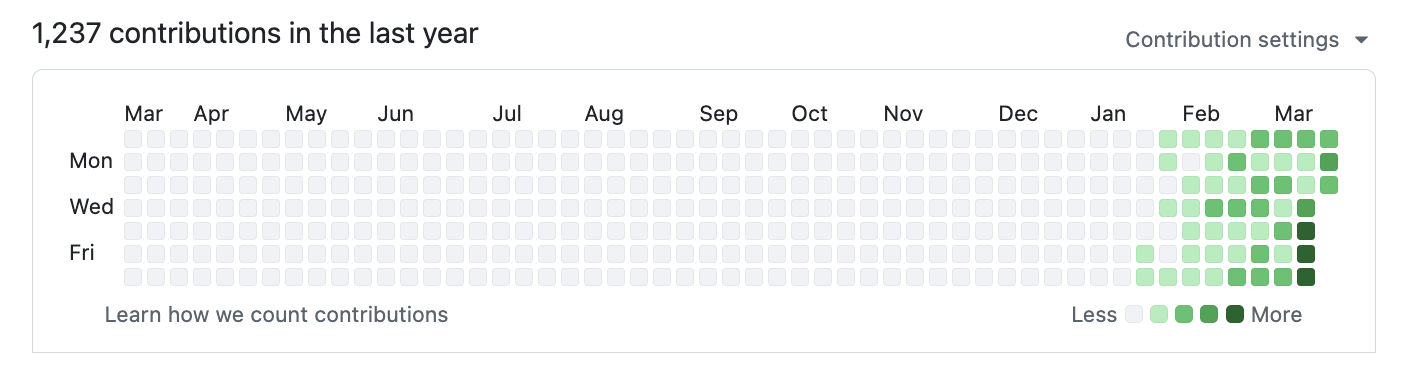
gstack is my answer. I've been building products for twenty years, and right now I'm shipping more products than I ever have. In the last 60 days: 3 production services, 40+ shipped features, part-time, while running YC full-time. On logical code change — not raw LOC, which AI inflates — my 2026 run rate is ~810× my 2013 pace (11,417 vs 14 logical lines/day). Year-to-date (through April 18), 2026 has already produced 240× the entire 2013 year. Measured across 40 public + private garrytan/* repos including Bookface, after excluding one demo repo. AI wrote most of it. The point isn't who typed it, it's what shipped.
The LOC critics aren't wrong that raw line counts inflate with AI. They are wrong that normalized-for-inflation, I'm less productive. I'm more productive, by a lot. Full methodology, caveats, and reproduction script: On the LOC Controversy.
2026 — 1,237 contributions and counting:
2013 — when I built Bookface at YC (772 contributions):
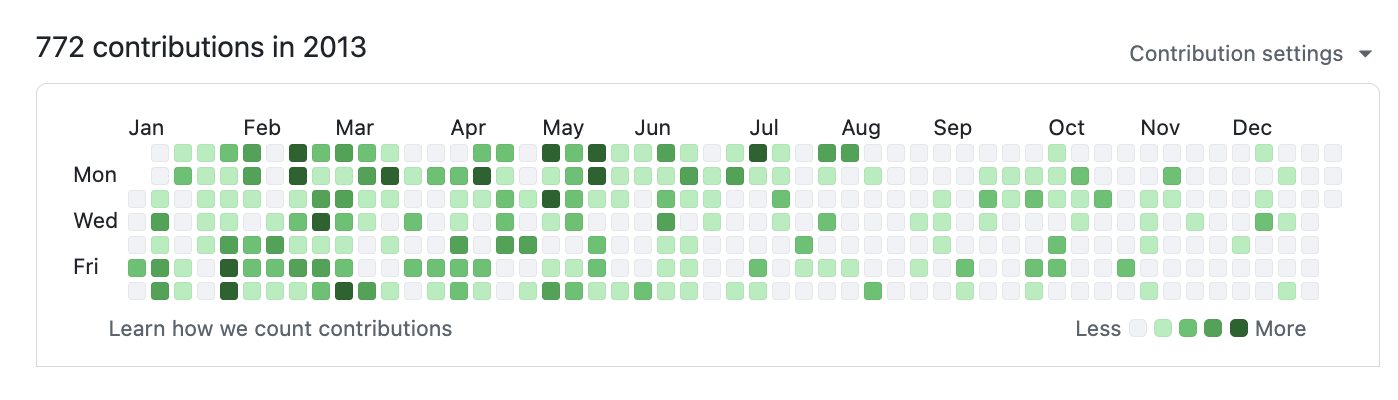
Same person. Different era. The difference is the tooling.
gstack is how I do it. It turns Claude Code into a virtual engineering team — a CEO who rethinks the product, an eng manager who locks architecture, a designer who catches AI slop, a reviewer who finds production bugs, a QA lead who opens a real browser, a security officer who runs OWASP + STRIDE audits, and a release engineer who ships the PR. Twenty-three specialists and eight power tools, all slash commands, all Markdown, all free, MIT license.
This is my open source software factory. I use it every day. I'm sharing it because these tools should be available to everyone.
Fork it. Improve it. Make it yours. And if you want to hate on free open source software — you're welcome to, but I'd rather you just try it first.
Who this is for:
- Founders and CEOs — especially technical ones who still want to ship
- First-time Claude Code users — structured roles instead of a blank prompt
- Tech leads and staff engineers — rigorous review, QA, and release automation on every PR
Quick start
- Install gstack (30 seconds — see below)
- Run
/office-hours— describe what you're building - Run
/plan-ceo-reviewon any feature idea - Run
/reviewon any branch with changes - Run
/qaon your staging URL - Stop there. You'll know if this is for you.
Install — 30 seconds
Requirements: Claude Code, Git, Bun v1.0+, Node.js (Windows only)
Step 1: Install on your machine
Open Claude Code and paste this. Claude does the rest.
Install gstack: run
git clone --single-branch --depth 1 https://github.com/garrytan/gstack.git ~/.claude/skills/gstack && cd ~/.claude/skills/gstack && ./setupthen add a "gstack" section to CLAUDE.md that says to use the /browse skill from gstack for all web browsing, never use mcp__claude-in-chrome__* tools, and lists the available skills: /office-hours, /plan-ceo-review, /plan-eng-review, /plan-design-review, /design-consultation, /design-shotgun, /design-html, /review, /ship, /land-and-deploy, /canary, /benchmark, /browse, /connect-chrome, /qa, /qa-only, /design-review, /setup-browser-cookies, /setup-deploy, /setup-gbrain, /retro, /investigate, /document-release, /document-generate, /codex, /cso, /autoplan, /plan-devex-review, /devex-review, /careful, /freeze, /guard, /unfreeze, /gstack-upgrade, /learn. Then ask the user if they also want to add gstack to the current project so teammates get it.
Step 2: Team mode — auto-update for shared repos (recommended)
From inside your repo, paste this. Switches you to team mode, bootstraps the repo so teammates get gstack automatically, and commits the change:
(cd ~/.claude/skills/gstack && ./setup --team) && ~/.claude/skills/gstack/bin/gstack-team-init required && git add .claude/ CLAUDE.md && git commit -m "require gstack for AI-assisted work"
No vendored files in your repo, no version drift, no manual upgrades. Every Claude Code session starts with a fast auto-update check (throttled to once/hour, network-failure-safe, completely silent).
Swap required for optional if you'd rather nudge teammates than block them.
OpenClaw
OpenClaw spawns Claude Code sessions via ACP, so every gstack skill just works when Claude Code has gstack installed. Paste this to your OpenClaw agent:
Install gstack: run
git clone --single-branch --depth 1 https://github.com/garrytan/gstack.git ~/.claude/skills/gstack && cd ~/.claude/skills/gstack && ./setupto install gstack for Claude Code. Then add a "Coding Tasks" section to AGENTS.md that says: when spawning Claude Code sessions for coding work, tell the session to use gstack skills. Include these examples — security audit: "Load gstack. Run /cso", code review: "Load gstack. Run /review", QA test a URL: "Load gstack. Run /qa https://...", build a feature end-to-end: "Load gstack. Run /autoplan, implement the plan, then run /ship", plan before building: "Load gstack. Run /office-hours then /autoplan. Save the plan, don't implement."
After setup, just talk to your OpenClaw agent naturally:
| You say | What happens |
|---|---|
| "Fix the typo in README" | Simple — Claude Code session, no gstack needed |
| "Run a security audit on this repo" | Spawns Claude Code with Run /cso |
| "Build me a notifications feature" | Spawns Claude Code with /autoplan → implement → /ship |
| "Help me plan the v2 API redesign" | Spawns Claude Code with /office-hours → /autoplan, saves plan |
See docs/OPENCLAW.md for advanced dispatch routing and the gstack-lite/gstack-full prompt templates.
Native OpenClaw Skills (via ClawHub)
Four methodology skills that work directly in your OpenClaw agent, no Claude Code session needed. Install from ClawHub:
clawhub install gstack-openclaw-office-hours gstack-openclaw-ceo-review gstack-openclaw-investigate gstack-openclaw-retro
| Skill | What it does |
|---|---|
gstack-openclaw-office-hours |
Product interrogation with 6 forcing questions |
gstack-openclaw-ceo-review |
Strategic challenge with 4 scope modes |
gstack-openclaw-investigate |
Root cause debugging methodology |
gstack-openclaw-retro |
Weekly engineering retrospective |
These are conversational skills. Your OpenClaw agent runs them directly via chat.
Other AI Agents
gstack works on 10 AI coding agents, not just Claude. Setup auto-detects which agents you have installed:
git clone --single-branch --depth 1 https://github.com/garrytan/gstack.git ~/gstack
cd ~/gstack && ./setup
Or target a specific agent with ./setup --host <name>:
| Agent | Flag | Skills install to |
|---|---|---|
| OpenAI Codex CLI | --host codex |
~/.codex/skills/gstack-*/ |
| OpenCode | --host opencode |
~/.config/opencode/skills/gstack-*/ |
| Cursor | --host cursor |
~/.cursor/skills/gstack-*/ |
| Factory Droid | --host factory |
~/.factory/skills/gstack-*/ |
| Slate | --host slate |
~/.slate/skills/gstack-*/ |
| Kiro | --host kiro |
~/.kiro/skills/gstack-*/ |
| Hermes | --host hermes |
~/.hermes/skills/gstack-*/ |
| GBrain (mod) | --host gbrain |
~/.gbrain/skills/gstack-*/ |
Want to add support for another agent? See docs/ADDING_A_HOST.md. It's one TypeScript config file, zero code changes.
See it work
You:    I want to build a daily briefing app for my calendar.
You:    /office-hours
Claude: [asks about the pain — specific examples, not hypotheticals]

You:    Multiple Google calendars, events with stale info, wrong locations.
        Prep takes forever and the results aren't good enough...

Claude: I'm going to push back on the framing. You said "daily briefing
        app." But what you actually described is a personal chief of
        staff AI.
        [extracts 5 capabilities you didn't realize you were describing]
        [challenges 4 premises — you agree, disagree, or adjust]
        [generates 3 implementation approaches with effort estimates]
        RECOMMENDATION: Ship the narrowest wedge tomorrow, learn from
        real usage. The full vision is a 3-month project — start with
        the daily briefing that actually works.
        [writes design doc → feeds into downstream skills automatically]

You:    /plan-ceo-review
        [reads the design doc, challenges scope, runs 10-section review]

You:    /plan-eng-review
        [ASCII diagrams for data flow, state machines, error paths]
        [test matrix, failure modes, security concerns]

You:    Approve plan. Exit plan mode.
        [writes 2,400 lines across 11 files. ~8 minutes.]

You:    /review
        [AUTO-FIXED] 2 issues. [ASK] Race condition → you approve fix.

You:    /qa https://staging.myapp.com
        [opens real browser, clicks through flows, finds and fixes a bug]

You:    /ship
        Tests: 42 → 51 (+9 new). PR: github.com/you/app/pull/42
You said "daily briefing app." The agent said "you're building a chief of staff AI" — because it listened to your pain, not your feature request. Eight commands, end to end. That is not a copilot. That is a team.
The sprint
gstack is a process, not a collection of tools. The skills run in the order a sprint runs:
Think → Plan → Build → Review → Test → Ship → Reflect
Each skill feeds into the next. /office-hours writes a design doc that /plan-ceo-review reads. /plan-eng-review writes a test plan that /qa picks up. /review catches bugs that /ship verifies are fixed. Nothing falls through the cracks because every step knows what came before it.
| Skill | Your specialist | What they do |
|---|---|---|
/office-hours |
YC Office Hours | Start here. Six forcing questions that reframe your product before you write code. Pushes back on your framing, challenges premises, generates implementation alternatives. Design doc feeds into every downstream skill. |
/plan-ceo-review |
CEO / Founder | Rethink the problem. Find the 10-star product hiding inside the request. Four modes: Expansion, Selective Expansion, Hold Scope, Reduction. |
/plan-eng-review |
Eng Manager | Lock in architecture, data flow, diagrams, edge cases, and tests. Forces hidden assumptions into the open. |
/plan-design-review |
Senior Designer | Rates each design dimension 0-10, explains what a 10 looks like, then edits the plan to get there. AI Slop detection. Interactive — one AskUserQuestion per design choice. |
/plan-devex-review |
Developer Experience Lead | Interactive DX review: explores developer personas, benchmarks against competitors' TTHW, designs your magical moment, traces friction points step by step. Three modes: DX EXPANSION, DX POLISH, DX TRIAGE. 20-45 forcing questions. |
/design-consultation |
Design Partner | Build a complete design system from scratch. Researches the landscape, proposes creative risks, generates realistic product mockups. |
/review |
Staff Engineer | Find the bugs that pass CI but blow up in production. Auto-fixes the obvious ones. Flags completeness gaps. |
/investigate |
Debugger | Systematic root-cause debugging. Iron Law: no fixes without investigation. Traces data flow, tests hypotheses, stops after 3 failed fixes. |
/design-review |
Designer Who Codes | Same audit as /plan-design-review, then fixes what it finds. Atomic commits, before/after screenshots. |
/devex-review |
DX Tester | Live developer experience audit. Actually tests your onboarding: navigates docs, tries the getting started flow, times TTHW, screenshots errors. Compares against /plan-devex-review scores — the boomerang that shows if your plan matched reality. |
/design-shotgun |
Design Explorer | "Show me options." Generates 4-6 AI mockup variants, opens a comparison board in your browser, collects your feedback, and iterates. Taste memory learns what you like. Repeat until you love something, then hand it to /design-html. |
/design-html |
Design Engineer | Turn a mockup into production HTML that actually works. Pretext computed layout: text reflows, heights adjust, layouts are dynamic. 30KB, zero deps. Detects React/Svelte/Vue. Smart API routing per design type (landing page vs dashboard vs form). The output is shippable, not a demo. |
/qa |
QA Lead | Test your app, find bugs, fix them with atomic commits, re-verify. Auto-generates regression tests for every fix. |
/qa-only |
QA Reporter | Same methodology as /qa but report only. Pure bug report without code changes. |
/pair-agent |
Multi-Agent Coordinator | Share your browser with any AI agent. One command, one paste, connected. Works with OpenClaw, Hermes, Codex, Cursor, or anything that can curl. Each agent gets its own tab. Auto-launches headed mode so you watch everything. Auto-starts ngrok tunnel for remote agents. Scoped tokens, tab isolation, rate limiting, activity attribution. |
/cso |
Chief Security Officer | OWASP Top 10 + STRIDE threat model. Zero-noise: 17 false positive exclusions, 8/10+ confidence gate, independent finding verification. Each finding includes a concrete exploit scenario. |
/ship |
Release Engineer | Sync main, run tests, audit coverage, push, open PR. Bootstraps test frameworks if you don't have one. |
/land-and-deploy |
Release Engineer | Merge the PR, wait for CI and deploy, verify production health. One command from "approved" to "verified in production." |
/canary |
SRE | Post-deploy monitoring loop. Watches for console errors, performance regressions, and page failures. |
/benchmark |
Performance Engineer | Baseline page load times, Core Web Vitals, and resource sizes. Compare before/after on every PR. |
/document-release |
Technical Writer | Update all project docs to match what you just shipped. Catches stale READMEs automatically. Builds a Diataxis coverage map (reference / how-to / tutorial / explanation) so gaps are visible in the PR body. |
/document-generate |
Documentation Author | Generate missing docs from scratch using the Diataxis framework. Researches the codebase first, then writes reference / how-to / tutorial / explanation docs that actually match the code. Invokable standalone or chained from /document-release when the coverage map finds gaps. Learn more: tutorial • how-to • why Diataxis. |
/retro |
Eng Manager | Team-aware weekly retro. Per-person breakdowns, shipping streaks, test health trends, growth opportunities. /retro global runs across all your projects and AI tools (Claude Code, Codex, Gemini). |
/browse |
QA Engineer | Give the agent eyes. Real Chromium browser, real clicks, real screenshots. ~100ms per command. /open-gstack-browser launches GStack Browser with sidebar, anti-bot stealth, and auto model routing. |
/setup-browser-cookies |
Session Manager | Import cookies from your real browser (Chrome, Arc, Brave, Edge) into the headless session. Test authenticated pages. |
/autoplan |
Review Pipeline | One command, fully reviewed plan. Runs CEO → design → eng review automatically with encoded decision principles. Surfaces only taste decisions for your approval. |
/spec |
Spec Author | Turn vague intent into a precise, executable spec in five phases (why, scope, technical with mandatory code-reading, draft, file). Codex quality gate before file (blocks below 7/10), fail-closed secret redaction, dedupe against existing issues, archive to $GSTACK_STATE_ROOT/projects/$SLUG/specs/ for team-corpus recall. --execute spawns claude -p in a fresh worktree; /ship auto-closes the source issue on merge. Plan-mode aware. |
/learn |
Memory | Manage what gstack learned across sessions. Review, search, prune, and export project-specific patterns, pitfalls, and preferences. Learnings compound across sessions so gstack gets smarter on your codebase over time. |
/make-pdf |
Publisher | Markdown in, publication-quality document out. Mermaid and excalidraw fences render as vector diagrams, fully offline. Images scale to the page and never truncate; wide diagrams get their own landscape page. --to html emits one self-contained file, --to docx a Word doc. |
/diagram |
Diagram Maker | English in, editable diagram out. Emits a triplet: mermaid source, .excalidraw you can open and edit on excalidraw.com (hand-drawn style), and rendered SVG/PNG. Zero network. Embed the source in markdown and /make-pdf renders it. |
Which review should I use?
| Building for... | Plan stage (before code) | Live audit (after shipping) |
|---|---|---|
| End users (UI, web app, mobile) | /plan-design-review |
/design-review |
| Developers (API, CLI, SDK, docs) | /plan-devex-review |
/devex-review |
| Architecture (data flow, perf, tests) | /plan-eng-review |
/review |
| All of the above | /autoplan (runs CEO → design → eng → DX, auto-detects which apply) |
— |
Power tools
| Skill | What it does |
|---|---|
/codex |
Second Opinion — independent code review from OpenAI Codex CLI. Three modes: review (pass/fail gate), adversarial challenge, and open consultation. Cross-model analysis when both /review and /codex have run. |
/careful |
Safety Guardrails — warns before destructive commands (rm -rf, DROP TABLE, force-push). Say "be careful" to activate. Override any warning. |
/freeze |
Edit Lock — restrict file edits to one directory. Prevents accidental changes outside scope while debugging. |
/guard |
Full Safety — /careful + /freeze in one command. Maximum safety for prod work. |
/unfreeze |
Unlock — remove the /freeze boundary. |
/open-gstack-browser |
GStack Browser — launch GStack Browser with sidebar, anti-bot stealth, auto model routing (Sonnet for actions, Opus for analysis), one-click cookie import, and Claude Code integration. Clean up pages, take smart screenshots, edit CSS, and pass info back to your terminal. |
/setup-deploy |
Deploy Configurator — one-time setup for /land-and-deploy. Detects your platform, production URL, and deploy commands. |
/setup-gbrain |
GBrain Onboarding — from zero to running gbrain in under 5 minutes. PGLite local, Supabase existing URL, or auto-provision a new Supabase project via Management API. MCP registration for Claude Code + per-repo trust triad (read-write/read-only/deny). Full guide. |
/sync-gbrain |
Keep Brain Current — re-index this repo's code into gbrain via gbrain sources add + gbrain sync --strategy code, refresh the ## GBrain Search Guidance block in CLAUDE.md, and auto-remove guidance when the capability check fails. --incremental (default), --full, --dry-run. Idempotent; safe to re-run. |
/gstack-upgrade |
Self-Updater — upgrade gstack to latest. Detects global vs vendored install, syncs both, shows what changed. |
/ios-qa |
iOS Live-Device QA (v1.43.0.0+) — drive a real iPhone over USB CoreDevice via an embedded StateServer in the app. Read Swift source, codegen typed @Observable accessors, run the agent loop. Optional --tailnet flag exposes the device to OpenClaw or any HTTP-capable agent on your Tailscale tailnet so remote agents can run iOS QA without ever touching the hardware. Capability-tier allowlist (observe/interact/mutate/restore), per-device session lock, audit log. |
/ios-fix, /ios-design-review, /ios-clean, /ios-sync |
iOS bug-fix loop, designer's-eye HIG audit, debug-bridge cleanup, and accessor resync. See docs/skills.md. End-to-end walkthrough: docs/howto-ios-testing-with-gstack.md. |
Standalone binaries
Beyond the slash-command skills, gstack ships standalone CLIs for workflows that don't belong inside a session:
| Command | What it does |
|---|---|
gstack-model-benchmark |
Cross-model benchmark — run the same prompt through Claude, GPT (via Codex CLI), and Gemini; compare latency, tokens, cost, and (optionally) LLM-judge quality score. Auth detected per provider, unavailable providers skip cleanly. Output as table, JSON, or markdown. --dry-run validates flags + auth without spending API calls. |
gstack-taste-update |
Design taste learning — writes approvals and rejections from /design-shotgun into a persistent per-project taste profile. Decays 5%/week. Feeds back into future variant generation so the system learns what you actually pick. |
gstack-egress |
Egress receipt auditor — every gstack-initiated off-machine send writes a tamper-evident, hash-chained receipt to ~/.gstack/security/egress.jsonl before the send. list shows what gstack attempted to send and to which host, grants shows the standing consent settings plus the exact command that revokes each, verify recomputes the hash chain and exits 3 on tamper. |
gstack-context-bill |
Token bill-of-materials — read-only, offline audit of what an installed skills tree costs in tokens: always-on frontmatter every session pays vs per-invocation SKILL.md + forced references. --diff compares two trees, --budget enforces a ceiling, --exact opts into Anthropic count_tokens (sends file text off-machine; writes an egress receipt first, degrades to the offline estimate if the receipt can't be written). |
gstack-ios-qa-daemon |
iOS QA daemon — Mac-side broker between an agent and a connected iPhone over USB CoreDevice. Loopback by default; --tailnet opens a Tailscale-facing listener with identity-gated capability tiers. Single-instance via flock on ~/.gstack/ios-qa-daemon.pid. See docs/howto-ios-testing-with-gstack.md. |
gstack-ios-qa-mint |
iOS allowlist manager — owner-grant CLI for the tailnet allowlist. grant/revoke/list against ~/.gstack/ios-qa-allowlist.json (mode 0600). Remote agents never auto-allowlist; this is the explicit-intent path. |
gstack-ios-qa-regen |
iOS bridge regenerator — deterministically installs the canonical DebugBridge package, generates typed state accessors, and records the installed gstack version. Safe to rerun after source changes or upgrades. |
Continuous checkpoint mode (opt-in, local by default)
Set gstack-config set checkpoint_mode continuous and skills auto-commit your work as you go with a WIP: prefix plus a structured [gstack-context] body (decisions, remaining work, failed approaches). Survives crashes and context switches. /context-restore reads those commits to reconstruct session state. /ship filter-squashes WIP commits before the PR (preserving non-WIP commits) so bisect stays clean. Push is opt-in via checkpoint_push=true — default is local-only so you don't trigger CI on every WIP commit.
Domain skills + raw CDP escape hatch
Two new browser primitives compound the gstack agent over time:
$B domain-skill save— agent saves a per-site note (e.g., "LinkedIn's Apply button lives in an iframe") that fires automatically next time it visits that hostname. Quarantined → active after 3 successful uses → optional cross-project promotion via$B domain-skill promote-to-global. Storage lives alongside/learn's per-project learnings file. Full reference: docs/domain-skills.md.$B cdp <Domain.method>— raw Chrome DevTools Protocol escape hatch for the rare case curated commands miss. Deny-default: methods must be explicitly added tobrowse/src/cdp-allowlist.tswith a one-line justification. Two-tier mutex serializes browser-scoped CDP calls against per-tab work. Output for data-exfil methods is wrapped in the UNTRUSTED envelope.
Want raw CDP with no rails, no allowlist, no daemon — just thin transport from agent to Chrome? browser-use/browser-harness-js is a different philosophy (agent-authored helpers vs gstack's curated commands) and a good fit if you don't want gstack's security stack. The two can coexist: gstack's
$B cdpand harness can both attach to the same Chrome via Playwright'snewCDPSession.
Deep dives with examples and philosophy for every skill →
Karpathy's four failure modes? Already covered.
Andrej Karpathy's AI coding rules (17K stars) nail four failure modes: wrong assumptions, overcomplexity, orthogonal edits, imperative over declarative. gstack's workflow skills enforce all four. /office-hours forces assumptions into the open before code is written. The Confusion Protocol stops Claude from guessing on architectural decisions. /review catches unnecessary complexity and drive-by edits. /ship transforms tasks into verifiable goals with test-first execution. If you already use Karpathy-style CLAUDE.md rules, gstack is the workflow enforcement layer that makes them stick across entire sprints, not just single prompts.
Parallel sprints
gstack works well with one sprint. It gets interesting with ten running at once.
Design is at the heart. /design-consultation builds your design system from scratch, researches what's out there, proposes creative risks, and writes DESIGN.md. But the real magic is the shotgun-to-HTML pipeline.
/design-shotgun is how you explore. You describe what you want. It generates 4-6 AI mockup variants using GPT Image. Then it opens a comparison board in your browser with all variants side by side. You pick favorites, leave feedback ("more whitespace", "bolder headline", "lose the gradient"), and it generates a new round. Repeat until you love something. Taste memory kicks in after a few rounds so it starts biasing toward what you actually like. No more describing your vision in words and hoping the AI gets it. You see options, pick the good ones, and iterate visually.
/design-html makes it real. Take that approved mockup (from /design-shotgun, a CEO plan, a design review, or just a description) and turn it into production-quality HTML/CSS. Not the kind of AI HTML that looks fine at one viewport width and breaks everywhere else. This uses Pretext for computed text layout: text actually reflows on resize, heights adjust to content, layouts are dynamic. 30KB overhead, zero dependencies. It detects your framework (React, Svelte, Vue) and outputs the right format. Smart API routing picks different Pretext patterns depending on whether it's a landing page, dashboard, form, or card layout. The output is something you'd actually ship, not a demo.
/qa was a massive unlock. It let me go from 6 to 12 parallel workers. Claude Code saying "I SEE THE ISSUE" and then actually fixing it, generating a regression test, and verifying the fix — that changed how I work. The agent has eyes now.
Smart review routing. Just like at a well-run startup: CEO doesn't have to look at infra bug fixes, design review isn't needed for backend changes. gstack tracks what reviews are run, figures out what's appropriate, and just does the smart thing. The Review Readiness Dashboard tells you where you stand before you ship.
Test everything. /ship bootstraps test frameworks from scratch if your project doesn't have one. Every /ship run produces a coverage audit. Every /qa bug fix generates a regression test. 100% test coverage is the goal — tests make vibe coding safe instead of yolo coding.
/document-release is the engineer you never had. It reads every doc file in your project, cross-references the diff, and updates everything that drifted. README, ARCHITECTURE, CONTRIBUTING, CLAUDE.md, TODOS — all kept current automatically. And now /ship auto-invokes it — docs stay current without an extra command.
Real browser mode. /open-gstack-browser launches GStack Browser, an AI-controlled Chromium with anti-bot stealth, custom branding, and the sidebar extension baked in. Sites like Google and NYTimes work without captchas. The menu bar says "GStack Browser" instead of "Chrome for Testing." Your regular Chrome stays untouched. All existing browse commands work unchanged. $B disconnect returns to headless. The browser stays alive as long as the window is open... no idle timeout killing it while you're working.
Sidebar agent — your AI browser assistant. Type natural language in the Chrome side panel and a child Claude instance executes it. "Navigate to the settings page and screenshot it." "Fill out this form with test data." "Go through every item in this list and extract the prices." The sidebar auto-routes to the right model: Sonnet for fast actions (click, navigate, screenshot) and Opus for reading and analysis. Each task gets up to 5 minutes. The sidebar agent runs in an isolated session, so it won't interfere with your main Claude Code window. One-click cookie import right from the sidebar footer.
Personal automation. The sidebar agent isn't just for dev workflows. Example: "Browse my kid's school parent portal and add all the other parents' names, phone numbers, and photos to my Google Contacts." Two ways to get authenticated: (1) log in once in the headed browser, your session persists, or (2) click the "cookies" button in the sidebar footer to import cookies from your real Chrome. Once authenticated, Claude navigates the directory, extracts the data, and creates the contacts.
Prompt injection defense. Hostile web pages try to hijack your sidebar agent. gstack ships a layered defense: a 22MB ML classifier bundled with the browser scans every page and tool output locally, a Claude Haiku transcript check votes on the full conversation shape, a random canary token in the system prompt catches session exfil attempts across text, tool args, URLs, and file writes, and a verdict combiner requires two classifiers to agree before blocking (prevents single-model false positives on Stack Overflow-style instruction pages). A shield icon in the sidebar header shows status (green/amber/red). Opt in to a 721MB DeBERTa-v3 ensemble via GSTACK_SECURITY_ENSEMBLE=deberta for 2-of-3 agreement. Emergency kill switch: GSTACK_SECURITY_OFF=1. See ARCHITECTURE.md for the full stack.
Browser handoff when the AI gets stuck. Hit a CAPTCHA, auth wall, or MFA prompt? $B handoff opens a visible Chrome at the exact same page with all your cookies and tabs intact. Solve the problem, tell Claude you're done, $B resume picks up right where it left off. The agent even suggests it automatically after 3 consecutive failures.
/pair-agent is cross-agent coordination. You're in Claude Code. You also have OpenClaw running. Or Hermes. Or Codex. You want them both looking at the same website. Type /pair-agent, pick your agent, and a GStack Browser window opens so you can watch. The skill prints a block of instructions. Paste that block into the other agent's chat. It exchanges a one-time setup key for a session token, creates its own tab, and starts browsing. You see both agents working in the same browser, each in their own tab, neither able to interfere with the other. If ngrok is installed, the tunnel starts automatically so the other agent can be on a completely different machine. Same-machine agents get a zero-friction shortcut that writes credentials directly. This is the first time AI agents from different vendors can coordinate through a shared browser with real security: scoped tokens, tab isolation, rate limiting, domain restrictions, and activity attribution.
Multi-AI second opinion. /codex gets an independent review from OpenAI's Codex CLI — a completely different AI looking at the same diff. Three modes: code review with a pass/fail gate, adversarial challenge that actively tries to break your code, and open consultation with session continuity. When both /review (Claude) and /codex (OpenAI) have reviewed the same branch, you get a cross-model analysis showing which findings overlap and which are unique to each.
Safety guardrails on demand. Say "be careful" and /careful warns before any destructive command — rm -rf, DROP TABLE, force-push, git reset --hard. /freeze locks edits to one directory while debugging so Claude can't accidentally "fix" unrelated code. /guard activates both. /investigate auto-freezes to the module being investigated.
Proactive skill suggestions. gstack notices what stage you're in — brainstorming, reviewing, debugging, testing — and suggests the right skill. Don't like it? Say "stop suggesting" and it remembers across sessions.
10-15 parallel sprints
gstack is powerful with one sprint. It is transformative with ten running at once.
Conductor runs multiple Claude Code sessions in parallel — each in its own isolated workspace. One session running /office-hours on a new idea, another doing /review on a PR, a third implementing a feature, a fourth running /qa on staging, and six more on other branches. All at the same time. I regularly run 10-15 parallel sprints — that's the practical max right now.
The sprint structure is what makes parallelism work. Without a process, ten agents is ten sources of chaos. With a process — think, plan, build, review, test, ship — each agent knows exactly what to do and when to stop. You manage them the way a CEO manages a team: check in on the decisions that matter, let the rest run.
Voice input (AquaVoice, Whisper, etc.)
gstack skills have voice-friendly trigger phrases. Say what you want naturally — "run a security check", "test the website", "do an engineering review" — and the right skill activates. You don't need to remember slash command names or acronyms.
Uninstall
Option 1: Run the uninstall script
If gstack is installed on your machine:
~/.claude/skills/gstack/bin/gstack-uninstall
This handles skills, symlinks, global state (~/.gstack/), project-local state, browse daemons, and temp files. Use --keep-state to preserve config and analytics. Use --force to skip confirmation.
Option 2: Manual removal (no local repo)
If you don't have the repo cloned (e.g. you installed via a Claude Code paste and later deleted the clone):
# 1. Stop browse daemons
pkill -f "gstack.*browse" 2>/dev/null || true

# 2. Remove per-skill directories whose SKILL.md points into gstack/
find ~/.claude/skills -mindepth 1 -maxdepth 1 -type d ! -name gstack 2>/dev/null |
while IFS= read -r dir; do
  link="$dir/SKILL.md"
  [ -L "$link" ] || continue
  target=$(readlink "$link" 2>/dev/null) || continue
  case "$target" in
    gstack/*|*/gstack/*)
      rm -f "$link"
      rmdir "$dir" 2>/dev/null || true
      ;;
  esac
done

# 3. Remove gstack
rm -rf ~/.claude/skills/gstack

# 4. Remove global state
rm -rf ~/.gstack

# 5. Remove integrations (skip any you never installed)
rm -rf ~/.codex/skills/gstack* 2>/dev/null
rm -rf ~/.factory/skills/gstack* 2>/dev/null
rm -rf ~/.kiro/skills/gstack* 2>/dev/null
rm -rf ~/.openclaw/skills/gstack* 2>/dev/null

# 6. Remove temp files
rm -f /tmp/gstack-* 2>/dev/null

# 7. Per-project cleanup (run from each project root)
rm -rf .gstack .gstack-worktrees .claude/skills/gstack 2>/dev/null
rm -rf .agents/skills/gstack* .factory/skills/gstack* 2>/dev/null
Clean up CLAUDE.md
The uninstall script does not edit CLAUDE.md. In each project where gstack was added, remove the ## gstack and ## Skill routing sections.
Playwright
~/Library/Caches/ms-playwright/ (macOS) is left in place because other tools may share it. Remove it if nothing else needs it.
Free, MIT licensed, open source. No premium tier, no waitlist.
I open sourced how I build software. You can fork it and make it your own.
We're hiring. Want to ship real products at AI-coding speed and help harden gstack? Come work at YC — ycombinator.com/software Extremely competitive salary and equity. San Francisco, Dogpatch District.
GBrain — persistent knowledge for your coding agent
GBrain is a persistent knowledge base for AI agents — think of it as the memory your agent actually keeps between sessions. GStack gives you a one-command path from zero to "it's running, my agent can call it."
/setup-gbrain
Four paths, pick one:
- Supabase, existing URL — your cloud agent already provisioned a brain; paste the Session Pooler URL, now this laptop uses the same data.
- Supabase, auto-provision — paste a Supabase Personal Access Token; the skill creates a new project, polls to healthy, fetches the pooler URL, hands it to
gbrain init. ~90 seconds end-to-end. - PGLite local — zero accounts, zero network, ~30 seconds. Isolated brain on this Mac only. Great for try-first; migrate to Supabase later with
/setup-gbrain --switch. - Remote gbrain MCP — your brain runs on another machine (Tailscale, ngrok, internal LAN) or a teammate's server; paste an MCP URL and bearer token. Optionally pair with a local PGLite for symbol-aware code search in split-engine mode. Best for cross-machine memory without standing up a local DB.
After init, the skill offers to register gbrain as an MCP server for Claude Code (claude mcp add gbrain -- gbrain serve) so gbrain search, gbrain put, etc. show up as first-class typed tools — not bash shell-outs.
Keeping the brain current. Run /sync-gbrain from any repo to re-index its code into gbrain (incremental by default, --full for a full reindex, --dry-run to preview). The skill registers the cwd as a federated source via gbrain sources add, runs gbrain sync --strategy code, and writes a ## GBrain Search Guidance block to your project's CLAUDE.md so the agent prefers gbrain search/code-def/code-refs over Grep. The block is removed automatically if the capability check fails — no stale guidance pointing at tools that aren't installed.
Per-remote trust policy. Each repo on your machine gets one of three tiers:
read-write— agent can search the brain AND write new pages back from this reporead-only— agent can search but never writes (best for multi-client consultants: search the shared brain, don't contaminate it with Client A's work while in Client B's repo)deny— no gbrain interaction at all
The skill asks once per repo. The decision is sticky across worktrees and branches of the same remote.
GStack memory sync (different feature, same private-repo infra). Optionally pushes your gstack state (learnings, CEO plans, design docs, retros, developer profile) to a private git repo so your memory follows you across machines, with a one-time privacy prompt (everything allowlisted / artifacts only / off) and a defense-in-depth secret scanner that blocks AWS keys, tokens, PEM blocks, and JWTs before they leave your machine.
gstack-artifacts-init
Running gstack in Conductor? Conductor explicitly strips ANTHROPIC_API_KEY and OPENAI_API_KEY from every workspace's process env, so paid evals and gbrain embeddings won't work out of the box. Set GSTACK_ANTHROPIC_API_KEY and GSTACK_OPENAI_API_KEY in Conductor's workspace env config instead — gstack's TS entry points promote them to canonical names at runtime. Full details and the contributor checklist for adding the import to new entry points: Conductor + GSTACK_* env vars.
Full monty — every scenario, every flag, every bin helper, every troubleshooting step: USING_GBRAIN_WITH_GSTACK.md
Other references: docs/gbrain-sync.md (sync-specific guide) • docs/gbrain-sync-errors.md (error index)
Docs
| Doc | What it covers |
|---|---|
| Skill Deep Dives | Philosophy, examples, and workflow for every skill (includes Greptile integration) |
| Diagrams & Document Formats | Mermaid/excalidraw fences in PDFs, image sizing and safety defaults, --to html|docx, /diagram triplets |
| Builder Ethos | Builder philosophy: Boil the Ocean, Search Before Building, three layers of knowledge |
| Using GBrain with GStack | Every path, flag, bin helper, and troubleshooting step for /setup-gbrain |
| GBrain Sync | Cross-machine memory setup, privacy modes, troubleshooting |
| Architecture | Design decisions and system internals |
| Browser Reference | Full command reference for /browse |
| Contributing | Dev setup, testing, contributor mode, and dev mode |
| Changelog | What's new in every version |
Privacy & Telemetry
gstack includes opt-in usage telemetry to help improve the project. Here's exactly what happens:
- Default is off. Nothing is sent anywhere unless you explicitly say yes.
- On first run, gstack asks if you want to share anonymous usage data. You can say no.
- What's sent (if you opt in): skill name, duration, success/fail, gstack version, OS. That's it.
- What's never sent: code, file paths, repo names, branch names, prompts, or any user-generated content.
- Change anytime:
gstack-config set telemetry offdisables everything instantly. - Every off-machine send is receipted. Any gstack-initiated network send — telemetry included — writes a hash-chained, tamper-evident receipt to
~/.gstack/security/egress.jsonlbefore the send; sensitive sinks refuse to send at all if the receipt can't be written. Audit withgstack-egress list, verify the chain withgstack-egress verify(exit 3 on tamper), see the standing consent settings withgstack-egress grants. The ledger records attempted sends so accidents are auditable — it's an audit trail, not a network firewall.
Data is stored in Supabase (open source Firebase alternative). The schema is in supabase/migrations/ — you can verify exactly what's collected. The Supabase publishable key in the repo is a public key (like a Firebase API key) — row-level security policies deny all direct access. Telemetry flows through validated edge functions that enforce schema checks, event type allowlists, and field length limits.
Local analytics are always available. Run gstack-analytics to see your personal usage dashboard from the local JSONL file — no remote data needed.
Troubleshooting
Skill not showing up? cd ~/.claude/skills/gstack && ./setup
/browse fails? cd ~/.claude/skills/gstack && bun install && bun run build
Stale install? Run /gstack-upgrade — or set auto_upgrade: true in ~/.gstack/config.yaml
Want shorter commands? cd ~/.claude/skills/gstack && ./setup --no-prefix — switches from /gstack-qa to /qa. Your choice is remembered for future upgrades.
Want namespaced commands? cd ~/.claude/skills/gstack && ./setup --prefix — switches from /qa to /gstack-qa. Useful if you run other skill packs alongside gstack.
Codex says "Skipped loading skill(s) due to invalid SKILL.md"? Your Codex skill descriptions are stale. Fix: cd ~/.codex/skills/gstack && git pull && ./setup --host codex — or for repo-local installs: cd "$(readlink -f .agents/skills/gstack)" && git pull && ./setup --host codex
Windows users: gstack works on Windows 11 via Git Bash or WSL. Node.js is required in addition to Bun — Bun has a known bug with Playwright's pipe transport on Windows (bun#4253). The browse server automatically falls back to Node.js. Make sure both bun and node are on your PATH.
On Windows without Developer Mode (MSYS2 / Git Bash), setup falls back to file copies instead of symlinks because ln -snf produces frozen copies that don't refresh on git pull. Re-run cd ~/.claude/skills/gstack && ./setup after every git pull so your skill files match the repo. setup prints a one-line note reminding you. Unix and WSL keep symlinks and don't need the re-run.
Claude says it can't see the skills? Make sure your project's CLAUDE.md has a gstack section. Add this:
## gstack
Use /browse from gstack for all web browsing. Never use mcp__claude-in-chrome__* tools.
Available skills: /office-hours, /plan-ceo-review, /plan-eng-review, /plan-design-review,
/design-consultation, /design-shotgun, /design-html, /review, /ship, /land-and-deploy,
/canary, /benchmark, /browse, /open-gstack-browser, /qa, /qa-only, /design-review,
/setup-browser-cookies, /setup-deploy, /setup-gbrain, /sync-gbrain, /retro, /investigate,
/document-release, /document-generate, /codex, /cso, /autoplan, /pair-agent, /careful, /freeze,
/guard, /unfreeze, /gstack-upgrade, /learn.
License
MIT. Free forever. Go build something.