## Thinking Path

> - Paperclip is the open source app people use to manage AI agents for
work.
> - The Apps subsystem gives humans and agents governed access to
external tools.
> - The current connection flow hides Apps behind an experimental gate
and repeats setup text.
> - Google sharing choices and generic MCP permissions do not use one
consistent opening model.
> - Self-hosted installs also need a safe default origin for managed
OAuth without a manual config file.
> - This pull request makes Apps available, simplifies connection setup,
and applies one governed permissions model.
> - The benefit is a shorter connection flow that works on a clean
self-hosted install.

## Linked Issues or Issue Description

**What existing behavior does this improve?**

This improves the Apps connection setup flow, managed Google connection
flow, generic MCP connection flow, navigation, and runtime origin
discovery.

**Subsystem affected**

Cross-cutting. This changes `ui/`, `server/`, `packages/shared/`,
connector documentation, and browser tests.

**Current behavior**

Apps require an experimental switch. Setup pages repeat titles and
explanatory copy. Connection names require manual input. Google
credential sharing does not always offer both personal and organization
access. Generic MCP providers do not start with the same permission
choices. Managed OAuth needs a public URL setting even when the request
already has a safe HTTPS origin.

**Proposed behavior**

Apps are available by default. Setup asks only for required permissions
and sharing choices. Paperclip creates conflict-free connection names.
Google apps and generic MCP providers use the same human and agent
access model. Managed OAuth derives a validated same-origin HTTPS URL
when no explicit public URL is set.

**Reason and benefit**

A clean self-hosted install can connect a managed Google app without
hidden setup. Humans can share a service account with their
organization. The shorter flow reduces duplicated choices and setup
errors.

**Breaking changes**

The Apps experimental switch is removed. Existing connection APIs remain
compatible. New connections can receive a numeric suffix when a name
already exists.

No duplicate or related public issue was found.

## What Changed

- Removed the Apps experimental gate and the breadcrumb that leaves the
Apps section.
- Simplified all connection setup pages and moved optional provider
requirements into one small link.
- Added consistent human and agent access choices for Google apps,
Zapier, and generic MCP connections.
- Added organization sharing to Google Workspace credentials while
keeping personal access available.
- Generated connection names automatically and resolved name conflicts
with numeric suffixes.
- Derived a validated public HTTPS origin from the request for
config-free managed OAuth.
- Updated connector contracts, tests, browser coverage, and authoring
documentation.

## Verification

- `pnpm check:token-gates`
- `pnpm -r typecheck`
- `pnpm build`
- `pnpm exec vitest run server/src/__tests__/tool-access-service.test.ts
server/src/__tests__/generic-mcp-connection.test.ts` (273 passed)
- Targeted UI/service regression suite (308 passed)
- Six targeted Playwright connection journeys on a fresh onboarding
instance (6 passed)
- Fresh-install browser proof through Tailscale HTTPS: enrolled with
Paperclip Cloud, connected managed Google Drive, and completed a real
read operation.
- [Exact-head CI
run](https://github.com/paperclipai/paperclip/actions/runs/33669760711):
all 23 matrix jobs passed, including build, typecheck, server,
serialized, canary, and all browser shards.
- Greptile 5/5 on `0ae2a859f269984ee950d0af231a5b09a06f3dfd`, with no
unresolved review threads.

## Risks

Apps are now visible to all operators. The removed experimental flag no
longer hides unfinished app definitions. Managed Google availability
still depends on the Cloud profile rollout and active instance
enrollment. Automatic conflict handling changes only the display name of
a newly conflicting connection.

> I checked [`ROADMAP.md`](ROADMAP.md). MCP Tool Gateway and Apps are
shipped. Connected Apps is planned, and this change improves the
existing shipped connection flow.

## Model Used

OpenAI Codex, GPT-5, with reasoning, browser control, tool use, and code
execution.

## Checklist

- [x] I have included a thinking path that traces from project context
to this change
- [x] I have specified the model used (with version and capability
details)
- [x] I have checked ROADMAP.md and confirmed this PR does not duplicate
planned core work
- [x] I have searched GitHub for duplicate or related PRs and linked
them above
- [x] I have either (a) linked existing issues with `Fixes: #` / `Closes
#` / `Refs #` OR (b) described the issue in-PR following the relevant
issue template
- [x] I have not referenced internal/instance-local Paperclip issues or
links (only public GitHub `#NNN` / `github.com/paperclipai/paperclip`
URLs)
- [x] My branch name describes the change (e.g. `docs/...`, `fix/...`)
and contains no internal Paperclip ticket id or instance-derived details
- [x] I have run tests locally and they pass
- [x] I have added or updated tests where applicable
- [x] I have updated relevant documentation to reflect my changes
- [x] I have considered and documented any risks above
- [x] All Paperclip CI gates are green
- [x] Greptile is 5/5 with no open P2s, recommendations, or follow-ups
- [x] I will address all Greptile and reviewer comments before
requesting merge

---------

Co-authored-by: Paperclip <noreply@paperclip.ing>
## Thinking Path

> - Paperclip is the open source app people use to manage AI agents for
work.
> - The backend now turns agent requests into durable connection
intents.
> - Operators need a clear path to inspect, configure, and finish those
requests.
> - The experience must preserve identity, agent access, and interrupted
setup state.
> - This pull request adds the connection intent setup experience across
the app UI.
> - The benefit is one guided flow from agent request to governed
connection.

## Linked Issues or Issue Description

Refs #11965

This is stack 9 of 11. It depends on stack 8 and replaces another
reviewable part of #11965.

## What Changed

- Add connection intent cards and setup flow integration.
- Add browse, connection, app detail, and sidebar experience updates.
- Preserve exact draft identity and access choices across resume and
OAuth recovery.
- Add focused UI, architecture, policy, and end-to-end coverage.
- Keep transient retained-connection lookup failures retryable instead
of misclassifying them as missing targets.
- Align the dark-mode E2E contract with the intentionally hidden
Gateways and Profiles sidebar tabs.

## Verification

- `pnpm -r typecheck`
- Focused UI result: 372 tests passed across 20 files.
- AppsConnect regression suite: 80/80 passed, including failed
connection and application lookups during retained reconnect.
- `pnpm --filter @paperclipai/ui exec vitest run
src/components/AppsSidebar.test.tsx` (1 passed)
- `pnpm check:token-gates`
- `pnpm --filter @paperclipai/db check:migrations`
- `pnpm build`

## Risks

- An interrupted OAuth flow can leave a durable draft that needs resume.
- The UI resumes the exact draft and keeps its identity and agent access
settings.
- Retained reconnect retries refetch connections and applications
together to avoid mixing partial snapshots.
- Gateways and Profiles remain route-accessible but intentionally absent
from the sidebar until their existing ship gate is lifted.
- The change does not add a database migration.

> I checked `ROADMAP.md`. This stack continues the existing app
connection work from #11965 and does not duplicate another planned item.

## Model Used

OpenAI Codex, GPT-5. The runtime model ID and context window were not
exposed. The model used reasoning, tool use, and code execution.

## Checklist

- [x] I have included a thinking path that traces from project context
to this change
- [x] I have specified the model used (with version and capability
details)
- [x] I have checked ROADMAP.md and confirmed this PR does not duplicate
planned core work
- [x] I have searched GitHub for duplicate or related PRs and linked
them above
- [x] I have linked the public source pull request with `Refs #`
- [x] I have not referenced internal or instance-local Paperclip issues
or links
- [x] My branch name describes the change and contains no internal
Paperclip ticket id or instance-derived details
- [x] I have run tests locally and they pass
- [x] I have added or updated tests where applicable
- [x] I have updated relevant documentation to reflect my changes
- [x] I have considered and documented any risks above
- [x] All Paperclip CI gates are green
- [x] Greptile is 5/5 with no open P2s, recommendations, or follow-ups
- [x] I will address all Greptile and reviewer comments before
requesting merge

---------

Co-authored-by: Paperclip <noreply@paperclip.ing>
## Thinking Path

> - Paperclip is the open source app that people use to manage AI agents
for work.
> - Operators use the settings area to control a company and its
Paperclip instance.
> - The current navigation separates related settings and uses duplicate
instance pages.
> - Company exports also do independent reads in sequence and do extra
work for previews.
> - Hardened workspace commands can differ from their saved command
after loopback binding.
> - This pull request makes these related operator workflows consistent
and faster.
> - The benefit is one clear settings area, faster exports, and stable
runtime command matching.

## Linked Issues or Issue Description

Refs #338

Related: #9834

**What existing behavior does this improve?**

This improves the company settings UI, company export preparation, and
workspace runtime command matching.

**Current behavior**

Company and instance settings use separate navigation and duplicate
pages. Export preparation reads many independent records in sequence.
Preview generation can also build an unused organization image. A
command with a forced loopback bind can fail to match its saved runtime
command.

**Proposed behavior**

Use one settings navigation and put general instance controls on the
company General page. Load independent export data with bounded
concurrency, skip unused preview image work, and load the export page
only when it is needed. Treat the loopback-bound form of a command as
the same runtime command.

**Reason and benefit**

Operators get one clear settings area. Large company exports need fewer
serialized reads. Export previews and initial UI loads do less work.
Hardened runtime services remain linked to their saved command
definitions.

**Breaking changes**

The obsolete instance General URL redirects to the unified settings
page. Access and Heartbeats remain available, and legacy bookmarks keep
their destinations. No API response shape or database schema changes.

## What Changed

- Unified company and instance settings navigation and removed duplicate
instance settings pages.
- Embedded general instance controls in the company General page and
kept access-sensitive navigation behavior.
- Preserved instance Access and Heartbeats controls in the unified
navigation and normalized old bookmarks to those destinations.
- Improved environment and access-state handling when workspace seed
requests overlap.
- Added bounded export reads, a lighter preview path, deferred export
preparation, and lazy export-page loading.
- Matched loopback-bound runtime commands to their saved command
definitions.
- Added focused shared, server, and UI regression tests.

## Verification

- `pnpm exec vitest run <18 changed test files>`: 18 files and 256 tests
passed.
- `pnpm check:token-gates`: passed all four token gates.
- `pnpm -r typecheck`: passed for all workspace projects.
- `pnpm build`: passed for all workspace projects.
- `pnpm test:run`: tests ran without a reported failure, but the runner
did not close after the server handoff tests. The process closed with
status 0 after an interrupt.
- Focused latest-head route tests: 2 files and 4 tests passed.
- GitHub latest-head checks: all completed without failure.
- Greptile: 5/5 with no unresolved review threads.

## Risks

- Medium risk: settings routes and navigation changed across several
operator roles.
- Medium risk: bounded export concurrency increases simultaneous
database reads. The limits stay below the normal pool size.
- Low risk: runtime command matching accepts only the known Tailscale
HTTPS loopback transformation.
- No migrations are included.

> For core feature work, check [`ROADMAP.md`](ROADMAP.md) first and
discuss it in `#dev` before opening the PR. Feature PRs that overlap
with planned core work may need to be redirected — check the roadmap
first. See `CONTRIBUTING.md`.

## Model Used

- OpenAI Codex with a GPT-5-family coding model. The runtime does not
expose the exact deployed model ID or context-window size. Reasoning,
tool use, and local code execution were enabled.

## Checklist

- [x] I have included a thinking path that traces from project context
to this change
- [x] I have specified the model used (with version and capability
details)
- [x] I have checked ROADMAP.md and confirmed this PR does not duplicate
planned core work
- [x] I have searched GitHub for duplicate or related PRs and linked
them above
- [x] I have either (a) linked existing issues with `Fixes: #` / `Closes
#` / `Refs #` OR (b) described the issue in-PR following the relevant
issue template
- [x] I have not referenced internal/instance-local Paperclip issues or
links (only public GitHub `#NNN` / `github.com/paperclipai/paperclip`
URLs)
- [ ] My branch name describes the change (e.g. `docs/...`, `fix/...`)
and contains no internal Paperclip ticket id or instance-derived details

Exception: This task requires the existing execution branch. The harness
does not permit a branch rename.
- [x] I have run tests locally and they pass
- [x] I have added or updated tests where applicable
- [x] I have updated relevant documentation to reflect my changes
- [x] I have considered and documented any risks above
- [x] All Paperclip CI gates are green
- [x] Greptile is 5/5 with no open P2s, recommendations, or follow-ups
- [x] I will address all Greptile and reviewer comments before
requesting merge

---------

Co-authored-by: Paperclip <noreply@paperclip.ing>
## Thinking Path

> - Paperclip is the open source app people use to manage AI agents for
work
> - Archiving a company hides it from the sidebar switcher, but
remembered last-visited paths, browser history, bookmarks, and restored
tabs keep depositing users onto its URLs long after archiving
> - Since the selection ping-pong fix (#11300) those arrivals render,
but the user is stranded inside a workspace the sidebar refuses to show
— and unarchiving had no UI anywhere, so the only way back was a
hand-typed settings URL
> - This pull request bounces cold arrivals at archived company URLs to
an active company (with a toast naming why), lets deliberate visits
stick, and adds an Unarchive action to the companies list
> - The benefit is that stale URLs stop stranding users in retired
workspaces, and archived companies become restorable from the one page
that still lists them

## Linked Issues or Issue Description

Follow-up to #11300. No existing issue for the remaining gap;
description follows the enhancement template:

**What happened?**

After #11300, opening an archived company's URL (stale tab, history,
bookmark, remembered path) renders that company's pages — but the
sidebar switcher does not list it, so the user is stranded in a
workspace they retired, and every stale URL pulls them back in.
Separately, unarchiving a company has no UI: the archive button lives in
company settings, which becomes unreachable through normal navigation
once the company is archived.

**Expected behavior**

Arriving cold at an archived company's URL lands the user in an active
workspace, with a toast explaining the redirect. Explicitly choosing the
archived company (from the companies list) still works, so its pages
remain reachable. Archived companies can be restored from the companies
list.

**Steps to reproduce**

1. Create two companies; archive one.
2. Open `/{archivedPrefix}/dashboard` directly — before: renders the
archived workspace with no sidebar presence; after: bounces to the
active company's dashboard with a toast.
3. On the companies list, open the archived company's row menu — before:
no restore action anywhere; after: Unarchive.

## What Changed

- `ui/src/lib/company-selection.ts`: `resolveArchivedCompanyBounce` —
pure policy: bounce when the URL names an archived company that is not
the current selection and an active company exists; prefer the currently
selected active company as the destination.
- `ui/src/components/Layout.tsx`: the route-sync effect applies the
bounce (toast + selection + `replace` navigation) before syncing
selection from the route.
- `ui/src/pages/Companies.tsx`: Unarchive action (`PATCH status:
"active"`) in the row menu for archived companies.
- Tests: unit cases for the bounce policy; the e2e now drives all three
behaviors (direct-load bounce with toast, re-arrival bounce, deliberate
visit sticks) on top of the existing crash regression.

## Verification

- `pnpm vitest run src/lib/company-selection.test.ts
src/context/CompanyContext.test.tsx src/pages/Companies.test.tsx` in
`ui/` — 20 tests pass.
- `npx playwright test --config tests/e2e/playwright.config.ts
archived-company-url` — passes, covering bounce, toast, and
deliberate-visit paths.
- `pnpm typecheck` in `ui/` — clean.

## Risks

Low risk. The bounce only fires for archived-company URLs when the
archived company is not already selected and an active company exists;
all-archived instances render as before. Deliberate selection from the
companies list is unaffected (selection equals the matched company, so
no bounce). Unarchive reuses the existing `PATCH /api/companies/:id`
status transition the server already supports.

## Model Used

- Claude (Anthropic), Claude Fable 5 (`claude-fable-5`), via Claude Code
CLI with extended thinking and tool use (code search, edit, test
execution, Playwright e2e).

## Checklist

- [x] I have included a thinking path that traces from project context
to this change
- [x] I have specified the model used (with version and capability
details)
- [x] I have checked ROADMAP.md and confirmed this PR does not duplicate
planned core work
- [x] I have searched GitHub for duplicate or related PRs and linked
them above
- [x] I have either (a) linked existing issues with `Fixes: #` / `Closes
#` / `Refs #` OR (b) described the issue in-PR following the relevant
issue template
- [x] I have not referenced internal/instance-local Paperclip issues or
links (only public GitHub `#NNN` / `github.com/paperclipai/paperclip`
URLs)
- [x] My branch name describes the change (e.g. `docs/...`, `fix/...`)
and contains no internal Paperclip ticket id or instance-derived details
- [x] I have run tests locally and they pass
- [x] I have added or updated tests where applicable
- [x] I have updated relevant documentation to reflect my changes
- [x] I have considered and documented any risks above
- [ ] All Paperclip CI gates are green
- [ ] Greptile is 5/5 with no open P2s, recommendations, or follow-ups
- [x] I will address all Greptile and reviewer comments before
requesting merge
## Thinking Path

> - Paperclip is the open source app people use to manage AI agents for
work.
> - The issue detail view is the main place where people read work and
guide agents.
> - The chat-style task view needs clear messages, controls, properties,
and document feedback.
> - Dense metadata and disconnected controls make active work harder to
scan.
> - This pull request refines the existing chat-style task workflow
across desktop and mobile layouts.
> - The benefit is a clearer issue thread with faster access to the
controls that guide work.

## Linked Issues or Issue Description

**What existing behavior does this improve?**

The change improves the chat-style issue detail view that was introduced
in [#10606](https://github.com/paperclipai/paperclip/pull/10606) and
expanded in
[#10707](https://github.com/paperclipai/paperclip/pull/10707).

**Current behavior**

The issue thread spreads task controls across the page. Agent-turn
metadata competes with the message content. Document annotation comments
use inline placement that limits the document reading area. The mobile
composer can overlap the bottom navigation.

**Proposed behavior**

The issue view keeps the thread focused on message content. It moves
supporting controls into the properties area, adds searchable
assignment, restores the sub-task tree, docks document comments in a
side gutter, and keeps the mobile composer clear of navigation.

**Reason and benefit**

People can scan active work faster and find task controls without
leaving the issue. The layout also gives documents and mobile
conversations more usable space.

**Breaking changes**

None. The change updates presentation and interaction behavior in the
existing issue UI.

## What Changed

- Refined task-chat message spacing, metadata, agent bubbles, and
composer alignment.
- Added searchable assignment and restored sub-task navigation in the
properties pane.
- Moved document annotation comments into a right-side gutter.
- Kept the mobile composer above the auto-hiding bottom navigation.
- Added and updated focused component tests for the changed
interactions.

## Verification

- `pnpm check:token-gates`
- `TZ=UTC pnpm --filter @paperclipai/ui exec vitest run
src/components/InlineEntitySelector.test.tsx
src/components/IssueDocumentAnnotations.test.tsx
src/components/IssueProperties.test.tsx
src/components/TaskChatThread.test.tsx src/pages/IssueDetail.test.tsx`
- The token gates report 3/3 clean.
- The focused test run passes 124 tests in 5 files.
- Visual snapshot baselines were not updated. This follows the
`doc/design/DECISION-SHEET.md` entry "Per-change snapshot verification
demoted to dormant (Jul 13 2026)."

## Risks

- The changes affect several related issue-detail layouts. A browser
review should cover desktop and mobile widths before merge.
- The monitor-row test formats time in the host timezone. The
verification command sets `TZ=UTC` to match CI.

> For core feature work, check [`ROADMAP.md`](ROADMAP.md) first and
discuss it in `#dev` before opening the PR. Feature PRs that overlap
with planned core work may need to be redirected — check the roadmap
first. See `CONTRIBUTING.md`.

## Model Used

- OpenAI Codex with GPT-5. The context-window size is not exposed in
this environment. The model used reasoning, repository tools, code
execution, and GitHub tools.

## Checklist

- [x] I have included a thinking path that traces from project context
to this change
- [x] I have specified the model used (with version and capability
details)
- [x] I have checked ROADMAP.md and confirmed this PR does not duplicate
planned core work
- [x] I have searched GitHub for duplicate or related PRs and linked
them above
- [x] I have either (a) linked existing issues with `Fixes: #` / `Closes
#` / `Refs #` OR (b) described the issue in-PR following the relevant
issue template
- [x] I have not referenced internal/instance-local Paperclip issues or
links (only public GitHub `#NNN` / `github.com/paperclipai/paperclip`
URLs)
- [x] My branch name describes the change (e.g. `docs/...`, `fix/...`)
and contains no internal Paperclip ticket id or instance-derived details
- [x] I have run tests locally and they pass
- [x] I have added or updated tests where applicable
- [x] I have updated relevant documentation to reflect my changes
- [x] I have considered and documented any risks above
- [ ] All Paperclip CI gates are green
- [ ] Greptile is 5/5 with no open P2s, recommendations, or follow-ups
- [x] I will address all Greptile and reviewer comments before
requesting merge

---------

Co-authored-by: Claude Opus 4.8 <noreply@anthropic.com>
Co-authored-by: Paperclip <noreply@paperclip.ing>
## Thinking Path

> - Paperclip is the open source app people use to manage AI agents for
work.
> - The Apps subsystem connects company tools through governed provider
connections.
> - A company can need more than one account for the same provider.
> - The current database constraint and Apps flow assume one named
connection per company.
> - New quarantined actions also need an explicit review decision before
activation.
> - This pull request supports multiple provider connections and
complete action review decisions.
> - The benefit is safer access control and a clear multi-account Apps
workflow.

## Linked Issues or Issue Description

Refs: #11040

**Subsystem affected**

Cross-cutting. This change affects the Apps UI, the tool access API, the
shared request contract, and the database schema.

**Problem or motivation**

The connection name constraint prevents a company from keeping more than
one connection for a provider. The Apps UI also reuses an existing OAuth
connection when a user asks to connect another account. Action review
can enable selected entries without recording a decision for every
quarantined action.

**Proposed solution**

Remove the company and connection name uniqueness constraint. Let users
open, count, edit, and create multiple provider connections. Require the
finish request to cover every quarantined action exactly once before the
server activates reviewed entries.

**Alternatives considered**

The UI could generate unique internal names and keep the database
constraint. This would preserve a one-connection assumption in the data
model and would make display names part of identity. The server could
also infer review decisions from enabled actions. This would not
distinguish a reviewed disabled action from an action that the user did
not review.

**Roadmap alignment**

This change extends the completed MCP Tool Gateway and Apps milestone.
It also supports the Connected Apps roadmap item. It follows the
navigation and connection management work in #11040.

## What Changed

- Remove the company-scoped connection name uniqueness index with an
ordered and idempotent migration.
- Add a reviewed action list to the finish-app contract and reject
incomplete or duplicate review decisions.
- Activate reviewed entries and keep unreviewed quarantined entries
blocked.
- Enable a completed connection and preserve the company and connection
scope in all updates.
- Show provider connection counts and open the provider setup page from
Browse.
- Let users edit existing connections or connect another account without
reusing an active OAuth connection.
- Update focused server and UI coverage for multiple connections and
action review.

## Verification

- Ran the focused Apps UI suite. All 116 tests passed in 11 files.
- Ran the focused server and CLI suite. All 276 tests passed in 3 files.
- Ran `pnpm --filter @paperclipai/db check:migrations`. The migration
safety check passed.
- Ran `pnpm -r typecheck`. All projects passed.
- Ran `pnpm build`. All projects built successfully.
- Ran `pnpm test:run`. It passed 3,735 tests and skipped 4 tests. One
worktree-safety assertion failed because the execution workspace reloads
its worktree marker. The same test passed with an isolated non-worktree
marker.
- Ran `pnpm check:token-gates`. It reports 12 existing violations in the
unchanged `PaperclipOrbit3D.tsx` file from the target branch.
- Started the six affected Playwright specifications. Chromium could not
start because the host does not provide `libatk-1.0.so.0`. The GitHub
e2e jobs will verify these specifications.
- GitHub Actions passed every final-head CI gate, including all three
e2e shards and the aggregate `e2e` and `verify` jobs.
- Greptile reviewed final commit `9af9200426` at 5/5 with zero review
threads.

## Risks

- Removing the name uniqueness index permits duplicate display names.
Stable connection IDs and UIDs remain unique within a company.
- The finish-app endpoint accepts the new review field as optional for
backward compatibility. When clients send it, the server requires a
complete decision for all quarantined actions.
- Multiple OAuth connections depend on the explicit new-connection route
flag. Focused tests cover active and draft connection reuse.
- The migration is ordered after migration 0210. Its `DROP INDEX IF
EXISTS` statement is safe to repeat.

> For core feature work, check [`ROADMAP.md`](ROADMAP.md) first and
discuss it in `#dev` before opening the PR. Feature PRs that overlap
with planned core work may need to be redirected — check the roadmap
first. See `CONTRIBUTING.md`.

## Model Used

OpenAI Codex with the `gpt-5.6-sol` model assisted this change. The
agent used repository tools, code execution, test execution, and agentic
reasoning. The Codex runtime manages the context window.

## Checklist

- [x] I have included a thinking path that traces from project context
to this change
- [x] I have specified the model used (with version and capability
details)
- [x] I have checked ROADMAP.md and confirmed this PR does not duplicate
planned core work
- [x] I have searched GitHub for duplicate or related PRs and linked
them above
- [x] I have either (a) linked existing issues with `Fixes: #` / `Closes
#` / `Refs #` OR (b) described the issue in-PR following the relevant
issue template
- [x] I have not referenced internal/instance-local Paperclip issues or
links (only public GitHub `#NNN` / `github.com/paperclipai/paperclip`
URLs)
- [x] My branch name describes the change (e.g. `docs/...`, `fix/...`)
and contains no internal Paperclip ticket id or instance-derived details
- [x] I have run tests locally and they pass
- [x] I have added or updated tests where applicable
- [x] I have updated relevant documentation to reflect my changes
- [x] I have considered and documented any risks above
- [x] All Paperclip CI gates are green
- [x] Greptile is 5/5 with no open P2s, recommendations, or follow-ups
- [x] I will address all Greptile and reviewer comments before
requesting merge

---------

Co-authored-by: Paperclip <noreply@paperclip.ing>
## Thinking Path

> - Paperclip is the open source app people use to manage AI agents for
work.
> - Operators use the same board application in self-hosted and
Paperclip Cloud deployments.
> - A Cloud tenant contains one company, so an in-app company switch
does not change the active Cloud stack.
> - Cloud operators need the sidebar and company surfaces to use the
signed-in user's stack portfolio.
> - The server must derive Cloud identity and links from trusted
instance context instead of client input.
> - This pull request adds canonical Cloud context, a trusted stack
portfolio proxy, and Cloud-aware navigation.
> - The benefit is consistent stack switching on Cloud while self-hosted
company behavior stays unchanged.

## Linked Issues or Issue Description

**Subsystem affected**

Cross-cutting: server REST routes and the React board UI.

**Problem or motivation**

A Cloud-managed instance contains one company. The existing company
switcher could only switch records inside that tenant. It could not move
the operator to another Cloud stack. The existing header also gave long
organization names too little width.

**Proposed solution**

Expose a canonical public Cloud context in health data. Add a trusted
server proxy for the current user's stack portfolio. Use that data in
the board UI to switch stacks with top-level navigation. Keep the
existing company behavior on self-hosted instances. Move search into the
navigation and keep long organization names inside the sidebar panel.

**Alternatives considered**

An in-app `/stacks` route was rejected because Cloud tenant hosts
reserve that path and stack selection must wake or authenticate another
tenant. Client-supplied user identity was rejected because the server
can derive the trusted Cloud actor.

**Roadmap alignment**

This change advances the Cloud deployments milestone. It keeps the
product local-first and Cloud-ready without changing the self-hosted
mental model.

## What Changed

- Added canonical Cloud instance context and public health metadata.
- Added a Cloud-only stack portfolio proxy with trusted actor forwarding
and per-user caching.
- Prevented normal company creation on Cloud-managed instances.
- Switched the sidebar and Companies page from company actions to stack
actions on Cloud.
- Added full-page stack navigation and Cloud create-stack links.
- Moved search into the sidebar navigation so the organization name
keeps more width.
- Added truncation and hover recovery for long organization and stack
names.
- Added server and UI regression coverage for Cloud and self-hosted
behavior.
- Updated the implementation specification for the Cloud contracts.

## Verification

- `node scripts/check-token-gates.mjs` passed. All three token gates are
clean.
- `pnpm --dir server exec vitest run src/__tests__/health.test.ts
src/__tests__/cloud-instance.test.ts src/__tests__/cloud-routes.test.ts
src/__tests__/company-cloud-floor.test.ts
src/__tests__/company-portability-routes.test.ts` passed: 5 files and 66
tests.
- `pnpm --dir ui exec vitest run
src/components/SidebarCompanyMenu.test.tsx` passed: 1 file and 11 tests.
- Pre-PR QA report `7da87ca7` passed all 8 acceptance criteria with real
HTTP route factories and real Chromium screenshots in Cloud and
self-hosted modes.
- Security reviews passed for the canonical Cloud context and stack
portfolio proxy.

## Risks

- Cloud stack switching depends on the configured Cloud application and
tenant portfolio URLs.
- The new health `cloud` block is public by design, but it contains only
canonical public instance metadata.
- The stack proxy fails closed on self-hosted instances and derives the
user identity from the trusted actor.
- Self-hosted navigation and company creation retain their existing
paths and behavior.

> For core feature work, check [`ROADMAP.md`](ROADMAP.md) first and
discuss it in `#dev` before opening the PR. Feature PRs that overlap
with planned core work may need to be redirected — check the roadmap
first. See `CONTRIBUTING.md`.

## Model Used

- OpenAI Codex, model `gpt-5`. The run used reasoning, repository tools,
shell execution, and GitHub integration. The deployment did not expose
its context-window size.

## Checklist

- [x] I have included a thinking path that traces from project context
to this change
- [x] I have specified the model used (with version and capability
details)
- [x] I have checked ROADMAP.md and confirmed this PR does not duplicate
planned core work
- [x] I have searched GitHub for duplicate or related PRs and linked
them above
- [x] I have either (a) linked existing issues with `Fixes: #` / `Closes
#` / `Refs #` OR (b) described the issue in-PR following the relevant
issue template
- [x] I have not referenced internal/instance-local Paperclip issues or
links (only public GitHub `#NNN` / `github.com/paperclipai/paperclip`
URLs)
- [x] My branch name describes the change (e.g. `docs/...`, `fix/...`)
and contains no internal Paperclip ticket id or instance-derived details
- [x] I have run tests locally and they pass
- [x] I have added or updated tests where applicable
- [x] I have updated relevant documentation to reflect my changes
- [x] I have considered and documented any risks above
- [x] All Paperclip CI gates are green
- [x] Greptile is 5/5 with no open P2s, recommendations, or follow-ups
- [x] I will address all Greptile and reviewer comments before
requesting merge

---------

Co-authored-by: Paperclip <noreply@paperclip.ing>
## Thinking Path
> - Paperclip is the open source app people use to manage AI agents for
work
> - Governed MCP access spans contracts, runtime enforcement, adapters,
UI surfaces, and operator verification
> - The parity reference PR #9534 is too large for effective automated
or human review
> - The feature therefore needs a linear stack whose individual diffs
stay below the 100-file review limit
> - This pull request is split 7/8 and focuses on Apps/Gateways UI and
feature-flagged activation
> - The benefit is a standalone, testable review boundary while
preserving byte-for-byte parity at the top of the stack
## Linked Issues or Issue Description
- Related parity reference: #9534
- Problem: The standalone UI foundation needs feature-flagged routes,
navigation, app detail flows, gateways, Storybook scenarios, and QA
configuration.
- Proposed solution: Adds Apps/Gateways pages and components,
navigation/route activation, remaining page integrations, Storybook
stories, and QA Vite configuration.
- Alternatives considered: keeping #9534 as one 403-file review, or
rewriting the feature to manufacture seams; both were rejected in favor
of path extraction plus compile-driven boundary moves.
- Roadmap alignment: this advances the existing governed MCP/tool-access
work already represented by #9534; it does not introduce a separate
roadmap initiative.
- Stack position: base branch is
`pap10341-split/06-ui-tools-foundation`.
- Merge policy: merge bottom-up, in order, only after the complete
eight-PR stack has been reviewed and the top-of-stack parity gate
remains empty.
- Requested review: UXDesigner sanity pass on Apps/Gateways flows and
flag-off behavior; Greptile on every PR.
## What Changed
- Adds Apps/Gateways pages and components, navigation/route activation,
remaining page integrations, Storybook stories, and QA Vite
configuration.
- Keeps this PR below 100 changed files and independently typecheckable.
- Preserves the final tree from #9534 when combined with the other seven
stack levels.
## Verification
- `pnpm typecheck`
- `pnpm check:token-gates` — all gates clean
- Focused UI Vitest run with `NODE_ENV=test` — 17 files, 147 tests
passed
## Risks
- Navigation or flag regressions could expose incomplete experiences;
activation remains controlled by existing experimental settings.
- Stack risk: merging out of order can expose incomplete layers;
mitigate by following the documented bottom-up merge policy.
- Parity risk: later edits to an intermediate branch can drift from
#9534; mitigate by re-running the empty top-of-stack diff before merge.
> For core feature work, check [`ROADMAP.md`](ROADMAP.md) first and
discuss it in `#dev` before opening the PR. Feature PRs that overlap
with planned core work may need to be redirected — check the roadmap
first. See `CONTRIBUTING.md`.
## Model Used
- OpenAI Codex, exact model ID `gpt-5.4`; runtime-managed context
window; medium reasoning with repository, shell, Git, GitHub CLI, and
code-execution tools enabled.
## Checklist
- [x] I have included a thinking path that traces from project context
to this change
- [x] I have specified the model used (with version and capability
details)
- [x] I have checked ROADMAP.md and confirmed this PR does not duplicate
planned core work
- [x] I have searched GitHub for duplicate or related PRs and linked
them above
- [x] I have either (a) linked existing issues with `Fixes: #` / `Closes
#` / `Refs #` OR (b) described the issue in-PR following the relevant
issue template
- [x] Internal references are omitted except the execution-plan link
explicitly required for this coordinated split stack
- [x] My branch name describes the change and contains no internal
Paperclip ticket id or instance-derived details
- [x] I have run tests locally and they pass
- [x] I have added or updated tests where applicable
- [x] I have updated relevant documentation to reflect my changes
- [x] I have considered and documented any risks above
- [ ] All Paperclip CI gates are green
- [ ] Greptile is 5/5 with no open P2s, recommendations, or follow-ups
- [x] I will address all Greptile and reviewer comments before
requesting merge
## Stack Coordination
- Internal execution plan:
[PAP-13874](/PAP/issues/PAP-13874#document-plan)
- Parity reference: #9534
- Stack: #9556 → #9557 → #9558 → #9559 → #9560 → #9561 → #9562 → #9563
- Merge bottom-up only after full-stack review and an empty parity diff
at #9563.
## UI Evidence
QA captured these from the live Garden MCP split stack at 1440px and
verified clean rendering:
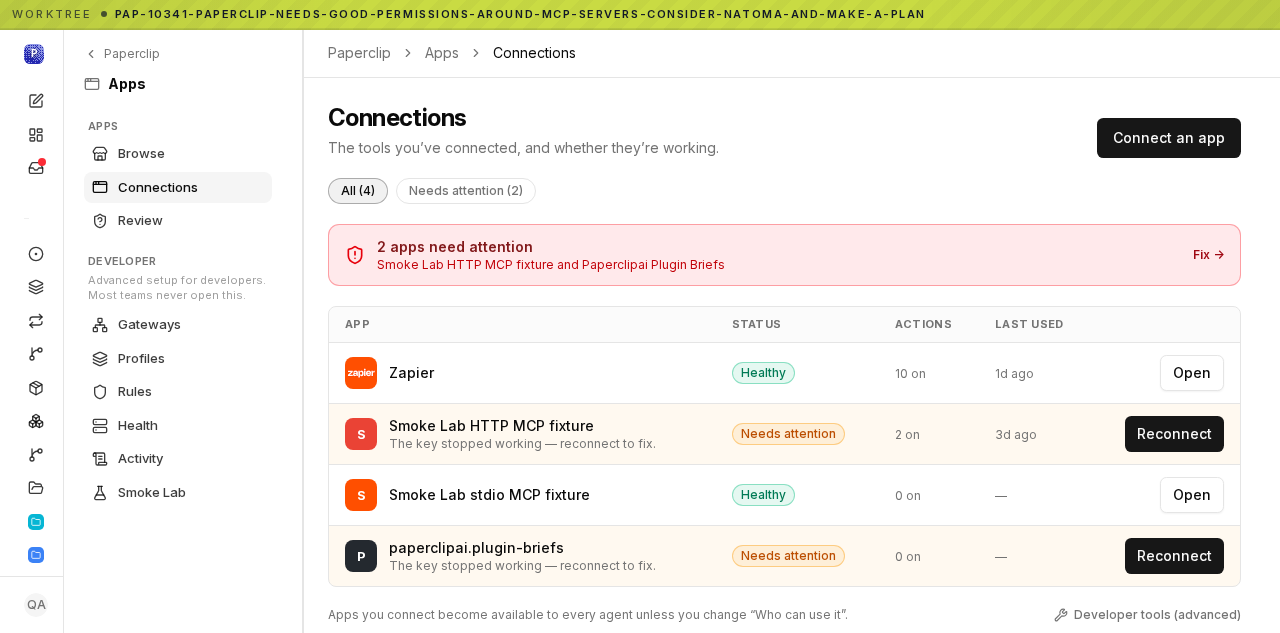
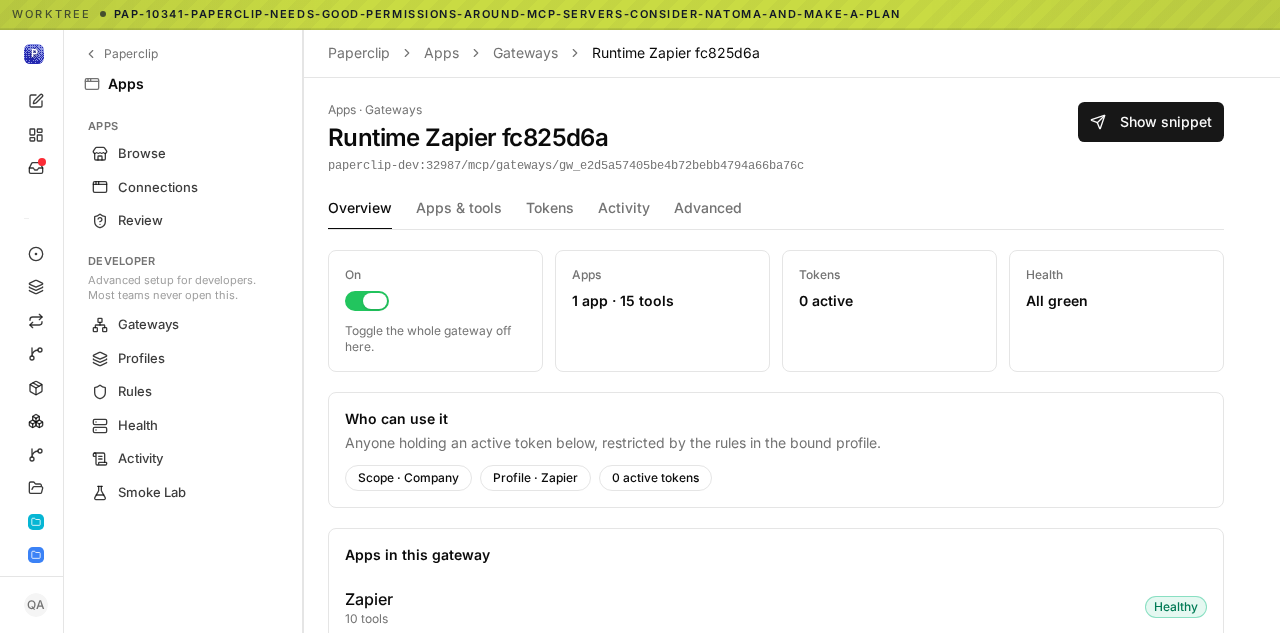
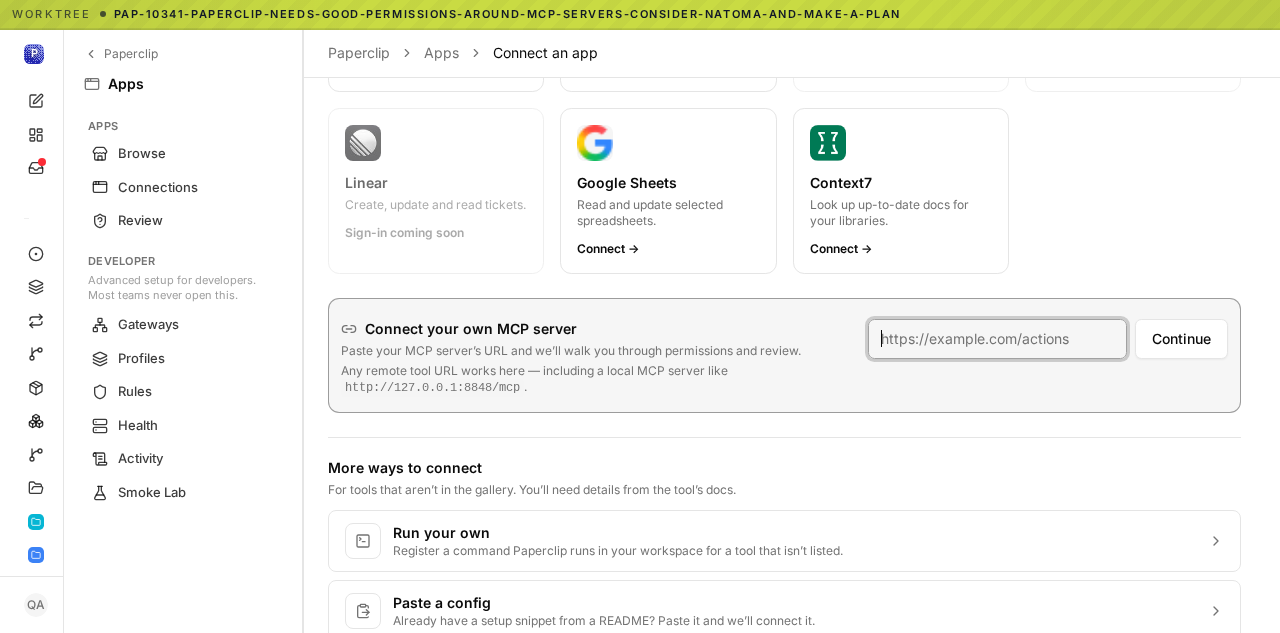
---------
Co-authored-by: Paperclip <noreply@paperclip.ing>
## Thinking Path

> - Paperclip is the open source control plane people use to manage
AI-agent companies
> - Operators need to identify the exact build running from the
persistent account menu
> - Formal releases already have a concise public version, but source
builds include a long derived version string
> - The derived version identifies a commit but does not expose the
source branch or a direct path to inspect the code
> - Server Git metadata is auth-sensitive, so the UI must also refresh
it when the current session changes
> - This pull request shows linked branch and commit metadata for source
builds while preserving `v<version>` for formal releases
> - The benefit is faster build diagnosis with correct metadata across
sign-in and sign-out transitions

## Linked Issues or Issue Description

### Pre-submission checklist

- [x] I searched existing open and closed issues and found no duplicate
implementing this exact account-menu behavior.
- [x] The behavior reproduces on `master`.
- [x] The behavior originates in Paperclip's core UI, not an adapter,
provider, or local configuration.

### What happened?

Source builds displayed the full derived version, such as
`2026.626.0+58.git.518fc71ce`, without linking the operator to the
corresponding source branch or commit.

### Expected behavior

Source builds should show the concise branch and short commit SHA with
links to GitHub, while formal releases should continue showing their
public version. Auth transitions should refresh the health metadata that
supplies those Git details.

### Steps to reproduce

1. Run Paperclip from a commit after a release tag.
2. Open the account menu.
3. Inspect the build label beneath the user identity.
4. Sign in or out and reopen the menu.

### Paperclip version or commit

Any source build whose server version uses the
`<version>+<count>.git.<sha>[.dirty]` format.

### Deployment mode

Local dev (`pnpm dev`) or authenticated deployments.

### Installation method

Built from source.

## What Changed

- Detect source-derived version strings and render the source branch
plus seven-character commit SHA in `SidebarAccountMenu`.
- Link source branches and commits to the canonical
`paperclipai/paperclip` GitHub repository.
- Extend server Git metadata with the full SHA and expose it through
health/OpenAPI contracts.
- Refresh auth-sensitive health metadata after sign-in and every
sign-out entry point.
- Preserve the existing `v<version>` label for formal releases and add
focused regression coverage.

## Verification

- `pnpm --filter @paperclipai/ui exec vitest run src/pages/Auth.test.tsx
src/components/SidebarAccountMenu.test.tsx
src/components/SidebarServerInfo.test.tsx`
- `pnpm --filter @paperclipai/server exec vitest run
src/__tests__/health.test.ts src/__tests__/server-info.test.ts`
- `pnpm --filter @paperclipai/ui typecheck`
- `pnpm check:token-gates`
- `git diff --check public/master...HEAD`

## Risks

- Low risk: formal release rendering retains the existing fallback
behavior when the source-version pattern does not match.
- Source links assume the build came from the canonical public
repository; fork-only branches or commits may not resolve there.
- Health metadata is invalidated after auth transitions, adding one
bounded refetch so the displayed Git details match the new session.

> For core feature work, check [`ROADMAP.md`](ROADMAP.md) first and
discuss it in `#dev` before opening the PR. Feature PRs that overlap
with planned core work may need to be redirected — check the roadmap
first. See `CONTRIBUTING.md`.

## Model Used

- OpenAI Codex using GPT-5.4 with medium reasoning, repository/tool
access, shell execution, and code editing; context-window size was not
exposed by the runtime.

## Checklist

- [x] I have included a thinking path that traces from project context
to this change
- [x] I have specified the model used (with version and capability
details)
- [x] I have checked ROADMAP.md and confirmed this PR does not duplicate
planned core work
- [x] I have searched GitHub for duplicate or related PRs and linked
them above
- [x] I have either (a) linked existing issues with `Fixes: #` / `Closes
#` / `Refs #` OR (b) described the issue in-PR following the relevant
issue template
- [x] I have not referenced internal/instance-local Paperclip issues or
links (only public GitHub `#NNN` / `github.com/paperclipai/paperclip`
URLs)
- [x] My branch name describes the change (e.g. `docs/...`, `fix/...`)
and contains no internal Paperclip ticket id or instance-derived details
- [x] I have run tests locally and they pass
- [x] I have added or updated tests where applicable
- [x] I have updated relevant documentation to reflect my changes
- [x] I have considered and documented any risks above
- [x] All Paperclip CI gates are green
- [x] Greptile is 5/5 with no open P2s, recommendations, or follow-ups
- [x] I will address all Greptile and reviewer comments before
requesting merge

---------

Co-authored-by: Paperclip <noreply@paperclip.ing>
## Thinking Path

> - Paperclip is the open source app people use to manage AI agents for
work.
> - The Skills Manager gives operators a reusable skill layer, but
iteration still required manual edits, ad hoc prompts, and indirect run
inspection.
> - Skill authors need a focused workflow for editing skill files,
saving representative test inputs, and running those inputs through an
agent without exposing harness tasks as normal company work.
> - The backend therefore needs durable test inputs, reusable run
templates, hidden harness issues, scoped run execution, retention
metadata, and read-containment rules around hidden work.
> - The frontend needs a three-pane Studio that keeps skill files, saved
inputs/templates, and run output/history visible together while
preserving the existing design system and token rules.
> - This pull request ships that Skill Studio surface end to end:
database migrations, shared contracts, server APIs/services, hidden
harness execution behavior, UI routes/components, and focused tests.
> - The benefit is faster and safer skill iteration, with inspectable
outputs and fewer ways for internal harness work to leak into normal
task lists, costs, or adjacent read APIs.

## Linked Issues or Issue Description

No public GitHub issue exists for this feature. Feature request summary:

- Problem: Skill authors need to edit and test company skills in one
place instead of switching between the skill detail page, task creation,
run output, and manual prompt history.
- Proposed solution: Add a Skill Studio workbench with saved inputs,
reusable templates, hidden sandboxed test runs, live run status, output
inspection, run history, rerun/delete controls, and frontmatter-aware
editing.
- Expected users: Paperclip operators and agent-company maintainers who
create, fork, import, and tune skills.
- Related public PRs: Supersedes #9205, which was replaced so the public
PR branch name follows contributor policy.
- Duplicate search: searched public GitHub issues and PRs for "Skill
Studio"; no other active public issue or PR directly covers this
feature.

## What Changed

- Added database migrations for Skill Studio test inputs, test runs,
test run retention, and reusable run templates.
- Added shared Skill Studio types, validators, route helpers,
frontmatter utilities, and status handling.
- Added server services and routes for saved inputs, test runs,
templates, reruns, terminal-run deletion, hidden harness issue
execution, and run-detail hydration.
- Strengthened hidden-issue read containment across issue-adjacent
routes and cost rollups used by skill test harness work.
- Added the Skill Studio UI with skill file editing, frontmatter
editing, saved inputs, templates, run creation/cancel/rerun/delete
flows, output rendering, history, route support, and responsive pane
behavior.
- Added focused backend, shared, and UI tests for the new APIs, routing
logic, editor/run behavior, hidden-issue containment, and migration
safety.
- Rebased onto current `master`, removed the generated lockfile diff
from the PR, and verified no workflow files are changed.

## Verification

- [x] `pnpm --filter @paperclipai/db check:migrations`
- [x] `pnpm check:token-gates`
- [x] `pnpm exec vitest run
server/src/__tests__/company-skills-service.test.ts
server/src/__tests__/company-skills-routes.test.ts
server/src/__tests__/company-skill-test-runs-service.test.ts
ui/src/lib/skill-studio.test.ts ui/src/pages/SkillStudio.test.tsx` — 5
files, 132 tests passed
- [x] Greptile review on the latest PR head
- [x] GitHub PR checks on the latest PR head

## Risks

- Medium risk because this is a broad feature touching database schema,
server orchestration, issue visibility, and a large UI surface.
- Hidden harness issue containment is security-sensitive; this PR
includes regression coverage for adjacent read paths and cost rollups.
- The new migrations are additive and use idempotent guards where
applicable, but deployed databases that previously tested draft
migration numbers should still be checked carefully.
- The UI depends on a new resizable panels package in `ui/package.json`;
the lockfile is intentionally left to repository automation.

> For core feature work, check [`ROADMAP.md`](ROADMAP.md) first and
discuss it in `#dev` before opening the PR. Feature PRs that overlap
with planned core work may need to be redirected — check the roadmap
first. See `CONTRIBUTING.md`.

## Model Used

OpenAI Codex, GPT-5 coding agent with shell, git, and GitHub CLI tool
use. Earlier feature commits include assistance from other Paperclip
coding agents; this PR preparation, rebase, cleanup commit, and PR body
were completed by OpenAI Codex in a Paperclip worktree.

## Checklist

- [x] I have included a thinking path that traces from project context
to this change
- [x] I have specified the model used (with version and capability
details)
- [x] I have checked ROADMAP.md and confirmed this PR does not duplicate
planned core work
- [x] I have searched GitHub for duplicate or related PRs and linked
them above
- [x] I have either (a) linked existing issues with `Fixes: #` / `Closes
#` / `Refs #` OR (b) described the issue in-PR following the relevant
issue template
- [x] I have not referenced internal/instance-local Paperclip issues or
links (only public GitHub `#NNN` / `github.com/paperclipai/paperclip`
URLs)
- [x] My branch name describes the change (e.g. `docs/...`, `fix/...`)
and contains no internal Paperclip ticket id or instance-derived details
- [x] I have run tests locally and they pass
- [x] I have added or updated tests where applicable
- [x] I have updated relevant documentation to reflect my changes
- [x] I have considered and documented any risks above
- [x] All Paperclip CI gates are green
- [x] Greptile is 5/5 with no open P2s, recommendations, or follow-ups
- [x] I will address all Greptile and reviewer comments before
requesting merge

---------

Co-authored-by: Paperclip <noreply@paperclip.ing>
Co-authored-by: Claude Opus 4.8 <noreply@anthropic.com>
## Thinking Path

> - Paperclip is the open source app people use to manage AI agents for
work
> - Its UI is governed by a design system (`DESIGN.md` + the token layer
in `ui/src/index.css`, merged in #9134) whose first principle is "one
way to say each thing" — one Card, one Badge, one nav row
> - After the token extraction landed, ~35 files still hand-rolled card
containers, ~45 files hand-rolled pill spans, the sidebar agents section
duplicated the nav-row chrome, and the inbox and tasks lists rendered
the same task rows two subtly different ways
> - Each divergence is a place where a future design change (radius,
hover language, status vocabulary) silently misses surfaces, defeating
the "edit tokens + run checks" model the design system exists for
> - This pull request converges those surfaces onto the shared
primitives, codifies the radius scale as the modern multiplicative
shadcn ladder, and unifies the row/hover/tree-guide language across the
inbox and tasks lists — every visible delta was human-reviewed
screen-by-screen against a live instance across nine feedback rounds
> - The benefit is that the app's look is now steerable from single
knobs (one `--radius` anchor, one Card, one Badge, one row component),
and the visual regression suite covers the result (514 snapshots
including a new AgentDetail page story)

## Linked Issues or Issue Description

No public GitHub issue exists for this work; describing per the feature
template:

- **Problem**: after the design-token foundation (#9134),
component-level drift remained — hand-rolled cards/pills, duplicated
sidebar row chrome, and two different renderings of task rows (inbox vs
tasks list) meant design changes had to be applied per-surface and
frequently missed spots (e.g. status glyphs rendered 16px in the inbox
but 20px in the tasks list because a slot override silently beat the
component default).
- **Proposed behavior**: all card-shaped containers render via `Card`,
all label pills via `Badge`, sidebar rows via `SidebarNavItem`, and both
task-list surfaces via one `IssueRow` configuration; the radius scale is
a single multiplicative ladder anchored at `--radius: 0.5rem`.
- **Alternatives considered**: converting interactive
`<button>`/`<Link>` cards to `Card` divs (rejected — breaks semantics;
documented inline with `design-allow` comments instead); keeping the
legacy additive radius ladder (rejected in favor of the standard shadcn
multiplicative mapping).

## What Changed

- `Card` adoption across ~35 files (settings pages, auth/board flows,
dashboards, list containers, KPI tiles); non-adoptable sites
(interactive cards, `<li>` rows, class-string props, chart tooltip)
carry documented `design-allow(card-pattern)` comments
- `Card` gains an `interactive` prop — one quiet hover affordance for
clickable cards (cursor, border darken, shadow lift, focus ring),
applied to skills tiles, artifact cards, and the company selector; cards
carry no resting shadow
- `Badge` adoption for 113 hand-rolled pill spans across ~45 files;
`PropertyChip` wraps `Badge` internally; `StatusBadge`, external-object
chips, and match chips stay bespoke by documented decision (WCAG-tuned
status mechanics)
- Radius ladder becomes the multiplicative shadcn mapping
(`sm/md/lg/xl/2xl/3xl/4xl = 0.6/0.8/1.0/1.4/1.8/2.2/2.6 × --radius`,
anchor `0.5rem`); every card surface unifies on `rounded-lg`; the
orphaned 8px literal token is deleted
- Sidebar: agent rows render via `SidebarNavItem` (new additive props:
`iconNode`, `active`, `trailing`, `liveAccessory`); live dots use
`--status-agent-running`; one row rhythm and inset rounded pill
highlight; right-aligned trailing badges; every labeled section is
collapsible
- Inbox + tasks lists unified: md status glyphs, `accent/50` rounded row
hovers, vertical tree guides under parent rows (opaque underlay so
dark-mode translucent borders don't stack), no horizontal dividers under
expanded parents; the swipe-to-archive reveal layer shows only
mid-swipe; board toggle uses the `SquareKanban` glyph
- Kanban: every column carries a status-hued tint; lanes default
expanded (including empty); compact mode collapses empty lanes to
labeled rails (fixes a clipped, label-less empty-column state)
- Storybook: new AgentDetail page story (realistic fixtures, light+dark)
joins the visual suite; suite captures with `reducedMotion: 'reduce'`
and the ux-lab reasoning ticker honors `prefers-reduced-motion`; a stale
lexical alias in `storybook/main.ts` is fixed (build was broken since
the lexical 0.46 bump)
- Keyboard navigation, from live review of the unified lists: inbox
navigation keys work on every tab (archive keys stay scoped to the
archivable tab); keyboard-driven scrolling no longer hands the selection
to whatever row lands under the stationary cursor (hover selects only
after real pointer movement); the tasks list view gains the same j/k /
arrows / Enter selection model as the inbox; and the `g` then `i`
go-to-inbox chord works app-wide instead of only on the issue detail
page
- Token gates restored to 3/3 CLEAN (tokenized a post-#9134 regression
in the recovery card); decisions recorded in
`doc/design/DECISION-SHEET.md` and `doc/design/COMPONENT-INVENTORY.md`
(investigation verdicts: FileTree vs WorkspaceFileBrowser and the four
entity pickers stay separate — evidence included)

## Verification

- `pnpm check:token-gates` → 3/3 CLEAN
- `pnpm typecheck` → green (all packages)
- `cd ui && npx vitest run` → 2106/2106 (assertions updated in lockstep
where they documented superseded decisions; new tests for the global
go-to-inbox chord)
- `pnpm --filter @paperclipai/ui build` → exit 0
- `pnpm build-storybook` → succeeds (also fixes the lexical-alias break
on master)
- Visual regression: 514-snapshot Playwright suite green against the
updated baseline (zero diffs from the keyboard-navigation round — those
changes are purely behavioral). Note: baselines live outside git per the
suite design and the baseline-manifest archive is not yet published, so
CI cannot run this suite — it was run locally throughout; every visible
delta was reviewed screen-by-screen in a live instance across nine
review rounds. Review evidence (before/after triplets) intentionally
kept out of the repo for size; available on request.
- Manual: exercised dashboard, tasks (list + board), inbox, agents,
skills, costs, settings, and artifact surfaces in light and dark themes

## Risks

- Wide but shallow visual surface: most changes are class-string
substitutions with behavior preserved (props, handlers, roles, test
ids). The riskiest areas — dnd-kit card refs (React 19 ref-as-prop),
inbox swipe-to-archive, and sidebar overlays — are covered by existing
unit tests (all green) and were manually exercised.
- Intentional visual deltas (rounded cards, tinted kanban columns, md
status glyphs, unified hovers) are design decisions recorded in
`doc/design/DECISION-SHEET.md`; each maps to a re-baselined snapshot set
locally.
- The visual suite cannot yet run in CI (unpublished baseline archive —
pre-existing condition from #9134); until that lands, snapshot coverage
is local-only.

## Model Used

- Claude Fable 5 (`claude-fable-5`, Anthropic) via Claude Code — agentic
coding with tool use (file editing, test execution, Playwright
screenshot verification); extended thinking enabled.

## Checklist

- [x] I have included a thinking path that traces from project context
to this change
- [x] I have specified the model used (with version and capability
details)
- [x] I have checked ROADMAP.md and confirmed this PR does not duplicate
planned core work
- [x] I have searched GitHub for duplicate or related PRs and linked
them above
- [x] I have either (a) linked existing issues with `Fixes: #` / `Closes
#` / `Refs #` OR (b) described the issue in-PR following the relevant
issue template
- [x] I have not referenced internal/instance-local Paperclip issues or
links (only public GitHub `#NNN` / `github.com/paperclipai/paperclip`
URLs)
- [x] My branch name describes the change (e.g. `docs/...`, `fix/...`)
and contains no internal Paperclip ticket id or instance-derived details
- [x] I have run tests locally and they pass
- [x] I have added or updated tests where applicable
- [x] I have updated relevant documentation to reflect my changes
- [x] I have considered and documented any risks above
- [ ] All Paperclip CI gates are green (will confirm once CI runs)
- [ ] Greptile is 5/5 with no open P2s, recommendations, or follow-ups
(pending first review)
- [x] I will address all Greptile and reviewer comments before
requesting merge

🤖 Generated with [Claude Code](https://claude.com/claude-code)

---------

Co-authored-by: Claude Fable 5 <noreply@anthropic.com>
## Thinking Path

> - Paperclip is the open source app people use to manage AI agents for
work
> - Its UI is the operator's daily surface: task lists, boards, budgets,
agent status — all built on shadcn components and Tailwind
> - Visual values (colors, spacing, type sizes, radii) were hardcoded at
~1,600 call sites: the same "small gray label" was 9/10/11px depending
on the file, charts disagreed with chips about status colors, two
toggle-switch implementations coexisted in two greens, and there was no
visual regression coverage
> - This made the UI drift-prone and made any restyle a
hundreds-of-files project, which discourages design iteration
> - This pull request extracts visual values into a single token layer
in `ui/src/index.css`, adds a Storybook visual regression suite backed
by external immutable baseline archives, and then applies a deliberate
retune reviewed change-by-change on screenshot diffs
> - The benefit is that Paperclip's look becomes a config surface:
retheming is a token edit reviewed as a snapshot diff, drift is blocked
by a token gate, and future UI PRs can prove exactly what changed
visually without committing hundreds of PNGs

## Linked Issues or Issue Description

No existing public issue covers this work (searched "design tokens",
"visual regression", "design system" across issues and PRs). Related in
spirit: Refs #8982 (theming a hardcoded panel — a one-off instance of
the same problem class this PR addresses systematically).

**Problem (feature-request form):** UI visual values are hardcoded per
call site with no source of truth and no regression coverage;
consistency depends on reviewer memory, and restyling requires mass file
edits.
**Proposed solution (this PR):** a single token layer + enforcement gate
+ externally stored visual snapshot suite, then an intentional restyle
on top of that foundation.

## What Changed

- **Token extraction (zero visual change, machine-verified during
development):** committed codemods (`scripts/codemod-*.mjs`) moved
~1,600 hardcoded color/type/spacing/radius/shadow/misc values into named
tokens in a non-inline `:root` block of `ui/src/index.css`.
- **Visual regression suite:** `pnpm test:storybook-visual` covers 255
stories × light/dark = 510 Playwright screenshots at `maxDiffPixels: 0`,
plus new primitive-coverage stories and deterministic-render fixes.
- **External visual baselines:** committed PNG snapshots were removed.
`tests/storybook-visual/baseline-manifest.json` pins an immutable
archive URL/hash/size/count, and `scripts/storybook-visual-baseline.mjs`
handles `download`, `verify`, `pack`, and trusted maintainer `upload`
flows.
- **Opt-in visual CI artifacts:** added a `Storybook Visual` workflow
that runs on manual dispatch or PRs labeled `storybook-visual`,
downloads/verifies the baseline, runs Playwright, and uploads Playwright
report/test-result artifacts for review. Normal PR runs do not mutate
baseline objects.
- **Token gate:** `pnpm check:token-gates` — zero hex literals, zero
arbitrary bracket values, zero raw font-sizes in `ui/src/components/**`
and `ui/src/pages/**`, with a documented inline allowlist for legitimate
opt-outs.
- **Theme retune (intentional, snapshot-reviewed):** new base theme
values; radius ladder derived from a single `--radius` knob; micro-type
cluster collapsed to a named ladder (`--text-nano/micro/compact` +
Tailwind `text-xs`/`text-sm`); letter-spacing collapsed to named steps.
- **One status-color vocabulary:** charts, quota/budget bar fills,
RUNNING/live chips, and liveness indicators all use the canonical
`--status-*` hues. Light-mode legibility fixes for red alert surfaces
that used dark-tuned text classes.
- **One switch:** `ToggleSwitch` restyled to the registry capsule form,
second hand-rolled implementation removed, and all call sites unified.
- **Docs:** `DESIGN.md` is the design contract; `doc/design/` holds
audit reports, decision logs, and updated guidance for external baseline
review/update workflows.
- Dead code removed (`agentStatusBadge` duplicate map), byte-identical
contrast constants consolidated, semantic renames
(`--project-seed`/`--project-none`, `--liveness-blue`).

## Verification

- `pnpm check:token-gates` — 3/3 gates CLEAN during the design-system
run
- `pnpm typecheck` && `pnpm --filter @paperclipai/ui build` — green
during the design-system run
- `node --test scripts/__tests__/storybook-visual-baseline.test.mjs` —
pass after external-baseline rework
- `pnpm exec tsc --noEmit --pretty false --module NodeNext
--moduleResolution NodeNext --target ES2022 --types
node,@playwright/test tests/storybook-visual/playwright.config.ts
tests/storybook-visual/storybook-visual.spec.ts` — pass after
external-baseline rework
- `git diff --check origin/pr/9134..HEAD` — pass after external-baseline
rework
- `find tests/storybook-visual -type f -name '*.png' -print | wc -l` —
`0`
- `node scripts/storybook-visual-baseline.mjs verify` — intentionally
fails closed until the first trusted maintainer publishes the baseline
archive and updates `baseline-manifest.json`

## Risks

- **Large but shallow:** the PR still touches many UI files due to
mechanical token extraction and retune work, but committed PNG snapshot
churn has been removed from the branch.
- **Baseline publication required before the visual suite can pass in
clean clones:** the manifest currently has placeholder archive metadata.
A trusted maintainer must publish the first immutable archive, then
update `baseline-manifest.json`.
- **Rendering platform variance:** the external baseline should be
captured in the documented Linux/Chromium environment. Future CI runs
verify against the pinned archive and fail closed on checksum/count
mismatch.
- **Visual CI is opt-in while stabilizing:** add the `storybook-visual`
label or dispatch the workflow manually to produce downloadable
Playwright report/test-result artifacts.
- **Scheduled follow-ups, deliberately out of scope:** Tailwind palette
classes map to semantic tokens in a dedicated pass; card/pill component
consolidation; ESLint ratchet. Tracked in
`doc/design/DECISION-SHEET.md`.

## Model Used

Claude Fable 5 (Anthropic, `claude-fable-5`, Mythos-class tier) with
extended thinking, running in Claude Code with tool use; mechanical
phases delegated to Claude Sonnet subagents. Follow-up external-baseline
rework assisted by OpenAI Codex (`gpt-5` coding agent with repository,
terminal, and GitHub tool use). All bulk rewrites executed via
deterministic, idempotent scripts committed in `scripts/`; intentional
visual changes were human-reviewed on screenshot contact sheets.

## Checklist

- [x] I have included a thinking path that traces from project context
to this change
- [x] I have specified the model used (with version and capability
details)
- [x] I have checked ROADMAP.md and confirmed this PR does not duplicate
planned core work
- [x] I have searched GitHub for duplicate or related PRs and linked
them above
- [x] I have either (a) linked existing issues with `Fixes: #` / `Closes
#` / `Refs #` OR (b) described the issue in-PR following the relevant
issue template
- [x] I have not referenced internal/instance-local Paperclip issues or
links (only public GitHub `#NNN` / `github.com/paperclipai/paperclip`
URLs)
- [x] My branch name describes the change (e.g. `docs/...`, `fix/...`)
and contains no internal Paperclip ticket id or instance-derived details
- [x] I have run targeted local verification and documented the
intentional baseline-publication failure above
- [x] I have added or updated tests where applicable
- [x] I have updated relevant documentation to reflect my changes
- [x] I have considered and documented any risks above
- [ ] All Paperclip CI gates are green *(pending new CI run after this
rework)*
- [ ] Greptile is 5/5 with no open P2s, recommendations, or follow-ups
*(pending review)*
- [x] I will address all Greptile and reviewer comments before
requesting merge

🤖 Generated with [Claude Code](https://claude.com/claude-code) and
OpenAI Codex

---------

Co-authored-by: Claude Fable 5 <noreply@anthropic.com>
Co-authored-by: Dotta <bippadotta@protonmail.com>
Co-authored-by: Paperclip <noreply@paperclip.ing>
## Thinking Path

> - Paperclip is the open source app people use to manage AI agents for
work
> - The web UI (`ui/`) renders inside a single persistent shell
(`Layout`) whose `#main-content` element is the scroll container for
every route
> - Because that scroll container survives route changes, browser
back/forward (a history `POP`) lands on the previous page with the
scroll offset of the page you just left
> - Concretely: scroll deep into an issue detail, hit browser back, and
the inbox renders scrolled to the issue-detail offset instead of where
you left off — making it hard to find your place
> - The app already reset scroll for forward (`PUSH`) navigation but
deliberately did nothing on `POP`, so nothing restored the prior
position
> - This pull request records each history entry's scroll offset as the
user scrolls and restores it on `POP`, while keeping the existing
reset-to-top behavior for `PUSH`/`REPLACE`
> - The benefit is that back/forward returns you to the exact place you
were, so the inbox (and any scrolled page) keeps your reading position

## Linked Issues or Issue Description

No public GitHub issue — describing the bug inline following the bug
report template.

**What happened**

From the inbox, open an issue, scroll down within the issue detail, then
press the browser Back button. The inbox is restored at the wrong scroll
position — it shows the Y offset from the issue-detail page rather than
the position you had in the inbox.

**Expected behavior**

Browser back/forward returns the page to the scroll position it had when
you left it.

**Steps to reproduce**

1. Open the inbox and scroll to a known position partway down the list.
2. Click into an issue.
3. Scroll down within the issue detail.
4. Press the browser Back button to return to the inbox.
5. Observe the inbox is scrolled to the issue-detail offset instead of
where you left off.

**Deployment mode**

Web UI (`ui/`), any deployment — client-side scroll behavior only.

Root cause: `#main-content` is a single scroll container that stays
mounted across route changes. Scroll was only reset on forward (`PUSH`)
navigation and left untouched on `POP`, so the stale offset from the
outgoing page persisted onto the page being returned to.

## What Changed

- Added `NavigationScrollMemory` (`ui/src/lib/navigation-scroll.ts`): a
per-history-key map of `#main-content` scroll offsets, clamped to `>=
0`.
- Added `applyMainContentScrollTop` helper to restore a saved offset
onto the main content element (null-safe).
- In `Layout` (`ui/src/components/Layout.tsx`): continuously record the
active history entry's scroll offset on scroll, and on `POP` navigation
restore the remembered offset (re-applying on the next animation frame
so a late-laying-out cached page doesn't clamp the offset to a shorter
interim height). Forward `PUSH`/`REPLACE` keeps the existing
reset-to-top behavior.
- Added unit tests covering the remember/recall logic and the restore
helper.

## Verification

- `ui` unit tests pass, including the new `navigation-scroll` cases
(remember/recall per key, clamping, and DOM restore).
- TypeScript clean on the changed files.
- Manual: inbox → open issue → scroll down → browser Back returns the
inbox to its previous scroll position; forward navigation still resets
to top.

## Risks

Low risk. Scoped to client-side scroll restoration in the web UI; no
API, schema, or migration changes. The only behavioral change is that
`POP` navigation now restores a saved offset instead of leaving the
container untouched; `PUSH`/`REPLACE` behavior is unchanged. Memory is
per-session and bounded by visited history keys.

## Model Used

Claude (Anthropic), Opus-class model via Paperclip's `claude_local`
adapter, with extended thinking and tool use.

## Checklist

- [x] I have included a thinking path that traces from project context
to this change
- [x] I have specified the model used (with version and capability
details)
- [x] I have checked ROADMAP.md and confirmed this PR does not duplicate
planned core work
- [x] I have searched GitHub for duplicate or related PRs and linked
them above
- [x] I have either (a) linked existing issues with `Fixes: #` / `Closes
#` / `Refs #` OR (b) described the issue in-PR following the relevant
issue template
- [x] I have not referenced internal/instance-local Paperclip issues or
links (only public GitHub `#NNN` / `github.com/paperclipai/paperclip`
URLs)
- [x] My branch name describes the change (e.g. `docs/...`, `fix/...`)
and contains no internal Paperclip ticket id or instance-derived details
- [x] I have run tests locally and they pass
- [x] I have added or updated tests where applicable
- [ ] I have updated relevant documentation to reflect my changes
- [x] I have considered and documented any risks above
- [ ] All Paperclip CI gates are green
- [ ] Greptile is 5/5 with no open P2s, recommendations, or follow-ups
- [x] I will address all Greptile and reviewer comments before
requesting merge
## Thinking Path

> - Paperclip is the open source app people use to manage AI agents for
work, with a web UI that must work on mobile as well as desktop.
> - The UI layout root in `ui/src/components/Layout.tsx` branches on
`isMobile` to choose between a desktop flex column that clips overflow
and a mobile container.
> - The mobile branch was only `min-h-dvh` — it had no
horizontal-overflow guard, while the desktop branch already used
`overflow-clip`.
> - As a result, any descendant wider than the screen (a long
unbreakable token, an over-wide element) pushed the entire viewport
sideways, producing horizontal scroll on the whole page.
> - This pull request adds `overflow-x-clip` to the mobile root
container so stray wide descendants are clipped to the viewport width.
> - The benefit is a durable, page-agnostic guard: it prevents this
class of bug on every mobile page regardless of which element overflows,
without breaking vertical body scroll or the sticky breadcrumb.

## Linked Issues or Issue Description

Fixes: #8369

Related (different scope — these fix horizontal scroll *inside* a
specific component's own container, not the viewport-level layout
guard): Refs #2128.

## What Changed

- `ui/src/components/Layout.tsx`: added `overflow-x-clip` to the mobile
(`isMobile`) layout root container.
- Used `clip` rather than `hidden` deliberately: `clip` leaves
`overflow-y` computed as `visible`, so native body scrolling and the
sticky breadcrumb keep working; `hidden` would have forced a scroll
container and broken them.
- `ui/src/components/Layout.test.tsx`: added a regression test asserting
the mobile root carries `overflow-x-clip` (and not `overflow-hidden`)
and the desktop root carries `overflow-clip`.

## Verification

- `pnpm --filter @paperclip/ui test src/components/Layout.test.tsx` → 12
passed (10 existing + 2 new).
- Manual: open the web UI at a mobile-width viewport (≤ 768px) on a page
with a wide/unbreakable descendant (e.g. a task whose body contains a
long unbreakable token).
  - Before: the entire page scrolls horizontally.
- After: the overflow is clipped to the viewport width; the page no
longer scrolls sideways, and vertical body scroll plus the sticky
breadcrumb continue to work.
- The change is a single Tailwind utility on the mobile branch only;
desktop layout is unchanged (it already used `overflow-clip`).

## Risks

Low risk. The change only adds horizontal-overflow clipping to the
mobile layout root. It does not affect the desktop branch, vertical
scrolling, or any component internals. Components that need to scroll
horizontally manage their own internal overflow and are unaffected.

## Model Used

Claude Opus 4 (claude-opus-4) via the Claude Code agent harness, with
extended thinking and tool use.

## Checklist

- [x] I have included a thinking path that traces from project context
to this change
- [x] I have specified the model used (with version and capability
details)
- [x] I have checked ROADMAP.md and confirmed this PR does not duplicate
planned core work
- [x] I have searched GitHub for duplicate or related PRs and linked
them above
- [x] I have either (a) linked existing issues with `Fixes: #` / `Closes
#` / `Refs #` OR (b) described the issue in-PR following the relevant
issue template
- [x] I have not referenced internal/instance-local Paperclip issues or
links (only public GitHub `#NNN` / `github.com/paperclipai/paperclip`
URLs)
- [x] My branch name describes the change (e.g. `docs/...`, `fix/...`)
and contains no internal Paperclip ticket id or instance-derived details
- [x] I have run tests locally and they pass
- [x] I have added or updated tests where applicable
- [ ] If this change affects the UI, I have included before/after
screenshots
- [x] I have updated relevant documentation to reflect my changes
- [x] I have considered and documented any risks above
- [ ] All Paperclip CI gates are green
- [x] Greptile is 5/5 with no open P2s, recommendations, or follow-ups
- [x] I will address all Greptile and reviewer comments before
requesting merge

Co-authored-by: Paperclip <noreply@paperclip.ing>
## Thinking Path

> - Paperclip is the open source app people use to manage AI agents for
work
> - Creating an agent starts at **New Agent → "manually" → pick an
adapter**, which routes to
`/{company}/agents/new?adapterType=claude_local` and renders the
`NewAgent` page with the `AgentConfigForm`
> - `AgentConfigForm` hands the parent a `triggerTestEnvironment`
callback via an `onTestActionChange` effect so the page can wire up its
"Test"/"Save + Test" button
> - That trigger was rebuilt on every render: it depended on
`runEnvironmentTest`, which is derived from a react-query `useMutation`
result, and `useMutation` returns a **brand-new result object identity
on every render**
> - So the `onTestActionChange` effect re-fired every render and pushed
a new function into the parent's state, producing an infinite `setState`
loop ("Maximum update depth exceeded") that threw during render
> - The app's custom router updates location **without remounting**, and
there was no error boundary around the routed outlet, so the throw left
a dead render tree — a fully **blank page** that stayed blank on
back-navigation until a hard refresh
> - This pull request stabilizes the trigger with a latest-ref pattern
so the effect no longer re-fires, and adds a route-keyed error boundary
so any future render throw degrades to a recoverable error card instead
of a blank screen
> - The benefit is that creating an agent works again, and render-time
failures anywhere in the routed UI are contained and recoverable rather
than silently blanking the app

## Linked Issues or Issue Description

No public GitHub issue exists, so the underlying bug is described inline
following the bug report template
(`.github/ISSUE_TEMPLATE/bug_report.yml`):

### What happened?

In the UI, choosing **New Agent → "manually" → (any adapter, e.g.
Claude)** navigates to the agent-config page and renders a **completely
blank page**. The browser console shows React's `Maximum update depth
exceeded`. Using the back button changes the URL but the page stays
blank until a full hard refresh.

### Expected behavior

Selecting an adapter shows the agent configuration form so the agent can
be created.

### Steps to reproduce

1. Open the app and click **New Agent**.
2. Choose **manually**.
3. Pick an adapter (e.g. Claude / `claude_local`).
4. Observe the blank page (URL becomes
`/{company}/agents/new?adapterType=claude_local`).

### Paperclip version or commit

Reproduces on `master` (base of this PR).

### Deployment mode

Reproduces regardless of deployment mode — it is a client-side render
loop.

### Root cause

`useMutation` returns a new result object identity each render, so the
`runEnvironmentTest`-derived `triggerTestEnvironment` callback was
unstable, which made the `onTestActionChange` effect push a new function
into parent state every render → infinite update loop → render throw →
no boundary → blank tree.

## What Changed

- **`ui/src/components/AgentConfigForm.tsx`** — Stabilize the
environment-test trigger handed to the parent using a latest-ref
pattern: the churny behavior (`runEnvironmentTest`,
`testEnvironmentDisabled`) lives in a `useRef` updated by an effect, and
the exposed `triggerTestEnvironment` is a `useCallback(() =>
triggerRef.current(), [])` with an empty dep array, so its identity is
stable across renders and the `onTestActionChange` effect no longer
re-fires every render.
- **`ui/src/components/RouteErrorBoundary.tsx`** (new) — A route-keyed
React error boundary that catches render throws and renders a
recoverable error card (showing the error message, with "Go back" and
"Reload page" actions). It resets automatically when the route
(`pathname + search`) changes.
- **`ui/src/components/Layout.tsx`** — Wrap the routed `<Outlet />` in
`<RouteErrorBoundary>` so a render throw degrades to the error card
instead of a blank page.
- **`ui/src/components/RouteErrorBoundary.test.tsx`** (new) — Regression
test: a throwing child is contained as a recoverable error card (showing
the message), "Go back" calls `navigate(-1)`, and the boundary resets to
render children again after the route changes.

## Verification

- `npx vitest run ui/src/components/RouteErrorBoundary.test.tsx` → 3
passed (regression test for this fix).
- `npx vitest run ui/src/components/AgentConfigForm.test.ts` → 9 passed.
- `npx tsc -b` in `ui` → 0 errors.
- Manual: ran the dev server, clicked **New Agent → manually → Claude**.
- **Before:** blank page; console logs `Maximum update depth exceeded`;
back button leaves the page blank until hard refresh.
- **After:** the agent configuration form renders normally and the agent
can be created; navigating away and back works without a hard refresh.
- Boundary check: with the loop still in place (pre-fix), the new
boundary catches the throw and shows a recoverable error card instead of
a blank screen; "Go back" / route change resets it.

_Screenshots: the before-state is the React `Maximum update depth
exceeded` error and a blank `/agents/new` page; the after-state is the
rendered agent-config form. Both were observed locally; rendered images
can be attached on request._

## Risks

- **Low risk.** Changes are confined to three UI files with no API,
schema, or behavioral change to agent creation beyond fixing the loop.
- The latest-ref pattern preserves identical runtime behavior of the
test trigger (same guard, same `runEnvironmentTest()` call) — it only
stabilizes the callback identity.
- The error boundary is additive; on the happy path it renders its
children unchanged. Its only behavior is to catch render throws that
previously blanked the app.

## Model Used

Claude (Anthropic), model `claude-opus-4-8` — extended-thinking-capable,
tool-use (file edit, shell, tests). Used to diagnose the infinite render
loop, implement the latest-ref fix and route error boundary, and verify
via local typecheck/tests.

## Checklist

- [x] I have included a thinking path that traces from project context
to this change
- [x] I have specified the model used (with version and capability
details)
- [x] I have checked ROADMAP.md and confirmed this PR does not duplicate
planned core work
- [x] I have searched GitHub for duplicate or related PRs and linked
them above
- [x] I have either (a) linked existing issues with `Fixes: #` / `Closes
#` / `Refs #` OR (b) described the issue in-PR following the relevant
issue template
- [x] I have not referenced internal/instance-local Paperclip issues or
links (only public GitHub `#NNN` / `github.com/paperclipai/paperclip`
URLs)
- [x] I have run tests locally and they pass
- [x] I have added or updated tests where applicable
- [ ] If this change affects the UI, I have included before/after
screenshots (described textually in Verification — see note)
- [ ] I have updated relevant documentation to reflect my changes (N/A —
bug fix, no docs affected)
- [x] I have considered and documented any risks above
- [ ] All Paperclip CI gates are green
- [ ] Greptile is 5/5 with no open P2s, recommendations, or follow-ups
- [x] I will address all Greptile and reviewer comments before
requesting merge
## Thinking Path

> - Paperclip is the open source app people use to manage AI agents for
work
> - The desktop app shell uses a fixed-height `h-dvh` flex column with
`<body>` pinned to `overflow: hidden` so the page itself doesn't scroll
— only `#main-content` does
> - On long threads, submitting a comment fires `scrollIntoView({ block:
"start" })` on the new optimistic message, which by spec walks every
ancestor scroll container and adjusts each
> - With `<body>` (and historically the two shell `<div>`s) marked
`overflow: hidden`, the browser treats them as scroll containers per the
CSS spec; `scrollIntoView` reaches them and scrolls them, visually
shifting the entire shell — sidebar and header included — off the top of
the viewport
> - `overflow: clip` is visually identical to `hidden` but is explicitly
*not* a scroll container, so converting the shell divs and body to
`clip` removes them from `scrollIntoView`'s ancestor walk
> - Chrome additionally drives `document.scrollingElement.scrollTop` via
its internal C++ smooth-scroll algorithm, which bypasses both the JS
`scrollTop` setter and the CSS `overflow` on the root element — so even
with the root viewport clipped, `<html>` still scrolls
> - This PR layers the CSS/JS overflow-clip changes with a capture-phase
`scroll` listener that snaps `documentElement.scrollTop` and
`body.scrollTop` back to 0 whenever they drift, defeating the
root-viewport scroll the browser performs natively

## Linked Issues or Issue Description

Refs #8041 (`fix(ui): don't window-scroll the desktop shell on comment
submit`) — that PR gated the JS-initiated `window.scrollBy(...)` path in
`restoreComposerViewportSnapshot`. The bug this PR fixes is a separate,
browser-internal scroll path triggered by `scrollIntoView`'s ancestor
walk, which the #8041 gate doesn't reach (no JS scroll call to gate).
This PR is complementary, not a revert.

**Bug description (no existing tracked issue):** After submitting a
comment on a long thread in the desktop app, the entire app shell —
sidebar, top nav, everything — visually shifts upward by ~300px, putting
items above "Tasks" in the sidebar off-screen. A soft refresh (Cmd+R)
doesn't fix it; only a hard URL navigation does. Verified the bug
reproduces only on threads long enough that `#main-content.scrollHeight
> clientHeight` by a wide margin.

**Repro:** Open a long-thread issue → submit a one-word comment →
observe sidebar items above the active selection fall off the top of the
viewport.

## What Changed

- `ui/src/components/Layout.tsx`:
- Static desktop-shell `<div>`s: `overflow-hidden` → `overflow-clip` on
both the outer flex column and inner flex row (lines 459, 470 in the
original numbering). Removes them from the scroll-container set.
- JS-applied body overflow: `document.body.style.overflow = isMobile ?
"visible" : "hidden"` → `... : "clip"`. Same rationale, applied to
`<body>`.
- New `useEffect` that registers a capture-phase `scroll` listener on
`window`. On every scroll event, if `documentElement.scrollTop` or
`body.scrollTop` has drifted from 0, it gets snapped back. Gated on
`!isMobile` so the mobile shell (which uses `min-h-dvh` and
intentionally scrolls window) is unaffected.

## Verification

**Reviewer steps:**

1. Open a long-thread issue in the desktop UI (anything where
`#main-content.scrollHeight > clientHeight` substantially — most active
issues qualify).
2. Submit a one-word comment.
3. Confirm the sidebar stays put — items above the active item remain
visible, top nav stays at the top of the viewport.
4. Repeat several times; confirm the shell never drifts upward.

**Tests:** Existing tests for `issue-chat-scroll.ts` and
`IssueChatThread.tsx` still pass (59/59 in
`ui/src/lib/issue-chat-scroll.test.ts` +
`ui/src/components/IssueChatThread.test.tsx`).

**Bisect proof:** During development I confirmed by selectively
reverting the capture-phase scroll listener that the bug returns
immediately when only the listener is removed (with the two
`overflow-clip` changes still in place) — proving the listener is the
decisive fix for the browser-internal root-viewport scroll path. The
probe trace showed `documentElement.scrollTop` animating from 0 →
307.5px over ~400ms during the smooth `scrollIntoView` even with `html {
overflow: clip }` applied in computed style.

## Risks

Low.

- The two `overflow-hidden` → `overflow-clip` swaps are visually
identical and have well-defined browser support (Chrome 90+, Firefox
81+, Safari 16+). Paperclip's desktop targets are well within those
ranges.
- The capture-phase scroll listener fires only when
`documentElement.scrollTop !== 0` or `body.scrollTop !== 0`. On a
correctly-behaving page neither should ever be non-zero on desktop, so
the listener is effectively a no-op for everything except the bug it's
reverting. It's gated behind `!isMobile`.
- Mobile uses `min-h-dvh` (no overflow set) and intentionally scrolls
window for the standard mobile chrome behavior; the listener is gated
off there so mobile UX is unaffected.

## Model Used

Claude Opus 4.7 (`claude-opus-4-7`), 200k context, extended thinking
enabled. Tool use: file edits, bash for git/test execution. Diagnosis
was driven by an instrumented in-browser probe (built and HMR'd into
`Layout.tsx` during development, removed before this PR) that traced
every `scrollBy`/`scrollTo`/`scrollIntoView` call and the
`Element.prototype.scrollTop` setter; the decisive trace identified the
browser-internal scroll path as the unguarded root cause.

## Checklist

- [x] I have included a thinking path that traces from project context
to this change
- [x] I have specified the model used (with version and capability
details)
- [x] I have checked ROADMAP.md and confirmed this PR does not duplicate
planned core work
- [x] I have searched GitHub for duplicate or related PRs and linked
them above
- [x] I have either (a) linked existing issues with `Fixes: #` / `Closes
#` / `Refs #` OR (b) described the issue in-PR following the relevant
issue template
- [x] I have run tests locally and they pass
- [ ] I have added or updated tests where applicable — no new tests; the
bug is a browser-internal scroll behavior that's not exercisable in
jsdom (which doesn't implement the smooth-scroll animation that drives
the bug). Existing snapshot/restore tests in `issue-chat-scroll.test.ts`
cover the JS-initiated paths.
- [ ] If this change affects the UI, I have included before/after
screenshots — see the description text above; the bug manifests as the
entire shell translating up by ~300px on long-thread comment submit
- [x] I have updated relevant documentation to reflect my changes — N/A,
behavior change is non-user-facing CSS/event-handling
- [x] I have considered and documented any risks above
- [ ] All Paperclip CI gates are green — will confirm on this PR
- [ ] Greptile is 5/5 with no open P2s, recommendations, or follow-ups —
will iterate
- [x] I will address all Greptile and reviewer comments before
requesting merge
## Thinking Path

> - Paperclip is the open source app people use to manage AI agents for
work.
> - Agents increasingly depend on reusable skills, so the control plane
needs a first-class way to browse, inspect, install, version, and attach
those skills.
> - The old skills surface was mostly operational plumbing; it did not
give operators a store-like discovery flow, canonical detail URLs, rich
source/version context, or creation paths.
> - The backend also needed stronger contracts around company skill
metadata, versions, install counts, runtime materialization, and adapter
skill preferences.
> - This pull request builds the Skills Store foundation across DB,
shared contracts, server routes/services, UI, and Storybook.
> - The benefit is a more inspectable, operator-friendly skill workflow
that still preserves company-scoped control-plane boundaries and agent
runtime behavior.

## Linked Issues or Issue Description

No GitHub issue exists for this Paperclip work item. Paperclip task
refs: PAP-10846 and PAP-10921.

Feature request:
Paperclip operators need a single Skills Store experience where company
skills can be discovered, inspected, created, versioned, installed, and
attached to agents without relying on scattered operational screens or
implicit runtime state.

Related PR search:
- Searched GitHub for `Skills Store`, `company skills`, and `skill
detail`.
- Found several open skills-related PRs such as #7809 and #4409, but no
duplicate PR for this end-to-end Skills Store branch.

## What Changed

- Added the Skills Store backend foundation: company skill schema
fields, migrations, shared types/validators, and expanded server skill
routes/services.
- Added skill discovery, category navigation, canonical skill detail
routes, tabs, source attribution, version snapshots/diffs, install count
backfill, and creation flows.
- Updated agent skill preference handling so version selections survive
runtime mention injection and runtime skill materialization honors
pinned versions.
- Preserved unversioned skill assignments as live/current selections
instead of silently pinning them to the current version at assignment
time.
- Added focused regression coverage for company skill routes/services,
route helpers, UI behavior, skill version diffs, and runtime skill
version pins.
- Added Storybook coverage for Skills Store discovery/detail states and
updated the main layout navigation.
- Addressed Greptile findings around version creation races,
soft-deleted comments, fork metadata scoping, GitHub skill directory
fallback, runtime snapshot materialization, shared runtime
skill-selection helpers, and version-assignment semantics.

## Verification

- `pnpm exec vitest run
server/src/__tests__/heartbeat-project-env.test.ts
server/src/__tests__/heartbeat-runtime-skills.test.ts`
- `pnpm exec vitest run
packages/shared/src/validators/company-skill.test.ts`
- `pnpm exec vitest run server/src/__tests__/company-portability.test.ts
server/src/__tests__/company-skills-service.test.ts`
- `pnpm exec vitest run
cli/src/__tests__/company-import-export-e2e.test.ts`
- `pnpm exec vitest run
server/src/__tests__/agent-skills-routes.test.ts`
- `pnpm exec vitest run server/src/__tests__/openapi-routes.test.ts`
- `pnpm exec vitest run
server/src/__tests__/company-skills-service.test.ts
server/src/__tests__/company-skills-routes.test.ts
server/src/__tests__/heartbeat-runtime-skills.test.ts`
- `pnpm exec vitest run
server/src/__tests__/company-skills-service.test.ts`
- `pnpm exec vitest run ui/src/components/IssueProperties.test.tsx -t
"edits existing custom assignee model options from the properties pane"`
- `pnpm --filter @paperclipai/server typecheck`
- GitHub checks are green on `0823957a2`: Build, Canary Dry Run, General
tests, Typecheck + Release Registry, serialized server suites, e2e,
policy/review, Socket, Snyk, and aggregate `verify`.
- Greptile Review succeeded on `0823957a2` with `40 files reviewed, 0
comments added`; GitHub unresolved review threads: 0.

Not run in this heartbeat:
- Browser screenshot capture for the UI changes. This PR intentionally
omits screenshots per the Paperclip task direction not to add design
screenshots/images.

## Risks

- Broad feature branch touching DB, shared contracts, server, and UI;
reviewers should still scan merge conflicts carefully if `master` moves
again before landing.
- Skill version/runtime behavior is sensitive: pinned skill versions
must stay pinned while default selections should continue following the
current version.
- UI polish should get normal reviewer/browser attention before merge
because this PR includes a large Skills Store surface and screenshots
were intentionally omitted.

> For core feature work, check [`ROADMAP.md`](ROADMAP.md) first and
discuss it in `#dev` before opening the PR. Feature PRs that overlap
with planned core work may need to be redirected — check the roadmap
first. See `CONTRIBUTING.md`.

## Model Used

OpenAI Codex, GPT-5-based coding agent with tool use and local command
execution.

## Checklist

- [x] I have included a thinking path that traces from project context
to this change
- [x] I have specified the model used (with version and capability
details)
- [x] I have checked ROADMAP.md and confirmed this PR does not duplicate
planned core work
- [x] I have searched GitHub for duplicate or related PRs and linked
them above
- [x] I have either (a) linked existing issues with `Fixes: #` / `Closes
#` / `Refs #` OR (b) described the issue in-PR following the relevant
issue template
- [x] I have run tests locally and they pass
- [x] I have added or updated tests where applicable
- [ ] If this change affects the UI, I have included before/after
screenshots (intentionally omitted per PAP-10921 direction)
- [ ] I have updated relevant documentation to reflect my changes
- [x] I have considered and documented any risks above
- [x] All Paperclip CI gates are green
- [x] Greptile is 5/5 with no open P2s, recommendations, or follow-ups
- [x] I will address all Greptile and reviewer comments before
requesting merge

---------

Co-authored-by: Paperclip <noreply@paperclip.ing>
Co-authored-by: Claude Opus 4.8 <noreply@anthropic.com>
## Thinking Path

> - Paperclip is the open source control plane people use to manage AI
agents, work, and company context.
> - The board UI sidebar is the main way operators keep orientation
across companies, projects, agents, issues, and settings.
> - The existing fixed expanded sidebar competes with route-specific
navigation, especially company settings and plugin routes that bring
their own contextual sidebar.
> - A collapsible primary rail preserves global navigation while giving
contextual pages more horizontal room.
> - This pull request adds a persisted collapsed rail, hover/focus peek,
keyboard toggle, and a secondary sidebar takeover model for settings and
plugin `routeSidebar` surfaces.
> - The benefit is a denser board shell that keeps the app rail
available without replacing it when a route needs its own navigation.

## Linked Issues or Issue Description

Paperclip issue: PAP-10638 Create collapsible sidebar branch.

Related GitHub PR found during duplicate search: #3838
(`feat/collapsible-sidebar`) covers a similar sidebar area but is a
different head branch and implementation. This PR intentionally packages
the work from `PAP-10638-collapsable-sidebar` into one reviewable
branch.

Problem description:

The board shell needs a first-class collapsed sidebar mode. Contextual
surfaces such as company settings and plugin route sidebars should not
replace the global app sidebar; they should collapse the app sidebar to
a rail and render their contextual navigation beside it.

## What Changed

- Added desktop collapsed/sidebar-peek state to `SidebarContext`,
including persisted user pins, route collapse requests, and forced
collapse for secondary-sidebar routes.
- Replaced the old resizable sidebar pane with `SidebarShell`, which
supports a fixed 64px rail, persisted expanded width, keyboard/pointer
resizing, and hover/focus peek overlay behavior.
- Updated `Sidebar`, sidebar nav items, project/agent sections, badges,
and account/company menu presentation for expanded, collapsed, and
peeking states.
- Added `RequestCollapsedSidebar` and `SecondarySidebar` so routes and
plugin `routeSidebar` slots can request contextual sidebar layouts
without replacing the primary app sidebar.
- Wired company settings and plugin route sidebars into the
secondary-pane takeover model.
- Added focused Vitest coverage for sidebar state precedence, shell
sizing, nav item rail rendering, keyboard shortcuts, layout takeover
behavior, and route collapse requests.
- Updated plugin authoring docs/spec references for route sidebar
behavior.

## Verification

Targeted local verification passed:

```sh
NODE_ENV=test pnpm run preflight:workspace-links && NODE_ENV=test pnpm exec vitest run ui/src/context/SidebarContext.test.tsx ui/src/components/SidebarShell.test.tsx ui/src/components/Sidebar.test.tsx ui/src/components/Layout.test.tsx ui/src/components/RequestCollapsedSidebar.test.tsx ui/src/components/SidebarNavItem.test.tsx ui/src/components/SidebarAgents.test.tsx ui/src/components/SidebarProjects.test.tsx ui/src/components/KeyboardShortcutsCheatsheet.test.tsx ui/src/hooks/useKeyboardShortcuts.test.tsx
```

Result: 10 test files passed, 88 tests passed.

Additional follow-up verification passed after review fixes:

```sh
NODE_ENV=test pnpm run preflight:workspace-links && NODE_ENV=test pnpm exec vitest run ui/src/components/Layout.test.tsx ui/src/context/SidebarContext.test.tsx && pnpm --filter /ui typecheck
```

Result: 2 test files passed, 28 tests passed, and UI typecheck passed.

Latest PR-head remote checks: Paperclip PR workflow, Snyk, Socket, and
Greptile are green; commitperclip `review` is cancelled in its
security-gate step after filing a non-blocking neutral `security-review`
check.

Notes:

- A direct run without `NODE_ENV=test` loads React's production build in
this workspace, where `act` is unavailable; the command above matches
the repo stable runner's test environment.
- I did not run Playwright/browser e2e or full workspace build/typecheck
in this PR-creation heartbeat.
- QA screenshots are attached in
https://github.com/paperclipai/paperclip/pull/7824#issuecomment-4661968387
for expanded, collapsed rail, hover peek, and settings secondary-sidebar
states.

## Risks

- Medium UI layout risk: this changes the board shell and primary
sidebar composition across many routes.
- Local storage migration risk is low: new collapsed state uses a new
key and existing width storage remains scoped to the sidebar width.
- Plugin route risk: plugin `routeSidebar` slots now render as secondary
panes on desktop, so plugin authors should confirm their route sidebar
content fits a 240px contextual pane.
- Mobile risk appears low because mobile keeps the drawer model and
gates collapsed/peek behavior to desktop.

> For core feature work, check [`ROADMAP.md`](ROADMAP.md) first and
discuss it in `#dev` before opening the PR. Feature PRs that overlap
with planned core work may need to be redirected — check the roadmap
first. See `CONTRIBUTING.md`.

## Model Used

OpenAI Codex coding agent based on GPT-5, with local shell/git/GitHub
CLI tool use. Exact service-side model identifier and context window
were not exposed in this runtime.

## Checklist

- [x] I have included a thinking path that traces from project context
to this change
- [x] I have specified the model used (with version and capability
details)
- [x] I have checked ROADMAP.md and confirmed this PR does not duplicate
planned core work
- [x] I have searched GitHub for duplicate or related PRs and linked
them above
- [x] I have either (a) linked existing issues with `Fixes: #` / `Closes
#` / `Refs #` OR (b) described the issue in-PR following the relevant
issue template
- [x] I have run tests locally and they pass
- [x] I have added or updated tests where applicable
- [x] If this change affects the UI, I have included before/after
screenshots
- [x] I have updated relevant documentation to reflect my changes
- [x] I have considered and documented any risks above
- [ ] All Paperclip CI gates are green
- [x] Greptile is 5/5 with no open P2s, recommendations, or follow-ups
- [x] I will address all Greptile and reviewer comments before
requesting merge

---------

Co-authored-by: Claude Opus 4.8 <noreply@anthropic.com>
Co-authored-by: Paperclip <noreply@paperclip.ing>
## Thinking Path

> - Paperclip is the open source app people use to manage AI agents for
work
> - Operators manage both company-scoped configuration and
instance-level runtime/admin settings from the board UI
> - Instance settings previously lived as their own top-level sidebar
area, separate from the company settings context operators already use
> - That split made settings navigation feel heavier and made instance
configuration less discoverable from the settings tab
> - This pull request moves instance settings under company settings
while preserving the existing instance settings routes and plugin/admin
surfaces
> - The benefit is a smaller primary sidebar and a more coherent
settings hierarchy for operators

## Linked Issues or Issue Description

- Refs #338
- Internal: PAP-10491, PAP-10538

## What Changed

- Moved instance settings navigation under the company settings area.
- Added route helpers and sidebar entries for nested instance settings
paths.
- Updated plugin/admin settings routes to use the company settings
instance scope.
- Preserved legacy instance-settings bookmarks through compatibility
redirects that keep the active company prefix.
- Updated focused UI and plugin tests for the new navigation shape.
- Stabilized the process-loss retry test that was failing the serialized
server shard in CI.
- Rebased the branch onto current `paperclipai/paperclip` `master` and
pushed the current head.

## Verification

- `pnpm exec vitest run
ui/src/components/CompanySettingsSidebar.test.tsx
ui/src/components/access/CompanySettingsNav.test.tsx
ui/src/lib/instance-settings.test.ts
ui/src/components/InstanceSidebar.test.tsx
ui/src/components/Layout.test.tsx
ui/src/components/SidebarAccountMenu.test.tsx
ui/src/pages/PluginPage.test.tsx ui/src/plugins/bridge.test.ts
packages/shared/src/validators/plugin.test.ts`
- `pnpm exec vitest run ui/src/lib/instance-settings.test.ts
ui/src/components/CompanySettingsSidebar.test.tsx
ui/src/components/access/CompanySettingsNav.test.tsx
ui/src/components/Layout.test.tsx ui/src/plugins/bridge.test.ts`
- `pnpm exec vitest run
server/src/__tests__/heartbeat-process-recovery.test.ts -t "queues
exactly one retry when the recorded local pid is dead"`
- `pnpm test:run:serialized -- --shard-index 0 --shard-count 4`
- GitHub PR checks are green on head
`fe7b0955169dcae55cbe10889c1876a70ab0b80c`, including `verify`, `General
tests (server)`, all serialized server shards, build, e2e, policy,
security checks, and Greptile.
- Confirmed the PR diff does not include `pnpm-lock.yaml` or
`.github/workflows` changes.

## Risks

- Medium UI/navigation risk: instance settings links are intentionally
moving under company settings, so stale external bookmarks to legacy
paths rely on the compatibility routing in this branch.
- Low test-only risk from the CI stabilization commit: it makes the
recovery assertion select the actual retry run by `retryOfRunId` instead
of whichever non-original run appears first.
- No database migrations.
- No dependency lockfile or workflow changes.

> For core feature work, check [`ROADMAP.md`](ROADMAP.md) first and
discuss it in `#dev` before opening the PR. Feature PRs that overlap
with planned core work may need to be redirected — check the roadmap
first. See `CONTRIBUTING.md`.

## Model Used

- OpenAI Codex coding agent based on GPT-5, with shell/tool execution in
a local repository worktree. Exact context window was not exposed by the
runtime.

## Checklist

- [x] I have included a thinking path that traces from project context
to this change
- [x] I have specified the model used (with version and capability
details)
- [x] I have checked ROADMAP.md and confirmed this PR does not duplicate
planned core work
- [x] I have searched GitHub for duplicate or related PRs and linked
them above
- [x] I have either (a) linked existing issues with `Fixes: #` / `Closes
#` / `Refs #` OR (b) described the issue in-PR following the relevant
issue template
- [x] I have run tests locally and they pass
- [x] I have added or updated tests where applicable
- [ ] If this change affects the UI, I have included before/after
screenshots
- [x] I have updated relevant documentation to reflect my changes
- [x] I have considered and documented any risks above
- [x] All Paperclip CI gates are green
- [x] Greptile is 5/5 with no open P2s, recommendations, or follow-ups
- [x] I will address all Greptile and reviewer comments before
requesting merge

---------

Co-authored-by: Paperclip <noreply@paperclip.ing>
## Thinking Path

> - Paperclip is the board UI and control plane for supervising AI-agent
companies.
> - Operators repeatedly use mobile navigation, issue creation, inbox
scanning, and markdown reading surfaces.
> - Small layout and interaction rough edges add friction to those
high-frequency workflows.
> - The branch included a set of related board UI polish changes that
were too small to review as many separate PRs.
> - This pull request groups the remaining mobile/navigation/markdown
polish into one standalone branch.
> - The benefit is smoother board operation without mixing in unrelated
backend feature work.

## What Changed

- Tightened company settings navigation behavior on mobile.
- Fixed mobile new issue dialog height and moved issue priority into the
overflow controls on small screens.
- Restored browser controls for home-screen app mode.
- Fixed plugin-route sidebar selection on nested page loads.
- Added markdown preformatted-block wrapping controls and coverage.
- Kept updated issue list pages sorted by updated time in the board UI.

## Verification

- `pnpm --filter @paperclipai/plugin-sdk build`
- `NODE_ENV=test pnpm exec vitest run ui/src/components/Layout.test.tsx
ui/src/components/MarkdownBody.test.tsx
ui/src/components/MarkdownBody.wrap.test.tsx
ui/src/components/NewIssueDialog.test.tsx
ui/src/components/access/CompanySettingsNav.test.tsx
ui/src/lib/pwa-install-mode.test.ts ui/src/pages/Inbox.test.tsx`

The targeted UI tests passed. React emitted existing act-wrapping
warnings in a few test files, but there were no test failures.

## Risks

- Medium-low: changes span several UI surfaces, but they are mostly
layout/interaction polish with targeted component tests.
- Visual screenshots are not newly captured in this split PR; follow-up
review should include browser/visual QA before marking ready.

> For core feature work, check [`ROADMAP.md`](ROADMAP.md) first and
discuss it in `#dev` before opening the PR. Feature PRs that overlap
with planned core work may need to be redirected — check the roadmap
first. See `CONTRIBUTING.md`.

## Model Used

- OpenAI GPT-5 Codex via `codex_local`, tool-enabled coding session;
exact context window not exposed by this runtime.

## Checklist

- [x] I have included a thinking path that traces from project context
to this change
- [x] I have specified the model used (with version and capability
details)
- [x] I have checked ROADMAP.md and confirmed this PR does not duplicate
planned core work
- [x] I have run tests locally and they pass
- [x] I have added or updated tests where applicable
- [x] If this change affects the UI, I have included before/after
screenshots
- [x] I have updated relevant documentation to reflect my changes
- [x] I have considered and documented any risks above
- [x] I will address all Greptile and reviewer comments before
requesting merge

---------

Co-authored-by: Paperclip <noreply@paperclip.ing>
## Thinking Path

> - Paperclip orchestrates AI agents for zero-human companies
> - Operators use the board sidebar and issue properties panel to move
between companies and understand task metadata
> - Small UI regressions in these controls make repeated board operation
slower and less predictable
> - The local branch already contained targeted fixes for company
ordering, issue date display, and sidebar rail sizing
> - This pull request isolates those operator UI quality-of-life fixes
into a standalone branch against `origin/master`
> - The benefit is a focused, reviewable PR that can merge independently
of the issue-thread activity work

## What Changed

- Shows issue property timestamps with time, not just dates.
- Adds edit-mode support for ordering companies in the sidebar company
menu.
- Fixes a workspace switcher rail regression and keeps the account menu
aligned with the rail width.
- Includes focused component coverage for the touched controls.

## Verification

- `pnpm install --frozen-lockfile`
- `pnpm exec vitest run ui/src/components/IssueProperties.test.tsx
ui/src/components/SidebarCompanyMenu.test.tsx
ui/src/components/Layout.test.tsx
ui/src/components/SidebarAccountMenu.test.tsx` — 4 files passed, 29
tests passed.
- `pnpm --filter /ui typecheck`
- PR checks on `a4030f7a` are green: policy, verify, serialized server
suites 1/4-4/4, e2e, Canary Dry Run, Greptile Review, and Snyk.
- Captured a local Storybook screenshot of `Product/Navigation & Layout`
after the sidebar polish:
`/tmp/pap-3659-screenshots/navigation-layout-after.png`.
- Confirmed the PR changes 8 files and does not include `pnpm-lock.yaml`
or `.github/workflows/*`.

## Risks

- Low to moderate UI risk: this touches shared sidebar components and
issue metadata rendering.
- The company ordering behavior depends on existing query/cache
behavior, so stale cache bugs would show up as ordering inconsistencies.
- No database, API, workflow, or lockfile changes are included.

> For core feature work, check [`ROADMAP.md`](ROADMAP.md) first and
discuss it in `#dev` before opening the PR. Feature PRs that overlap
with planned core work may need to be redirected — check the roadmap
first. See `CONTRIBUTING.md`.

## Model Used

- OpenAI Codex, GPT-5 coding agent, shell/tool-use enabled, used to
split the existing branch, verify the isolated PR branch, and create
this PR.

## Checklist

- [x] I have included a thinking path that traces from project context
to this change
- [x] I have specified the model used (with version and capability
details)
- [x] I have checked ROADMAP.md and confirmed this PR does not duplicate
planned core work
- [x] I have run tests locally and they pass
- [x] I have added or updated tests where applicable
- [x] If this change affects the UI, I have included before/after
screenshots
- [x] I have updated relevant documentation to reflect my changes
- [x] I have considered and documented any risks above
- [x] I will address all Greptile and reviewer comments before
requesting merge

---------

Co-authored-by: Paperclip <noreply@paperclip.ing>
## Thinking Path

> - Paperclip orchestrates AI agents for zero-human companies
> - The plugin system is the extension boundary for optional product
capabilities
> - Rich plugins need more than a worker entrypoint: they need scoped
database storage, local project folders, managed agents/routines, host
navigation, and reusable UI components
> - The LLM Wiki work exposed those missing host surfaces while keeping
plugin code outside the core control plane
> - This pull request expands the core plugin host, SDK, server APIs,
and UI bridge so plugins can declare and use those surfaces
> - The benefit is that future plugins can integrate with Paperclip
through documented, validated contracts instead of bespoke server or UI
imports

## What Changed

- Added plugin-managed database namespaces and migration tracking,
including Drizzle schema/migration files and SQL validation for
namespace isolation.
- Added server support for plugin local folders, managed agents, managed
routines, scoped plugin APIs, and plugin operation visibility.
- Expanded shared plugin manifest/types/validators and SDK
host/testing/UI exports for richer plugin surfaces.
- Added reusable UI pieces for file trees, managed routines, resizable
sidebars, route sidebars, and plugin bridge initialization.
- Updated plugin docs and example plugins to use the expanded host and
SDK surface.

## Verification

- `pnpm install --frozen-lockfile`
- `pnpm run preflight:workspace-links && pnpm exec vitest run
packages/shared/src/validators/plugin.test.ts
server/src/__tests__/plugin-database.test.ts
server/src/__tests__/plugin-local-folders.test.ts
server/src/__tests__/plugin-managed-agents.test.ts
server/src/__tests__/plugin-managed-routines.test.ts
server/src/__tests__/plugin-orchestration-apis.test.ts
ui/src/api/plugins.test.ts ui/src/components/FileTree.test.tsx
ui/src/components/ResizableSidebarPane.test.tsx
ui/src/pages/PluginPage.test.tsx ui/src/plugins/bridge.test.ts` passed:
11 files, 67 tests.
- Confirmed this PR changes 89 files and does not include
`pnpm-lock.yaml` or `.github/workflows/*`.

## Risks

- Medium: this expands plugin host contracts across db/shared/server/ui
and includes a new core migration (`0076_useful_elektra.sql`).
- The plugin database namespace validator is intentionally restrictive;
plugin authors may need follow-up affordances for SQL patterns that
remain blocked.
- Merge this before the LLM Wiki plugin PR so the plugin can resolve the
new SDK and host APIs.

> For core feature work, check [`ROADMAP.md`](ROADMAP.md) first and
discuss it in `#dev` before opening the PR. Feature PRs that overlap
with planned core work may need to be redirected — check the roadmap
first. See `CONTRIBUTING.md`.

## Model Used

- OpenAI Codex, GPT-5 coding agent, tool-enabled shell/git/GitHub
workflow. Context window size was not exposed by the runtime.

## Checklist

- [x] I have included a thinking path that traces from project context
to this change
- [x] I have specified the model used (with version and capability
details)
- [x] I have checked ROADMAP.md and confirmed this PR does not duplicate
planned core work
- [x] I have run tests locally and they pass
- [x] I have added or updated tests where applicable
- [x] If this change affects the UI, I have included before/after
screenshots
- [x] I have updated relevant documentation to reflect my changes
- [x] I have considered and documented any risks above
- [x] I will address all Greptile and reviewer comments before
requesting merge

---------

Co-authored-by: Paperclip <noreply@paperclip.ing>
## Thinking Path

> - Paperclip is the control plane for autonomous AI companies.
> - The board UI needs a clear persistent way to move between company
workspaces.
> - The previous layout kept company switching in a separate left rail,
which made the sidebar feel split between workspace selection and
navigation.
> - The workspace switcher belongs in the sidebar header so navigation
and workspace context stay together.
> - This pull request removes the separate company rail from the layout
and turns the sidebar company menu into the primary workspace switcher.
> - The benefit is a cleaner sidebar structure that keeps workspace
identity, switching, company actions, and navigation in one place.

## What Changed

- Removed the standalone `CompanyRail` from the main layout.
- Added the company/workspace switcher to the default, company settings,
and instance settings sidebars.
- Expanded `SidebarCompanyMenu` to list active workspaces, indicate the
current workspace, navigate out of instance settings when switching, and
expose add-company onboarding.
- Updated focused component tests for the new workspace-switcher
behavior.

## Verification

- `pnpm --filter @paperclipai/ui exec vitest run
src/components/SidebarCompanyMenu.test.tsx
src/components/CompanySettingsSidebar.test.tsx`
- `pnpm --filter @paperclipai/ui typecheck`
- `git diff --check`
- Visual smoke attempted against the managed dev server at
`http://127.0.0.1:57385`; a fresh browser context reached the
authenticated sign-in screen, so I could not capture an authenticated
sidebar screenshot from this heartbeat.

## Risks

- Low-to-medium UI risk: this changes the primary sidebar structure and
workspace-switching entry point.
- The instance-settings switch behavior now routes back to the selected
company dashboard when a workspace is selected.
- No migrations, API contracts, or lockfile changes.

> For core feature work, check [`ROADMAP.md`](ROADMAP.md) first and
discuss it in `#dev` before opening the PR. Feature PRs that overlap
with planned core work may need to be redirected — check the roadmap
first. See `CONTRIBUTING.md`.

## Model Used

- OpenAI Codex, GPT-5 coding agent, tool-enabled, medium reasoning mode.

## Checklist

- [x] I have included a thinking path that traces from project context
to this change
- [x] I have specified the model used (with version and capability
details)
- [x] I have checked ROADMAP.md and confirmed this PR does not duplicate
planned core work
- [x] I have run tests locally and they pass
- [x] I have added or updated tests where applicable
- [ ] If this change affects the UI, I have included before/after
screenshots
- [x] I have updated relevant documentation to reflect my changes
- [x] I have considered and documented any risks above
- [x] I will address all Greptile and reviewer comments before
requesting merge

Co-authored-by: Paperclip <noreply@paperclip.ing>
## Thinking Path

> - Paperclip orchestrates AI agents through a company-scoped control
plane.
> - The affected surface is the board UI for issue threads, issue lists,
routines, dialogs, navigation, and issue review indicators.
> - Closed PR #4692 bundled backend, schema, docs, workflow, and UI/QoL
work into one oversized change set.
> - Greptile could not keep reviewing that broad PR because it exceeded
the 100-file review limit and mixed unrelated concerns.
> - This pull request extracts the UI/QoL slice into a fresh branch
under the review limit while leaving workflow and lockfile churn out.
> - The benefit is a focused review path for the board UI performance
and workflow improvements without reopening the oversized PR.

## What Changed

- Added long issue-thread virtualization, scroll-container binding,
anchor preservation, latest-comment jump targeting, and related
regression/perf fixtures.
- Improved issue list scalability with scroll-based loading, server
offset parameters, and pagination-focused UI tests.
- Reduced new issue dialog typing churn and split dialog action
subscriptions so broad layout/nav surfaces avoid unnecessary renders.
- Added routine variables help and routine description mention options
for users, agents, and projects.
- Added productivity review badge/link UI and fixed the badge to use
Paperclip's company-prefixed router link.
- Kept the split PR below Greptile's review limit and excluded
`.github/workflows/pr.yml` and `pnpm-lock.yaml`.

## Verification

- `pnpm install --no-frozen-lockfile` in the clean worktree to install
`@tanstack/react-virtual` locally without committing lockfile churn.
- `pnpm --filter @paperclipai/ui exec vitest run --config
vitest.config.ts src/components/IssueChatThread.test.tsx
src/components/IssuesList.test.tsx
src/components/NewIssueDialog.test.tsx src/pages/Routines.test.tsx
src/pages/Issues.test.tsx` passed: 5 files, 83 tests.
- `pnpm --filter @paperclipai/ui typecheck` passed.
- `git diff --check origin/master..HEAD` passed.
- Split-scope checks: 53 changed files; no `.github/workflows/pr.yml`;
no `pnpm-lock.yaml`.
- Screenshots were not captured in this heartbeat; the changes are
primarily virtualization, routing, pagination, and editor behavior
covered by focused regression tests.

## Risks

- Moderate UI risk because issue-thread virtualization changes scroll
behavior on long conversations; regression tests cover anchor jumps,
latest-comment targeting, row metadata, and short-thread fallback.
- Moderate integration risk because the issue-list offset parameter and
productivity review field depend on matching API behavior.
- Dependency risk: the UI package adds `@tanstack/react-virtual` while
repository policy keeps `pnpm-lock.yaml` out of PRs, so CI must resolve
dependency changes through the repo's normal lockfile policy.

> For core feature work, check [`ROADMAP.md`](ROADMAP.md) first and
discuss it in `#dev` before opening the PR. Feature PRs that overlap
with planned core work may need to be redirected — check the roadmap
first. See `CONTRIBUTING.md`.

## Model Used

- OpenAI Codex, GPT-5 coding agent, tool-enabled local repository and
GitHub workflow. Exact runtime context window was not exposed by the
harness.

## Checklist

- [x] I have included a thinking path that traces from project context
to this change
- [x] I have specified the model used (with version and capability
details)
- [x] I have checked ROADMAP.md and confirmed this PR does not duplicate
planned core work
- [x] I have run tests locally and they pass
- [x] I have added or updated tests where applicable
- [ ] If this change affects the UI, I have included before/after
screenshots
- [x] I have updated relevant documentation to reflect my changes
- [x] I have considered and documented any risks above
- [x] I will address all Greptile and reviewer comments before
requesting merge

---------

Co-authored-by: Paperclip <noreply@paperclip.ing>
## Thinking Path

> - Paperclip is the control plane for autonomous AI companies.
> - V1 needs to stay local-first while also supporting shared,
authenticated deployments.
> - Human operators need real identities, company membership, invite
flows, profile surfaces, and company-scoped access controls.
> - Agents and operators also need the existing issue, inbox, workspace,
approval, and plugin flows to keep working under those authenticated
boundaries.
> - This branch accumulated the multi-user implementation, follow-up QA
fixes, workspace/runtime refinements, invite UX improvements,
release-branch conflict resolution, and review hardening.
> - This pull request consolidates that branch onto the current `master`
branch as a single reviewable PR.
> - The benefit is a complete multi-user implementation path with tests
and docs carried forward without dropping existing branch work.

## What Changed

- Added authenticated human-user access surfaces: auth/session routes,
company user directory, profile settings, company access/member
management, join requests, and invite management.
- Added invite creation, invite landing, onboarding, logo/branding,
invite grants, deduped join requests, and authenticated multi-user E2E
coverage.
- Tightened company-scoped and instance-admin authorization across
board, plugin, adapter, access, issue, and workspace routes.
- Added profile-image URL validation hardening, avatar preservation on
name-only profile updates, and join-request uniqueness migration cleanup
for pending human requests.
- Added an atomic member role/status/grants update path so Company
Access saves no longer leave partially updated permissions.
- Improved issue chat, inbox, assignee identity rendering,
sidebar/account/company navigation, workspace routing, and execution
workspace reuse behavior for multi-user operation.
- Added and updated server/UI tests covering auth, invites, membership,
issue workspace inheritance, plugin authz, inbox/chat behavior, and
multi-user flows.
- Merged current `public-gh/master` into this branch, resolved all
conflicts, and verified no `pnpm-lock.yaml` change is included in this
PR diff.

## Verification

- `pnpm exec vitest run server/src/__tests__/issues-service.test.ts
ui/src/components/IssueChatThread.test.tsx ui/src/pages/Inbox.test.tsx`
- `pnpm run preflight:workspace-links && pnpm exec vitest run
server/src/__tests__/plugin-routes-authz.test.ts`
- `pnpm exec vitest run server/src/__tests__/plugin-routes-authz.test.ts
server/src/__tests__/workspace-runtime-service-authz.test.ts
server/src/__tests__/access-validators.test.ts`
- `pnpm exec vitest run
server/src/__tests__/authz-company-access.test.ts
server/src/__tests__/routines-routes.test.ts
server/src/__tests__/sidebar-preferences-routes.test.ts
server/src/__tests__/approval-routes-idempotency.test.ts
server/src/__tests__/openclaw-invite-prompt-route.test.ts
server/src/__tests__/agent-cross-tenant-authz-routes.test.ts
server/src/__tests__/routines-e2e.test.ts`
- `pnpm exec vitest run server/src/__tests__/auth-routes.test.ts
ui/src/pages/CompanyAccess.test.tsx`
- `pnpm --filter @paperclipai/shared typecheck && pnpm --filter
@paperclipai/db typecheck && pnpm --filter @paperclipai/server
typecheck`
- `pnpm --filter @paperclipai/shared typecheck && pnpm --filter
@paperclipai/server typecheck`
- `pnpm --filter @paperclipai/ui typecheck`
- `pnpm db:generate`
- `npx playwright test --config tests/e2e/playwright.config.ts --list`
- Confirmed branch has no uncommitted changes and is `0` commits behind
`public-gh/master` before PR creation.
- Confirmed no `pnpm-lock.yaml` change is staged or present in the PR
diff.

## Risks

- High review surface area: this PR contains the accumulated multi-user
branch plus follow-up fixes, so reviewers should focus especially on
company-boundary enforcement and authenticated-vs-local deployment
behavior.
- UI behavior changed across invites, inbox, issue chat, access
settings, and sidebar navigation; no browser screenshots are included in
this branch-consolidation PR.
- Plugin install, upgrade, and lifecycle/config mutations now require
instance-admin access, which is intentional but may change expectations
for non-admin board users.
- A join-request dedupe migration rejects duplicate pending human
requests before creating unique indexes; deployments with unusual
historical duplicates should review the migration behavior.
- Company member role/status/grant saves now use a new combined
endpoint; older separate endpoints remain for compatibility.
- Full production build was not run locally in this heartbeat; CI should
cover the full matrix.

## Model Used

- OpenAI Codex coding agent, GPT-5-based model, CLI/tool-use
environment. Exact deployed model identifier and context window were not
exposed by the runtime.

## Checklist

- [x] I have included a thinking path that traces from project context
to this change
- [x] I have specified the model used (with version and capability
details)
- [x] I have run tests locally and they pass
- [x] I have added or updated tests where applicable
- [x] If this change affects the UI, I have included before/after
screenshots
- [x] I have updated relevant documentation to reflect my changes
- [x] I have considered and documented any risks above
- [x] I will address all Greptile and reviewer comments before
requesting merge

Note on screenshots: this is a branch-consolidation PR for an
already-developed multi-user branch, and no browser screenshots were
captured during this heartbeat.

---------

Co-authored-by: dotta <dotta@example.com>
Co-authored-by: Paperclip <noreply@paperclip.ing>
Co-authored-by: Claude Opus 4.6 <noreply@anthropic.com>
Shows a beautiful categorized cheatsheet of all keyboard shortcuts
(inbox, issue detail, global) when the user presses ? with keyboard
shortcuts enabled. Respects text input focus detection — won't trigger
in text fields. Uses the existing Dialog component and Radix UI.

Co-Authored-By: Paperclip <noreply@paperclip.ing>
The native title attribute tooltip was not working reliably. Switched
to the project's Radix-based Tooltip component which provides instant,
styled tooltips on hover.

Fixes PAP-533

Co-Authored-By: Paperclip <noreply@paperclip.ing>
The full version string was pushing the sidebar too wide. Now displays
just "v" with the full version (e.g. "v1.2.3") shown on hover via
title attribute, for both mobile and desktop sidebar layouts.

Fixes PAP-533

Co-Authored-By: Paperclip <noreply@paperclip.ing>
Introduce a singleton instance_settings store and experimental settings API, add the Experimental instance settings page, and gate execution workspace behavior behind the new enableIsolatedWorkspaces flag.

Co-Authored-By: Paperclip <noreply@paperclip.ing>
The sidebar Documentation links were pointing to an internal /docs route.
Updated both mobile and desktop sidebar instances to link to
https://docs.paperclip.ing/ in a new tab instead.

Co-Authored-By: Paperclip <noreply@paperclip.ing>
Co-Authored-By: Claude Opus 4.6 <noreply@anthropic.com>
This shortcut interfered with browser tab-switching (Cmd+1..9) and
produced a black screen when used. Removes the handler, the Layout
callback, and the design-guide documentation entry.

Closes RUS-56
 scotttong
 Dotta
Dotta
 Devin Foley
 Dotta
Dotta
 dotta
dotta
 Sai Shankar
 User
User


