## Summary

- Replace Caddy reverse proxy with [Portless](https://portless.sh) for
local HTTPS, eliminating manual cert generation and `/etc/hosts` editing
- Two URL strategies coexist: `composer run dev` uses worktree-aware
URLs (`https://<branch>.dev.whisper.money.localhost`), `whispermoney
start` uses a fixed alias (`https://whisper.money.localhost`)
- Remove Caddyfile, `docker/caddy/` directory, caddy service from
`compose.yaml`, and cert-related `.gitignore` entries
- Simplify `vite.config.ts` by removing caddy cert detection block (Vite
stays on plain HTTP since browsers treat localhost as secure context)
- Overhaul `public/setup.sh` to use `portless trust`, `portless proxy
start`, and `portless alias` instead of SSL cert generation and hosts
file editing
## Summary

- Installs `web-haptics` via bun
- Triggers `selection` haptic feedback on all navigation items (mobile
bottom bar and desktop sidebar)
- Triggers `light` haptic feedback on all back buttons
(`connect-account-inline.tsx`, `categorize.tsx`)
## Why

### Problem
Running `bun release -i patch` (or any interactive `release-it`
invocation) always failed with:

```
ERROR stringWidth is not a function
```

### Root Cause
`@inquirer/core` (used by `inquirer@12`, which `release-it@19` depends
on) bundles its own `wrap-ansi@6.2.0` (CJS). That package calls
`require('string-width')`, but the top-level `string-width` in this
project is v8 — pure ESM. When required via CJS, Node returns a module
namespace object instead of a function, causing the crash when
`release-it` tried to render its interactive confirmation prompt.

## What

- Added `scripts/patch-inquirer-string-width.js`: installs
CJS-compatible versions of `string-width@4`, `strip-ansi@6`,
`ansi-regex@5`, and `is-fullwidth-code-point@3` into
`node_modules/@inquirer/core/node_modules/` so `wrap-ansi@6` resolves
them correctly.
- Added a `postinstall` script to `package.json` so the patch is
re-applied automatically after every `bun install`.

## Verification

### Tests
No automated tests — this is a dev tooling fix. Verified manually by
running `node node_modules/release-it/bin/release-it.js --dry-run` and
confirming the interactive prompt renders without the `stringWidth`
error.

### Manual
1. `bun install` — postinstall script runs and outputs `Patch applied.`
2. `bun release -i patch` — interactive prompt now renders correctly.
## Why

### Problem
Cards across the app lacked visual interactivity. Adding a
cursor-tracking glowing border effect improves the UI polish and makes
the dashboard and other card-heavy pages feel more dynamic.

## What

### Changes
- Install `motion` package (required for the `animate()` call in the
effect)
- Add `GlowingEffect` component at
`resources/js/components/ui/glowing-effect.tsx` — tracks pointer
position and renders an animated conic gradient border that follows the
cursor
- Update the base `Card` primitive to include `<GlowingEffect>` as the
first child with `spread=40`, `proximity=64`, `inactiveZone=0.01`,
`glow=true` — all consumers inherit the effect automatically
- Remove `overflow-hidden` from the net-worth chart's `<Card>` (it was
clipping the effect) and move it to `<CardContent>` where it's actually
needed to contain the chart

## Verification

### Tests
No new logic was introduced — this is a purely visual enhancement to an
existing UI primitive. Existing tests remain unaffected.

### Manual
Move the cursor near and over any card (dashboard stats, account
balances, net worth chart, cashflow, budgets) to see the gradient border
glow follow the cursor.
## Summary
- Replaced the default initials-based avatar fallback with
[Facehash](https://facehash.dev/) — deterministic, unique avatar faces
generated from the user's name
- Same name always produces the same face, no API calls needed
- Fully rounded with `rounded-full` styling
## Preview
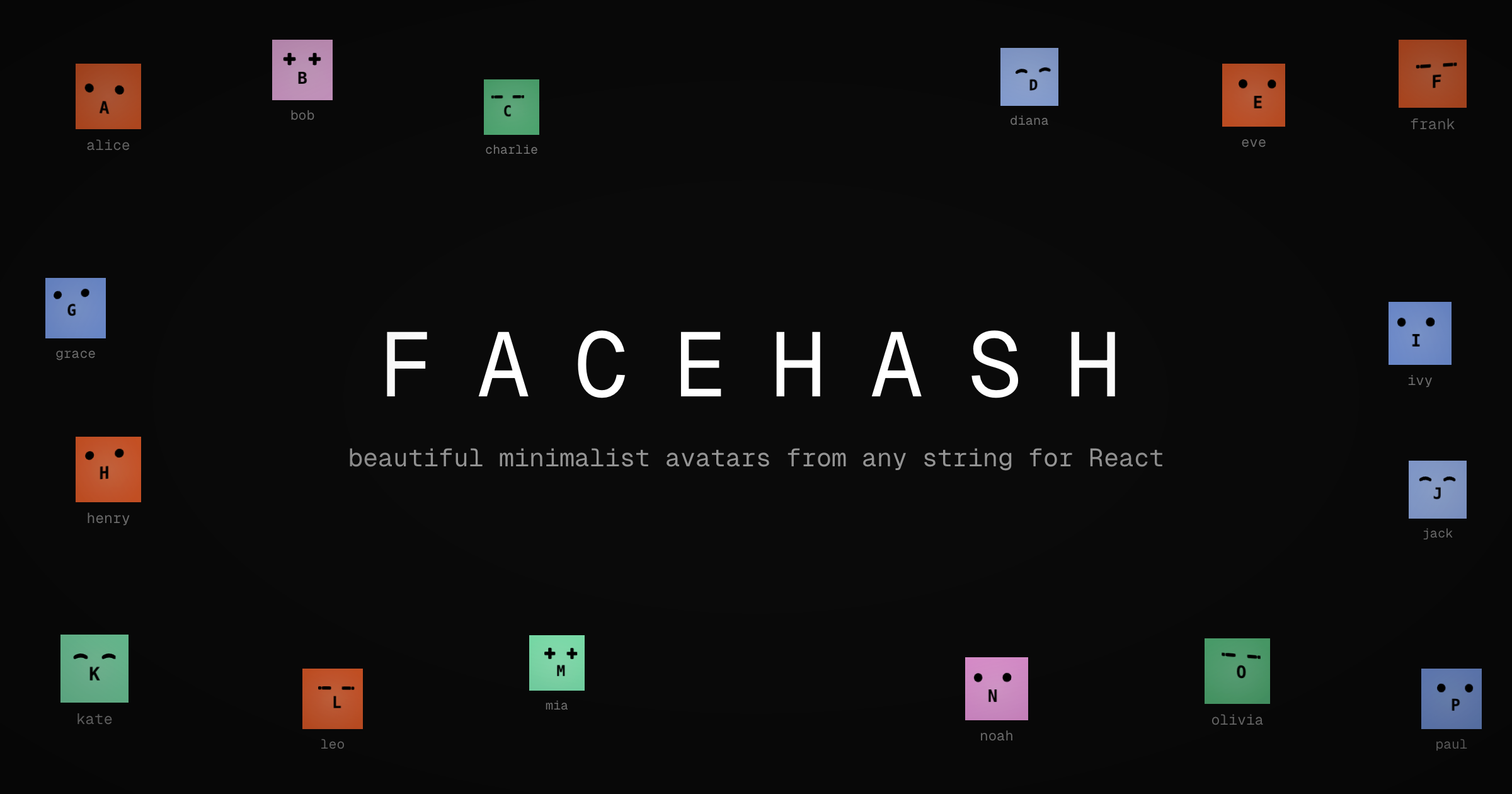
Each user gets a unique, consistent face based on their name — no more
generic initials.
## Changes
- Installed `facehash` package
- Updated `resources/js/components/user-info.tsx` to use `<Facehash>`
instead of `<Avatar>` with initials fallback
## Test plan
- [x] Verify avatar renders correctly in the sidebar footer (desktop)
- [x] Verify avatar renders correctly in the mobile header
- [x] Verify avatar renders correctly in the user dropdown menu
- [x] Confirm the same user always gets the same face
- [x] Check dark mode appearance
This PR simplifies the IndexedDB synchronization mechanism by removing
individual sync controllers and services, and instead using Inertia.js
shared props to provide data globally across the application.

## Benefits

1. **Simplified Architecture**: Removed complex sync logic for
static/semi-static data (accounts, categories, banks, labels, automation
rules)
2. **Better Performance**: Data is now shared via Inertia props,
eliminating unnecessary API calls and IndexedDB operations
3. **Reduced Complexity**: Significantly reduced codebase size (~2000
lines removed)
4. **Better UX**: Data is immediately available on page load without
waiting for sync operations
5. **Maintainability**: Fewer moving parts means easier to maintain and
debug

## Migration Notes

- Transaction syncing still uses IndexedDB for offline support
- All other data (accounts, categories, banks, labels, automation rules)
is now fetched via Inertia shared props
- Components automatically receive updated data on navigation without
manual sync operations
- Add version field to package.json (0.1.0)
- Install release-it for automated releases with conventional changelog
- Create .release-it.json configuration
- Create initial CHANGELOG.md
- Share version via Inertia (reads from package.json)
- Display version in user dropdown menu
## Summary

- Add four view modes for net worth and account balance charts:
- **Stacked Accounts**: existing stacked bar chart showing balances by
account
  - **Line**: net worth line chart with linear/log scale toggle
  - **Change**: bar chart showing MoM%, YoY%, Rolling 12M changes
- **Waterfall**: bridge chart showing Start -> Change -> End transition

- Add Vitest for frontend unit testing with 52 tests covering all
calculation functions
- Proper sign handling for liabilities (credit cards and loans subtract
from net worth)
- Log scale disabled with warning when net worth includes zero or
negative values
- Shared components and logic between dashboard and account detail
charts

## New Files

- `vitest.config.ts` - Vitest configuration
- `resources/js/lib/chart-calculations.ts` - Pure computation functions
- `resources/js/lib/chart-calculations.test.ts` - 52 unit tests
- `resources/js/hooks/use-chart-views.ts` - Shared chart view state hook
- `resources/js/components/charts/` - Reusable chart components

## Test plan

- [x] Dashboard net worth chart shows view toggle and all four views
work
- [ ] Account detail page chart shows view toggle and three views work
(no stacked)
- [x] Line chart scale toggle works (log disabled with warning when
applicable)
- [x] Change chart series toggle (MoM, YoY, 12M EUR, 12M %) works
- [x] Waterfall chart month selector works
- [x] All 52 unit tests pass (`bun run test`)
- [x] Build succeeds (`bun run build`)
- [x] Dark mode styling correct
 Víctor Falcón
