Upgrades Inertia.js from v2 to v3 on both sides — the major deliberately
left out of #764.

| Package | From | To |
| --- | --- | --- |
| `inertiajs/inertia-laravel` | 2.0.24 | **3.3.1** |
| `@inertiajs/react` | 2.3.17 | **3.6.1** |
| `axios` | transitive | **direct dep** (1.19.0) |

## Why axios becomes a direct dependency

The app imports `axios` in 18 runtime files, but it was never declared —
it arrived transitively through `@inertiajs/core` v2. v3 drops axios in
favour of its own XHR client, so without this the whole app would fail
to resolve the import.

Nothing relied on Inertia configuring axios: v2 never touched
`axios.defaults`, and there are no interceptors. `^1.19.0` also
satisfies core's optional peer range (`^1.15.2`).

## Breaking changes swept

Every v2→v3 breaking change from the [official upgrade
guide](https://inertiajs.com/upgrade-guide) was checked against the
codebase:

| Change | Call sites |
| --- | --- |
| `<title inertia>` → `<title data-inertia>` | fixed (`app.blade.php`) |
| `testing.page_paths/page_extensions` → `pages.paths/extensions` |
fixed (`config/inertia.php`) |
| `ComponentResolver` no longer accepts `Promise<{default}>` | fixed
(`app.tsx`, `ssr.tsx`) |
| `router.on('invalid'/'exception')` → `httpException`/`networkError` |
none — only `'navigate'` is used |
| `router.cancel()` → `cancelAll()` | none |
| `Inertia::lazy()` → `optional()` | none |
| `future` options block | none |
| `hideProgress`/`revealProgress` | none |
| arrow-fn `.layout =` → `[Layout]` | none — no page sets `.layout` |
| deprecated testing traits (`Has`/`Matching`/`Debugging`) | none |
| `qs` / `lodash-es` imports | none |

React 19.2.4, Laravel 13 and PHP 8.4 already satisfy v3's raised floors.

## DevTools kept opt-in

v3 adds a DevTools recorder that writes every request's page props to
`storage/inertia-devtools/` and **defaults to on in local**. On this app
that produced 38 dumps, the largest ~1 MB, holding whole transaction and
balance payloads — redaction only covers credential-shaped keys. It is
gitignored by the package, so it never reaches the repo, but for a
privacy-first product it shouldn't be the default. Gated behind
`INERTIA_DEVTOOLS_ENABLED` (set it to `true` in your own `.env` when you
need it).

## Deliberate behaviour change: `<Deferred>` on partial reloads

v3 no longer resets `<Deferred>` to its `fallback` during a partial
reload — existing content stays visible while fresh data loads. This
affects the dashboard (`onBalanceUpdated`) and account detail
(`handleTransactionCreated`).

**Kept as-is, on purpose.** Two reasons:

1. `dashboard.tsx:131-133` already carried a workaround for exactly this
v2 behaviour — it requests an unrelated cheap prop purely so the
deferred prop isn't refetched into a skeleton. The team already treated
the skeleton flash as a problem and v3 fixes it upstream, so restoring
it via the new `reloading` slot prop would undo an improvement. That
workaround is now redundant and can be simplified in a follow-up.
2. The "user can't tell it worked and re-submits" risk doesn't apply:
`edit-transaction-dialog.tsx:390` fires `toast.success('Transaction
created successfully')` *before* the reload, so the confirmation is
explicit and independent of the list.

## Verification

Full CI set, locally:

- `bun run build` — green
- `bun run test` — **353/353**
- `bun run types` — zero new errors (advisory step; pre-existing backlog
unchanged)
- `bun run format`, `bun run lint`, `bun run dry` — green
- `vendor/bin/pint --test`, `vendor/bin/phpstan analyse` — green
- `php artisan crap --base=origin/main` — 0 methods above complexity 10
- `pest --exclude-testsuite=Browser,Performance` — **2086/2088**
- `pest --testsuite=Browser` — **132/133**

Both test failures are pre-existing and reproduce identically on `main`
with Inertia v2 — I ran each one there to confirm:

- `DashboardTest::dashboard top categories roll child spending up into
the parent` — 409, the known local Inertia asset-version artifact
- `BudgetsFeatureNavigationTest::user cannot access another users
budget` — `Unknown column 'category_id'` on `budgets`, a factory/schema
mismatch

## Browser QA

Real browser sweep against the production build over dashboard,
transactions, accounts, budgets, settings and billing: **0 console
errors, 0 uncaught exceptions, 0 failed requests**. Page titles apply,
deferred props resolve, sidebar `<Link>` navigation stays client-side
with no document reloads, back/forward restores from Inertia history,
and a profile form submit persisted correctly.

## SSR: measured, left alone

v3 routes SSR through the Vite dev server (`/__inertia_ssr`) whenever
Vite is running hot, and we don't use the `@inertiajs/vite` plugin — so
in theory local dev makes a doomed POST per render. Measured it rather
than guessed: with `bun run dev` up, page loads are **16 ms** and the
failed attempt is a connection-refused costing ~0.6 ms, then it falls
back to client rendering. Dev mode renders correctly (React mounts, 0
console errors). Not worth a config knob.

Production is untouched — `Vite::isRunningHot()` is false there, so it
uses the real SSR server from `docker/supervisor/supervisord.conf`
exactly as on v2.

## Notes

- Wayfinder needed nothing: #764 already brought it to v0.1.21 (latest),
and `@laravel/vite-plugin-wayfinder` is on 0.1.7 (latest).
- Pre-existing bug both reviews surfaced, left for its own PR:
`auth/register.tsx:40` passes an `async` handler to `<Form onBefore>`,
which Inertia never awaits (same in v2 and v3), so
`transactionSyncService.clearAll()` is fire-and-forget on registration.
- `config/inertia.php` is hand-patched rather than republished. The v3
stub is ~190 lines; the unset keys resolve to package defaults via
`mergeConfigFrom`. Adopting the whole stub is a separate, reviewable
change.
- Remaining "Inertia v2" strings live inside Boost-generated blocks
(`CLAUDE.md`'s guidelines block and the vendored `SKILL.md` copies).
Hand-edits there get overwritten, so they should come from a Boost
regeneration. The three hand-written references are updated here.

## Demo


https://github.com/user-attachments/assets/3f0e7f6d-621a-4c3a-a2a0-68473ec59f10


<!-- PLACEHOLDER: drag the QA video in here -->
Adds two code-quality signals to CI, with deliberately different
strengths.

## Duplication (blocks merges)

`bun run dry` runs jscpd as a step in the `linter` job, a required
check, so
copy-paste that pushes duplication above the threshold in `.jscpd.json`
blocks
the merge. Baseline today is 5.36% (PHP 6.01%, TSX 5.82%) and the
threshold sits
at 5.4. jscpd is pinned as a devDependency rather than run through
`bunx`: a
version bump changes the reported number and would fail unrelated PRs.

## Complexity (goes red, does not block)

`php artisan crap` reports cyclomatic complexity per method. A separate
`crap`
job reports the methods a PR touched that exceed complexity 10. It is
**not** a
required check: it goes red so the number is visible, but never blocks a
merge.
Folding it into the `linter` job would turn it into a gate, which is not
the
intent — please keep it out of branch protection.

### Why complexity decides the verdict and not CRAP

CRAP is `c² × (1 − coverage)³ + c`, so it is complexity penalised by
missing
tests. Measured here, it is the wrong signal for readability:

| | Methods over 30 | crapLoad | totalCrap |
|---|---:|---:|---:|
| Whole suite with real coverage | 15 (0.99%) | 100 | 5,031 |

Because `app/` is well covered, CRAP mostly ranks what is untested. The
two
rankings barely overlap:

| Rank | By CRAP | By complexity |
|---|---|---|
| 1 | `VerifyRefundFlowCommand::handle` (c=14, 0%) |
`ExperimentFunnelCollector::collect` (c=35, 99%) |
| 2 | `StripeCustomerResolver::label` (c=10, 0%) |
`DashboardAnalyticsController::accountBalanceEvolution` (c=30, 91%) |
| 3 | `WiseTransactionSyncService::parseActivity` (c=8, 0%) |
`UpdateTransaction::write` (c=20, 75%) |

The most complex method in the codebase — 35 branches — is 99% covered,
so it
scores CRAP 35 and lands 11th of 15, below an untested enum `label()` of
complexity 6. An agent guided by CRAP would write tests for a console
command
and leave the 35-branch method alone. So complexity triggers the check,
and CRAP
plus per-method coverage travel in the output as context for *how* to
fix it.

### Threshold

10, McCabe's number, just above this codebase's p95 of 8 (median 1, p99
14,
max 35). It fires only on methods a diff touches, so the 35 existing
offenders
only matter when someone edits them.

## The command

```bash
php artisan crap                                      # whole project, ranked
php artisan crap --base=origin/main --no-coverage     # what CI checks, <1s
php artisan crap --base=origin/main --json            # for agents
```

- `--no-coverage` skips the coverage report and gives the same verdict,
since
complexity alone decides it. Without it, a crap4j report is required and
the
command refuses to guess when it is missing, printing the exact command
to
  generate one.
- Exemptions live in `.crap-ignore.json` keyed by method, with a reason
that is
read in review. Entries that are no longer needed get reported for
deletion.
- Untracked files count whole — a new feature is mostly new files and
would
  otherwise sail through unmeasured.
- Exit codes: 0 clean, 1 over threshold, 2 unusable input.

The counter is php-code-coverage's own
`CyclomaticComplexityCalculatingVisitor`,
so the numbers match the CRAP it reports: **1502 of 1503 methods
agree**. Its
wrapping visitor is not reused because that one asserts a method's
parent is a
class or a trait, which fails on enums.

## Notes for review

- `pcov.directory` is set explicitly in the tests job. Left to
autodetect, pcov
picks `src`, which does not exist in a Laravel app, and every method
silently
reports 0% coverage — which is how the first measurements of this metric
came
  out wrong, with plausible-looking numbers.
- The `crap` job skips rather than fails when `tests` fails: without the
coverage
  artifact, a red `crap` job would say nothing about complexity.
- The two checks cover each other's blind spot. Splitting a complex
method into
near-identical pieces to lower complexity raises duplication, and that
check
  does block.
- **Not verified:** that paratest merges coverage across its 4 processes
in CI.
Locally only the serial run works — in parallel each worker starts its
own
MySQL testcontainer and they time out. If it misbehaves, the symptom is
empty
  crap/coverage context columns, not a wrong verdict.
- Scope is PHP only. `resources/js` (392 files, 72k lines vs 435/37k in
`app/`)
has no complexity pipeline; the JSON says so explicitly rather than
letting
  "whole project" be assumed.

## Testing

10 Pest tests covering the threshold verdict, the CCN counting rules
(including
match arms and closures nested in a method), enum methods, exemptions,
stale
exemptions, the missing-report refusal, the crap4j join, and the
reported scope.
`pint --test` and the full `phpstan` run are clean.
## What & why

The dashboard white-screened with React **"Maximum update depth
exceeded"** on mobile (iOS 18.7 / Opera Touch), fingerprinted in Sentry
as **PHP-LARAVEL-47** (`https://whisper.money/dashboard`).

### Root cause (upstream, recharts < 3.9.0)
The crashing first-party frame is inside recharts' internal
`CartesianChart` → `useElementOffset`
(`node_modules/recharts/es6/util/useElementOffset.js`). In < 3.9.0 that
hook:

- memoizes its measuring **callback ref** with `useCallback(...,
[lastBoundingBox.width, .height, .top, .left, ...])`, so **every
`setState` changes the ref identity → React re-invokes the ref → it
re-measures on each render**, and
- reads **viewport-relative** `getBoundingClientRect().top/left` with a
`EPS = 1px` threshold.

On mobile, any mid-render viewport shift (the iOS URL bar showing/hiding
on scroll) moves the box `> 1px` on each commit, feeding an unbounded
`render → measure → setState` loop until React aborts at the
nested-update limit and the dashboard white-screens.

This is the **same crash family** as the `ChartTooltipPortal` loop fixed
in #657, but a **distinct root cause inside recharts** (that first-party
loop is already fixed and covered by its own test; both are present on
this branch).

### The fix
Upgrade **recharts 3.7.0 → 3.9.2**. 3.9.0 rewrote `useElementOffset` to
drive measurement off a **`ResizeObserver` with a stable callback ref**
(deps no longer include the last bounding box). `ResizeObserver` fires
on element **size** changes, not on scroll/viewport-position — so the
iOS URL-bar shift no longer re-triggers measurement. This removes the
loop at its source; it does not merely mask it.

## Commits
1. `fix(chart): upgrade recharts to 3.9.2 to stop the dashboard render
loop` — the fix (bun.lock + a code comment on `ResponsiveContainer`
recording the `>= 3.9.0` requirement).
2. `fix(chart): raise recharts floor to ^3.9.0 so the crash fix can't
regress` — review follow-up: `package.json` was still `^3.7.0` (permits
the crashing versions); bumped to `^3.9.0` and regenerated
`package-lock.json` so both `bun install --frozen-lockfile` and `npm ci`
enforce the floor. Also resolves a pre-existing
bun.lock/package-lock.json divergence.
3. `test(chart): guard recharts >= 3.9.0 against a downgrade regression`
— asserts the installed recharts is `>= 3.9.0` (the honest test for a
"depend on the patched version" fix; a jsdom behavioral repro is
impossible — zero-size rects, no ResizeObserver — and would pass on the
buggy version too).

## Review (two agents, before this PR)
Both reviewed against the actual `node_modules/recharts@3.9.2` source,
not just release notes.

- **No material regression risk.** The `ChartTooltipPortal`'s two hard
dependencies still hold in 3.9.2: `.recharts-wrapper` is still emitted
and is still the default tooltip portal target, and `Tooltip` still
passes `coordinate` as `{ x, y }`. `ResponsiveContainer`'s
`initialDimension` is still supported. No API we use was
removed/renamed.
- **Types & tests:** `bun run types` produces zero recharts-attributable
errors; the chart-related JS tests (tooltip portal/position,
budget-spending-chart, stacked-bar custom-shape path) pass on 3.9.2.

### Lockfile note
The production bundle is built by `bun run build` off **bun.lock**
(pinned to 3.9.2). `package-lock.json` is consumed **only** by
`release.yml`'s `npm ci`, which runs `release-it`
(versioning/changelog/tag) and does **not** build the shipped bundle —
so its large regen diff is mechanical drift-repair and cannot affect
users. Follow-up worth considering (out of scope): consolidate on bun
and drop the vestigial `package-lock.json`.

## Why draft (not auto-merged)
The root-cause fix is high-confidence, but this is a **charting-library
bump touching all chart surfaces** and the original bug is
**mobile-only**, which I can't visually QA here. Please spot-check
before merge:

- [ ] **Mobile dashboard** (ideally iOS Safari + Opera Touch): charts
render, no white-screen, scroll is smooth, tooltips position correctly.
- [ ] **Animations**: recharts 3.9 rewrote the animation system — glance
that Area/Bar/Line still animate acceptably on data refresh (esp.
`account-balance-chart`, `budget-spending-chart`).
- [ ] **New Sentry noise**: watch for `"ResizeObserver loop completed
with undelivered notifications"` — that's a benign warning, not the loop
returning; suppress rather than treat as a regression.

Refs PHP-LARAVEL-47
## What

Let users reorder their accounts by drag-and-drop. The order is shared
between the **dashboard** and the **accounts page**, and persisted
server-side.

## Why

The account order was fixed (by type, then name). Users want to put the
accounts they care about first, consistently across both views.

## How

**Backend**
- New `position` column on `accounts`, backfilled per user from the
previous type/name ordering so existing layouts are preserved.
- `PATCH /accounts/reorder` (`AccountController@reorder` +
`ReorderAccountsRequest`) persists the order and validates ownership of
every id.
- Dashboard and accounts queries now `orderBy('position')`. `position`
is cast to int and hidden from the serialized payload (order is conveyed
by array order).

**Frontend**
- Shared `SortableGrid` component built on `@dnd-kit` (new dependency).
Pointer drag starts after a small move (clicks still work); touch drag
starts on a long press, so quick swipes still scroll.
- The drag handle swaps with the account type icon on hover — top-right
on the dashboard card, bottom-left on the accounts card.
- The accounts page is now a flat list (type grouping dropped) so its
order matches the dashboard exactly.
- Reorder is optimistic and avoids refetching the deferred dashboard
metrics.
- Haptic feedback (`'selection'`, same as the mobile menu) fires when a
drag starts on touch.
- On mobile the accounts card stacks vertically (name / amount / trend)
and hides the redundant bank-name subtitle.

## Tests

- `reorder` persists positions and rejects accounts the user doesn't
own.
- Index ordering updated to assert `position` order.
- Existing account/dashboard/real-estate suites updated and green.

## Notes / follow-ups

- New accounts get `position = 0` (appear first) — can add `position =
max+1` on create later.
- On mobile the whole subtitle is hidden, including "Mortgage at X" for
real estate.
- Mobile drag-and-drop discoverability (the handle only shows on hover)
is still open — discussed but not yet decided.
## What

- **Markdown comments**: admin comments on the integration board now
render as markdown (`react-markdown` + `remark-gfm`) instead of plain
text. Links open in a new tab; blockquotes, lists and bold are styled.
Comments are admin-only (set via CLI), so the content is trusted.
- **`in_progress` status**: new status, visible to everyone and votable
like `approved`, with an optional public comment. Lets the admin signal
an integration is actively being built.
- **`integration-requests:review` rework**:
- Any decision can now move a request to any status (approve / in
progress / reject / not doable), not just the pending ones.
- New `--all` flag prints the full list with a `#` column so the admin
can pick a request by number and change its status.
- `not doable` requires a comment; `in progress` allows an optional one;
approve/reject clears any stale public comment.

## New dependencies

- `react-markdown`, `remark-gfm` (approved with the author).

## Tests

- 24 feature tests passing, incl. `--all` status change, `in_progress`
visibility + voting, and updated review-command option sets.
- Frontend vitest covering markdown rendering (link + blockquote).
## Summary

- Replace Caddy reverse proxy with [Portless](https://portless.sh) for
local HTTPS, eliminating manual cert generation and `/etc/hosts` editing
- Two URL strategies coexist: `composer run dev` uses worktree-aware
URLs (`https://<branch>.dev.whisper.money.localhost`), `whispermoney
start` uses a fixed alias (`https://whisper.money.localhost`)
- Remove Caddyfile, `docker/caddy/` directory, caddy service from
`compose.yaml`, and cert-related `.gitignore` entries
- Simplify `vite.config.ts` by removing caddy cert detection block (Vite
stays on plain HTTP since browsers treat localhost as secure context)
- Overhaul `public/setup.sh` to use `portless trust`, `portless proxy
start`, and `portless alias` instead of SSL cert generation and hosts
file editing
## Summary

- Installs `web-haptics` via bun
- Triggers `selection` haptic feedback on all navigation items (mobile
bottom bar and desktop sidebar)
- Triggers `light` haptic feedback on all back buttons
(`connect-account-inline.tsx`, `categorize.tsx`)
## Why

### Problem
Running `bun release -i patch` (or any interactive `release-it`
invocation) always failed with:

```
ERROR stringWidth is not a function
```

### Root Cause
`@inquirer/core` (used by `inquirer@12`, which `release-it@19` depends
on) bundles its own `wrap-ansi@6.2.0` (CJS). That package calls
`require('string-width')`, but the top-level `string-width` in this
project is v8 — pure ESM. When required via CJS, Node returns a module
namespace object instead of a function, causing the crash when
`release-it` tried to render its interactive confirmation prompt.

## What

- Added `scripts/patch-inquirer-string-width.js`: installs
CJS-compatible versions of `string-width@4`, `strip-ansi@6`,
`ansi-regex@5`, and `is-fullwidth-code-point@3` into
`node_modules/@inquirer/core/node_modules/` so `wrap-ansi@6` resolves
them correctly.
- Added a `postinstall` script to `package.json` so the patch is
re-applied automatically after every `bun install`.

## Verification

### Tests
No automated tests — this is a dev tooling fix. Verified manually by
running `node node_modules/release-it/bin/release-it.js --dry-run` and
confirming the interactive prompt renders without the `stringWidth`
error.

### Manual
1. `bun install` — postinstall script runs and outputs `Patch applied.`
2. `bun release -i patch` — interactive prompt now renders correctly.
## Why

### Problem
Cards across the app lacked visual interactivity. Adding a
cursor-tracking glowing border effect improves the UI polish and makes
the dashboard and other card-heavy pages feel more dynamic.

## What

### Changes
- Install `motion` package (required for the `animate()` call in the
effect)
- Add `GlowingEffect` component at
`resources/js/components/ui/glowing-effect.tsx` — tracks pointer
position and renders an animated conic gradient border that follows the
cursor
- Update the base `Card` primitive to include `<GlowingEffect>` as the
first child with `spread=40`, `proximity=64`, `inactiveZone=0.01`,
`glow=true` — all consumers inherit the effect automatically
- Remove `overflow-hidden` from the net-worth chart's `<Card>` (it was
clipping the effect) and move it to `<CardContent>` where it's actually
needed to contain the chart

## Verification

### Tests
No new logic was introduced — this is a purely visual enhancement to an
existing UI primitive. Existing tests remain unaffected.

### Manual
Move the cursor near and over any card (dashboard stats, account
balances, net worth chart, cashflow, budgets) to see the gradient border
glow follow the cursor.
## Summary
- Replaced the default initials-based avatar fallback with
[Facehash](https://facehash.dev/) — deterministic, unique avatar faces
generated from the user's name
- Same name always produces the same face, no API calls needed
- Fully rounded with `rounded-full` styling
## Preview
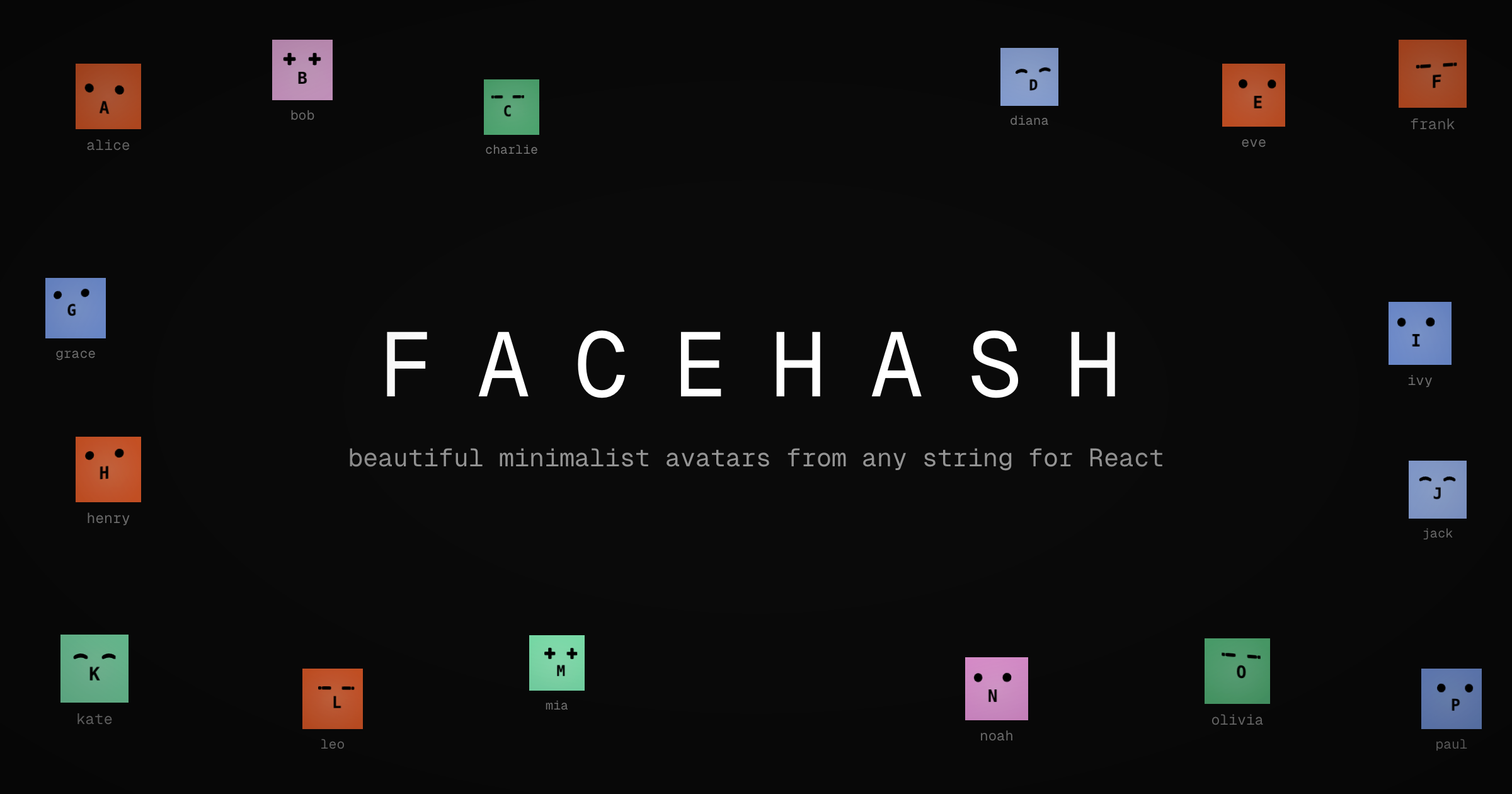
Each user gets a unique, consistent face based on their name — no more
generic initials.
## Changes
- Installed `facehash` package
- Updated `resources/js/components/user-info.tsx` to use `<Facehash>`
instead of `<Avatar>` with initials fallback
## Test plan
- [x] Verify avatar renders correctly in the sidebar footer (desktop)
- [x] Verify avatar renders correctly in the mobile header
- [x] Verify avatar renders correctly in the user dropdown menu
- [x] Confirm the same user always gets the same face
- [x] Check dark mode appearance
This PR simplifies the IndexedDB synchronization mechanism by removing
individual sync controllers and services, and instead using Inertia.js
shared props to provide data globally across the application.

## Benefits

1. **Simplified Architecture**: Removed complex sync logic for
static/semi-static data (accounts, categories, banks, labels, automation
rules)
2. **Better Performance**: Data is now shared via Inertia props,
eliminating unnecessary API calls and IndexedDB operations
3. **Reduced Complexity**: Significantly reduced codebase size (~2000
lines removed)
4. **Better UX**: Data is immediately available on page load without
waiting for sync operations
5. **Maintainability**: Fewer moving parts means easier to maintain and
debug

## Migration Notes

- Transaction syncing still uses IndexedDB for offline support
- All other data (accounts, categories, banks, labels, automation rules)
is now fetched via Inertia shared props
- Components automatically receive updated data on navigation without
manual sync operations
- Add version field to package.json (0.1.0)
- Install release-it for automated releases with conventional changelog
- Create .release-it.json configuration
- Create initial CHANGELOG.md
- Share version via Inertia (reads from package.json)
- Display version in user dropdown menu
## Summary

- Add four view modes for net worth and account balance charts:
- **Stacked Accounts**: existing stacked bar chart showing balances by
account
  - **Line**: net worth line chart with linear/log scale toggle
  - **Change**: bar chart showing MoM%, YoY%, Rolling 12M changes
- **Waterfall**: bridge chart showing Start -> Change -> End transition

- Add Vitest for frontend unit testing with 52 tests covering all
calculation functions
- Proper sign handling for liabilities (credit cards and loans subtract
from net worth)
- Log scale disabled with warning when net worth includes zero or
negative values
- Shared components and logic between dashboard and account detail
charts

## New Files

- `vitest.config.ts` - Vitest configuration
- `resources/js/lib/chart-calculations.ts` - Pure computation functions
- `resources/js/lib/chart-calculations.test.ts` - 52 unit tests
- `resources/js/hooks/use-chart-views.ts` - Shared chart view state hook
- `resources/js/components/charts/` - Reusable chart components

## Test plan

- [x] Dashboard net worth chart shows view toggle and all four views
work
- [ ] Account detail page chart shows view toggle and three views work
(no stacked)
- [x] Line chart scale toggle works (log disabled with warning when
applicable)
- [x] Change chart series toggle (MoM, YoY, 12M EUR, 12M %) works
- [x] Waterfall chart month selector works
- [x] All 52 unit tests pass (`bun run test`)
- [x] Build succeeds (`bun run build`)
- [x] Dark mode styling correct
 Víctor Falcón
